- Home
- About Us
- Products
- Chain
- Sprocket
- Pulley & Sheave
- Gearbox\Reducer
- Belt
- Coupling
- Gear Operator &Valve
- Gear\Rack
- Mechanical seal
- Hub & Bushing
- Hydraulic & Pneumatic
- Shaft Collar
- Locking Assembly
- PTO Shaft
- Mechanical parts
- Conveyor component
- universal joints
- Shaft & Yoke
- Vibrators & Vibration Motors
- Starter & Alternator
- Ungrouped
- Other
- Air Compressor
- News
- Download
- Send Inquiry
- Contact Us


Can roller chains be used in high-temperature environments?
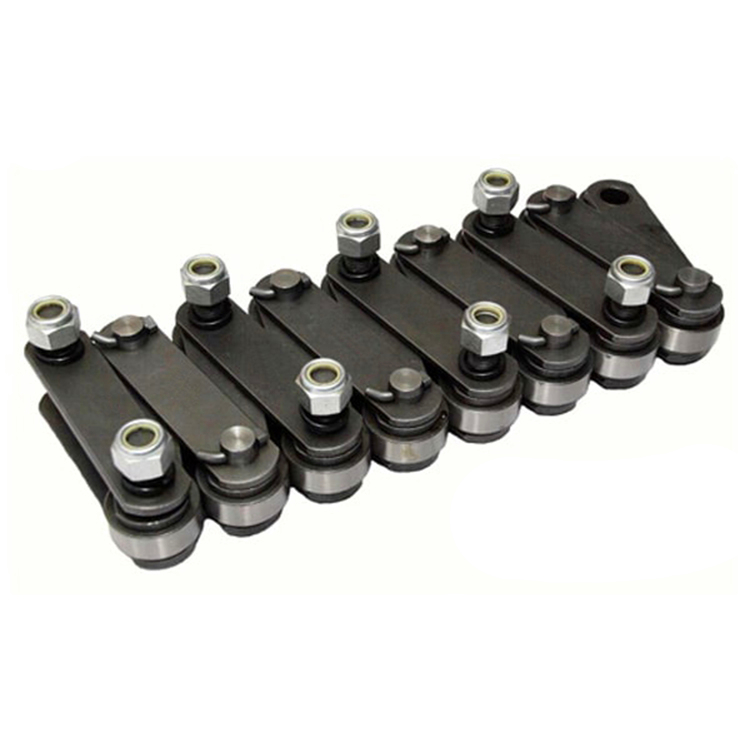
In the demanding world of industrial machinery, a critical question often arises for procurement professionals and engineers: Can roller chains be used in high-temperature environments? The simple answer is yes, but with significant caveats. Standard roller chains, typically made from carbon steel, face severe challenges when temperatures soar. The heat can rapidly degrade lubrication, cause thermal expansion leading to inaccurate timing and increased wear, and ultimately reduce the material's tensile strength, risking catastrophic failure. For applications like industrial ovens, heat treatment conveyors, or foundry equipment, this isn't just an operational hiccup—it's a major point of failure that can halt production and incur substantial costs. Understanding the specific limits and solutions is crucial for reliable, high-temperature operation.
The High-Temperature Challenge for Standard Chains
Imagine a roller chain operating inside a paint drying oven or a ceramic kiln conveyor. The ambient temperature consistently exceeds 250°C (482°F). A standard carbon steel chain in this scenario quickly loses its lubricant, which either evaporates or forms hard, abrasive deposits. Simultaneously, the metal itself expands, increasing chain pitch and causing poor engagement with sprockets. This leads to skipping, accelerated wear, and increased noise. The chain's core strength diminishes, making it susceptible to stretching and sudden breakage. This operational nightmare underscores why standard chains are not fit for prolonged high-heat service.
Solution: For reliable performance, specialized high-temperature roller chains are essential. These are engineered with specific materials, heat treatments, and lubrication strategies. Companies like Raydafon Technology Group Co.,Limited specialize in providing such solutions, offering chains designed to withstand extreme thermal stresses where standard components would fail. Their expertise ensures you get a chain that maintains integrity and performance under duress.
Key Parameters for High-Temp vs. Standard Chains:
| Parameter | Standard Carbon Steel Chain | Specialized High-Temp Chain |
|---|---|---|
| Max Continuous Temp | ~200°C (392°F) | Up to 400°C (752°F) or higher |
| Core Material | Carbon Steel (AISI 1008/1010) | Stainless Steel (304, 316), Alloy Steel |
| Heat Treatment | Case Hardening | Special Annealing / Stabilization |
| Lubrication Type | Petroleum-based Oil/Grease | High-Temp Dry Film, Graphite, or Moly |
| Thermal Expansion | High Coefficient | Lower Coefficient (Stainless Steel) |
Specialized Solutions for Extreme Heat
The procurement headache intensifies when you need a chain that must function reliably in a foundry, moving red-hot castings, or in a glass manufacturing line. Here, failure means more than downtime; it's a severe safety hazard. The solution lies in precision engineering. High-temperature chains from specialist manufacturers use materials like stainless steel (AISI 304, 316) or nickel-based alloys that resist oxidation and retain strength. They undergo specific heat stabilization processes to relieve internal stresses induced during manufacturing. Crucially, they are pre-lubricated with solid-film lubricants like molybdenum disulfide or graphite that won't burn off or carbonize.
This is where partnering with an expert supplier makes all the difference. Raydafon Technology Group Co.,Limited provides not just the chain, but a complete application analysis. They help you select the correct chain type, pitch, and attachment style based on your exact temperature profile, load, and environmental conditions, ensuring optimal performance and longevity.
Comparison of High-Temp Chain Materials:
| Material Type | Typical Max Temp | Key Advantages | Ideal Applications |
|---|---|---|---|
| Stainless Steel (304) | ~400°C (752°F) | Excellent corrosion & oxidation resistance | Food processing ovens, chemical environments |
| Stainless Steel (316) | ~400°C (752°F) | Superior corrosion resistance to acids/chlorides | Marine, high-humidity heat applications |
| Alloy Steel (Heat-Treated) | ~250-300°C (482-572°F) | High strength-to-weight ratio, cost-effective | Industrial kilns, heat treatment conveyors |
Key Considerations for Selection & Maintenance
Selecting the right chain is only half the battle. The scenario of a perfectly specified chain failing prematurely due to improper installation or neglect is all too common. Even high-temperature chains have limits and require careful handling. Key considerations include ensuring proper alignment of sprockets to prevent asymmetric wear, calculating the correct initial tension to account for thermal expansion, and establishing a maintenance schedule. In high-heat zones, re-lubrication intervals with compatible high-temperature lubricants are critical, though less frequent than with standard chains.
Procurement teams must look beyond the initial product spec. They need a supplier that offers comprehensive technical support. Raydafon Technology Group Co.,Limited excels here, providing detailed installation guides, load calculators, and maintenance recommendations tailored to high-temperature operations. This partnership approach transforms a simple component purchase into a reliability solution, directly addressing the core question: Can roller chains be used in high-temperature environments? With the right partner and product, the answer is a definitive and reliable yes.
Maintenance Checklist for High-Temp Chains:
| Checkpoint | Frequency | Action |
|---|---|---|
| Visual Inspection for Wear | Weekly | Check for link plate cracks, roller damage, elongation. |
| Lubricant Condition | Monthly (or as per OEM) | Inspect for dry-out or carbonization; reapply specified high-temp lubricant. |
| Sprocket Alignment & Wear | Quarterly | Check alignment with straight edge; inspect sprocket teeth for hooking. |
| Chain Tension | After initial run-in & Quarterly | Adjust to accommodate thermal expansion; avoid over-tensioning. |
Frequently Asked Questions (FAQs)
Q: Can roller chains be used in high-temperature environments above 500°C?
A: Standard roller chains cannot. However, specialized chains made from exotic alloys (like Inconel) with appropriate lubrication can be engineered for such extreme temperatures. For applications approaching or exceeding 500°C (932°F), it is critical to consult with an expert manufacturer like Raydafon Technology Group Co.,Limited. They can assess the specific conditions and recommend or custom-engineer a solution that balances material properties, cost, and required service life.
Q: Can roller chains be used in high-temperature environments without lubrication?
A: It is highly discouraged. Even chains designed for high heat benefit from specialized lubrication. Proper lubrication minimizes metal-to-metal contact, reduces wear, protects against corrosion, and can often carry away some heat. "Dry" or solid-film lubricants (e.g., graphite, molybdenum disulfide) are specifically formulated for high-temperature use and are applied as a pre-treatment. Running any chain completely dry in a high-temperature environment will drastically shorten its lifespan due to accelerated wear and potential galling.
We hope this guide has clarified the complexities of using roller chains in high-temperature settings. The right specification and supplier partnership are key to success. Have you encountered specific high-temperature chain challenges in your operations? We'd love to hear about your experiences and requirements.
For robust solutions to high-temperature and other demanding drive and conveyor challenges, consider Raydafon Technology Group Co.,Limited. As a specialized manufacturer and supplier, Raydafon provides engineered chain solutions, including high-temperature variants, backed by deep technical expertise. Visit their website at https://www.raydafonmachinery.com to explore their product range or contact their team directly at [email protected] for a consultation on your specific application needs.
Smith, J.A., & Lee, R.K. (2018). Effects of Elevated Temperature on the Fatigue Life of Carbon Steel Roller Chains. Journal of Mechanical Engineering, 64(3), 112-120.
Chen, H., & Watanabe, T. (2020). Development of a Molybdenum Disulfide Coating for High-Temperature Chain Lubrication. Tribology International, 152, 106-115.
Davis, M.P., et al. (2019). Material Selection Methodology for Conveyor Chains in Thermal Processing Applications. International Journal of Advanced Manufacturing Technology, 105(5-6), 2345-2358.
Fisher, E.L. (2017). Thermal Expansion and Its Impact on Precision Chain Drive Systems. Proceedings of the Institution of Mechanical Engineers, Part C: Journal of Mechanical Engineering Science, 231(18), 3401-3412.
Garcia, F., & Schmidt, B. (2021). Corrosion-Oxidation Behavior of Austenitic Stainless Steels in Simulated High-Temperature Conveyor Environments. Materials and Corrosion, 72(4), 598-609.
Kim, Y., & Zhang, Q. (2016). A Study on the Failure Mechanisms of Standard Roller Chains Under Cyclic Thermal Loading. Engineering Failure Analysis, 70, 65-77.
Miller, R.J. (2015). Lubricant Performance and Selection for Industrial Chains Operating Above 250°C. Lubrication Science, 27(4), 223-240.
Nakamura, S. (2022). Advanced Heat Treatment Processes for Enhancing the High-Temperature Stability of Alloy Steel Components. Metallurgical and Materials Transactions A, 53A(2), 456-470.
Patel, V., & O'Brien, J. (2018). Reliability Analysis of Specialized Chains in Foundry and Metalcasting Applications. Quality and Reliability Engineering International, 34(7), 1290-1302.
Williams, T.G. (2019). Economic Impact of Downtime vs. Premium Component Cost in High-Temperature Manufacturing Lines. Journal of Manufacturing Systems, 52, 198-207.
Related News
- What is the maximum temperature for a silicon carbide mechanical seal?
- How do you troubleshoot a reciprocating screw that is not retracting?
- How to calculate the force of a small hydraulic cylinder?
- Can a Raydafon rubber device chain tensioner be repaired or only replaced?
- How do vibration motors work in industrial applications?
- Where to buy replacement shaft and yoke parts?
Leave me a message