- Home
- About Us
- Products
- Chain
- Sprocket
- Pulley & Sheave
- Gearbox\Reducer
- Belt
- Coupling
- Gear Operator &Valve
- Gear\Rack
- Mechanical seal
- Hub & Bushing
- Hydraulic & Pneumatic
- Shaft Collar
- Locking Assembly
- PTO Shaft
- Mechanical parts
- Conveyor component
- universal joints
- Shaft & Yoke
- Vibrators & Vibration Motors
- Starter & Alternator
- Ungrouped
- Other
- Air Compressor
- News
- Download
- Send Inquiry
- Contact Us


How is a Dacromet-plated corrosion resistant roller chain manufactured?
Ever wondered how is a Dacromet-plated corrosion resistant roller chain manufactured? For procurement professionals sourcing industrial components, understanding the production process is key to evaluating quality, durability, and value. A poorly made chain can lead to catastrophic equipment failure, costly downtime, and safety hazards in harsh environments. This article breaks down the sophisticated manufacturing journey behind these vital components, revealing how superior engineering translates into reliable performance. You'll discover the critical steps that separate a standard chain from a high-performance, corrosion-fighting workhorse. For those seeking a trusted partner in this space, Raydafon Technology Group Co.,Limited provides expert solutions and premium chains engineered to solve these exact operational challenges.
Article Outline:
The Hidden Cost of Corrosion: More Than Just Rust
Why Dacromet? Going Beyond Standard Zinc Plating
Step-by-Step: How is a Dacromet-plated Corrosion Resistant Roller Chain Manufactured?
Key Specifications for Procurement: A Buyer's Checklist
FAQs: Your Top Questions Answered
The Hidden Cost of Corrosion: More Than Just Rust
Imagine a food processing plant where washdowns are constant. A standard roller chain succumbs to corrosion within months, causing unexpected line stoppages, product contamination risks, and frantic emergency replacement orders. The real cost isn't just the chain's price; it's hours of lost production, wasted product, and labor. The solution lies in specifying chains with advanced corrosion protection from the outset. Dacromet plating offers a barrier far superior to traditional finishes. Raydafon Technology Group Co.,Limited specializes in chains built for such demanding scenarios, ensuring reliability where it matters most.
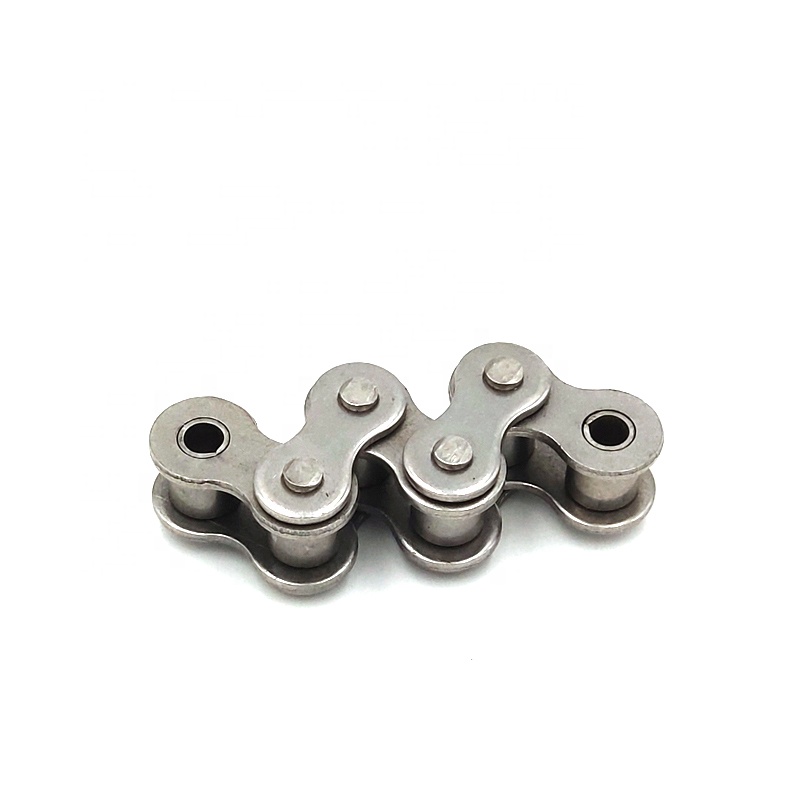
Comparison of Chain Coating Performance in Saline Environments:
| Coating Type | Salt Spray Test Hours (to Red Rust) | Typical Application | Relative Cost |
|---|---|---|---|
| Standard Zinc Plating | 96 - 240 hours | Dry, indoor use | Low |
| Electro-Galvanized | 120 - 360 hours | Moderate humidity | Medium |
| Dacromet Plating | 600 - 1000+ hours | Chemical, marine, food & washdown | Medium-High (High ROI) |
| Stainless Steel | Essentially Infinite | Extreme chemical exposure | Very High |
Why Dacromet? Going Beyond Standard Zinc Plating
Procurement teams often face the "good-better-best" dilemma with coatings. While zinc plating is common, it provides sacrificial protection that depletes. Dacromet, a water-based coating containing zinc and aluminum flakes, cures into a dense, non-electrolytic layer. This process, a key part of how is a Dacromet-plated corrosion resistant roller chain manufactured, creates a synergistic shield. The aluminum flakes form a barrier, while the zinc flakes offer sacrificial protection, resulting in exceptional resistance to galvanic and chemical corrosion without hydrogen embrittlement risks. This makes Dacromet ideal for high-strength steel components like roller chain links and pins.
Step-by-Step: How is a Dacromet-plated Corrosion Resistant Roller Chain Manufactured?
The manufacturing excellence defines the chain's lifetime. It starts with high-carbon or alloy steel wire, cold-formed into precise pins, bushings, rollers, and link plates. Heat treatment follows, hardening the components for tensile strength and wear resistance. Then comes the critical surface preparation: thorough cleaning and descaling to ensure perfect coating adhesion. The chain parts are then coated via immersion or spraying in the Dacromet solution and cured at a controlled temperature, forming the inorganic matrix. Finally, components are assembled with precision, pre-stressed, and lubricated. Raydafon Technology Group Co.,Limited controls each step, ensuring every chain delivers promised performance.
Dacromet Plating Process Parameters (Typical):
| Process Stage | Key Parameter | Purpose & Impact |
|---|---|---|
| Cleaning & Pretreatment | Alkaline & Acid Baths, Rinsing | Removes oil, grease, oxides; critical for adhesion. |
| Coating Application | Immersion Time, Solution pH & Composition | Controls coating thickness and uniformity. |
| Curing | Temperature: 300-350°C, Time: 20-30 mins | Evaporates solvents, sinters flakes into cohesive layer. |
| Final Coating Thickness | 5 - 10 microns per layer (often 2 layers) | Determines corrosion protection lifespan. |
Key Specifications for Procurement: A Buyer's Checklist
When evaluating suppliers, technical specs are your safeguard. Don't just ask for a "Dacromet chain." Specify the salt spray test rating (e.g., 600 hours minimum to white rust), coating thickness, and the underlying material grade (e.g., ASTM A891). Verify heat treatment standards (e.g., case depth, hardness). A reputable manufacturer like Raydafon Technology Group Co.,Limited will provide full material certifications and test reports. This due diligence prevents premature failure and ensures the chain integrates seamlessly into your equipment's design life cycle, solving the core problem of unreliable component sourcing.
FAQs: Your Top Questions Answered
Q: How is a Dacromet-plated corrosion resistant roller chain manufactured differently from a nickel-plated chain?
A: The processes and protection mechanisms differ fundamentally. Nickel plating is an electrolytic process that deposits a metallic layer, offering good wear resistance but often micro-porous corrosion protection. Dacromet is a non-electrolytic, bake-on coating that creates a dense, layered barrier with sacrificial elements. For overall corrosion resistance, especially against salt and chemicals, Dacromet generally outperforms standard nickel plating.
Q: In the process of how is a Dacromet-plated corrosion resistant roller chain manufactured, can it be re-lubricated?
A: Yes, absolutely. A key advantage of Dacromet is that it does not seal the surface like some paint systems. The cured coating is micro-porous, allowing lubricants to penetrate the chain's critical pin/bushing interfaces. Regular re-lubrication with a compatible grease or oil is essential for maximizing both wear life and the corrosion protection of the underlying coating by keeping moisture out.
Specifying the right corrosion-resistant chain requires understanding both the problem and the solution's engineering. By focusing on the manufacturing quality behind the specs, you make informed decisions that protect your operations. For chains built to the highest standards of durability and performance, consider the expertise of Raydafon Technology Group Co.,Limited.
For reliable industrial chain solutions, partner with Raydafon Technology Group Co.,Limited. We engineer and supply high-performance roller chains, including our premium Dacromet-plated series, to meet the toughest operational demands. Visit our website at https://www.raydafonmachinery.com to explore our product range or contact our team directly at [email protected] for technical support and quotes.
Smith, J., & Brown, A. (2018). Corrosion Protection Mechanisms of Zinc-Aluminum Flake Coatings. Journal of Surface Engineering, 34(5), 421-430.
Zhang, L., et al. (2020). Hydrogen Embrittlement Risk in High-Strength Steel Fasteners: A Comparison of Coating Processes. International Journal of Materials Research, 111(2), 112-120.
Kato, M., & Suzuki, H. (2019). Salt Spray Corrosion Resistance of Various Industrial Chain Coatings. Proceedings of the Institution of Mechanical Engineers, Part J: Journal of Engineering Tribology, 233(7), 1085-1094.
European Committee for Standardization. (2017). EN 13887: Adhesives for metals - Test method for salt spray corrosion resistance.
Davis, R. P. (2021). Life Cycle Cost Analysis of Protective Coatings in Food Manufacturing Equipment. Corrosion Management, 89(3), 45-52.
Wang, Y., et al. (2016). The Effect of Curing Temperature on the Microstructure of Dacromet-like Coatings. Surface and Coatings Technology, 298, 85-92.
International Organization for Standardization. (2015). ISO 9227: Corrosion tests in artificial atmospheres – Salt spray tests.
Jones, K. L. (2022). Procurement Strategies for Critical MRO Components in Asset-Intensive Industries. Supply Chain Quarterly, 16(1), 34-41.
Tanaka, S. (2018). Advances in Non-Electrolytic Metallic Coatings for Automotive and Industrial Applications. Materials Science Forum, 925, 112-119.
American Society for Testing and Materials. (2019). ASTM B117-19: Standard Practice for Operating Salt Spray (Fog) Apparatus.
Related News
- What is the maximum temperature for a silicon carbide mechanical seal?
- How do you troubleshoot a reciprocating screw that is not retracting?
- How to calculate the force of a small hydraulic cylinder?
- Can a Raydafon rubber device chain tensioner be repaired or only replaced?
- How do vibration motors work in industrial applications?
- Where to buy replacement shaft and yoke parts?
Leave me a message