- Home
- About Us
- Products
- Chain
- Sprocket
- Pulley & Sheave
- Gearbox\Reducer
- Belt
- Coupling
- Gear Operator &Valve
- Gear\Rack
- Mechanical seal
- Hub & Bushing
- Hydraulic & Pneumatic
- Shaft Collar
- Locking Assembly
- PTO Shaft
- Mechanical parts
- Conveyor component
- universal joints
- Shaft & Yoke
- Vibrators & Vibration Motors
- Starter & Alternator
- Ungrouped
- Other
- Air Compressor
- News
- Download
- Send Inquiry
- Contact Us


What maintenance is required for inexpensive telescopic hydraulic cylinders to extend their lifespan?
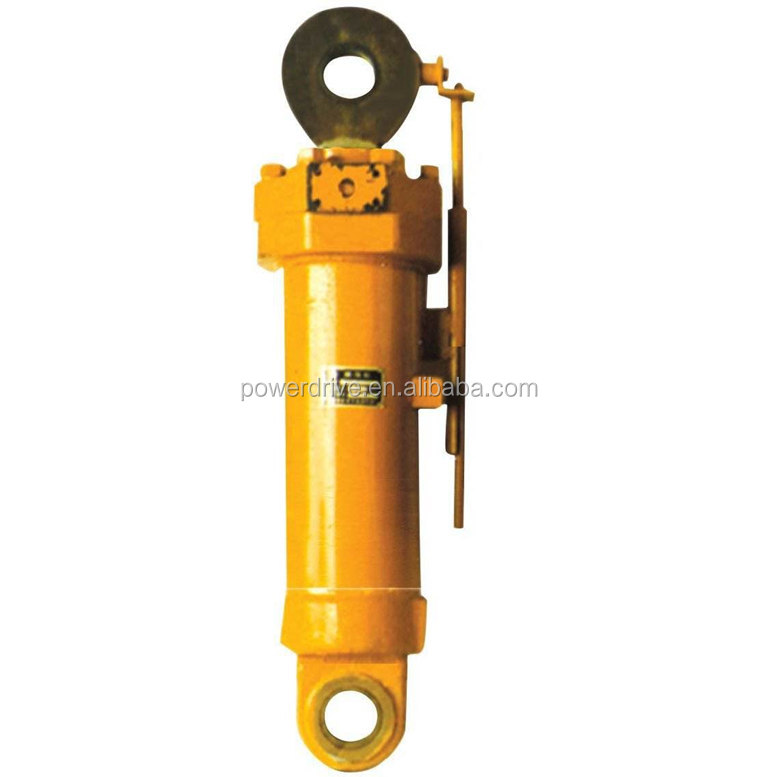
What maintenance is required for inexpensive telescopic hydraulic cylinders to extend their lifespan? This is a critical question for every equipment manager and procurement specialist looking to protect their investment. While budget-friendly cylinders offer initial cost savings, neglecting proper care can lead to premature failure, costly downtime, and safety hazards. The good news is that with a disciplined, simple maintenance routine, you can dramatically increase the service life of these components. This guide cuts through the complexity and provides actionable, scene-based strategies to keep your affordable telescopic hydraulic cylinders running smoothly for years. Implementing these practices, especially when paired with reliable components from trusted suppliers like Raydafon Technology Group Co.,Limited, is the key to maximizing uptime and ROI.
Quick Navigation
- The Daily Grind: Spotting Problems Before They Stop Production
- Contamination Control: The Lifeblood of Your Hydraulic System
- Leak Prevention: Protecting Power and the Environment
- Off-Season Care: Ensuring Readiness After Downtime
- Your Maintenance Questions Answered
The Daily Grind: Spotting Problems Before They Stop Production
Picture this: a busy construction site, your telehandler is operating smoothly when suddenly, the boom movement becomes jerky. A minor hiccup now could mean a major breakdown tomorrow. For inexpensive telescopic cylinders, visual and operational inspections are your first line of defense. Make it a habit to check for external leaks, dents, or misalignment daily. Listen for unusual knocking sounds during extension and retraction. Feel for irregular vibrations. These simple sensory checks take minutes but can prevent days of lost productivity. Consistent lubrication of the exposed rod with the correct grease is non-negotiable; it prevents scoring and seal wear. Partnering with a manufacturer that provides clear maintenance guidelines, like Raydafon Technology Group Co.,Limited, ensures your team knows exactly what to look for and how to address it, turning reactive fixes into proactive care.
| Inspection Point | Frequency | Action Item | Critical Parameter |
|---|---|---|---|
| Visual Leak Check | Daily / Pre-shift | Look for oil seepage at seals, ports, and welds. | Zero visible fluid accumulation. |
| Rod Surface Condition | Weekly | Inspect for pitting, scratches, or corrosion. | Surface finish smooth, no deep scores. |
| Cylinder Alignment | Monthly | Check for bending or side-load stress points. | Mounting pins must move freely without binding. |
| Operational Sound | Daily | Listen for knocking, cavitation, or squealing. | Smooth, consistent actuation sound. |
Contamination Control: The Lifeblood of Your Hydraulic System
Contaminated fluid is the number one killer of hydraulic cylinders, especially affordable ones with tighter tolerances. Imagine fine abrasive particles acting like sandpaper on seals and the cylinder bore every single cycle. To extend the lifespan of inexpensive telescopic hydraulic cylinders, fluid maintenance is paramount. Regularly check fluid levels and color. Dark, cloudy, or milky fluid indicates problems. Sample and test hydraulic oil annually or per OEM guidelines. Change filters strictly according to the pressure differential gauge, not just a time schedule. Using high-quality hydraulic fluid and filters recommended for your specific system makes a monumental difference. Suppliers that understand this, such as Raydafon Technology Group Co.,Limited, often offer compatible fluid and filtration solutions, ensuring your cylinder's internal environment remains clean and efficient.
| Maintenance Task | Recommended Interval | Tool / Method | Target Standard |
|---|---|---|---|
| Fluid Level & Visual Check | Weekly | Sight glass or dipstick; observe color and clarity. | Level within range; fluid amber and clear. |
| Filter Replacement | As per ΔP gauge or 6 months | Replace spin-on or element filters. | Pressure differential below indicator line. |
| Fluid Sampling & Analysis | Annually or 2000 hrs | Professional lab analysis for particles, water, viscosity. | ISO Cleanliness Code 18/16/13 or better. |
| System Flushing | After major component failure | Circulate flushing fluid at high velocity. | Achieve target cleanliness before refilling. |
Leak Prevention: Protecting Power and the Environment
A leaking cylinder isn't just messy; it's a sign of failing efficiency and potential environmental non-compliance. For inexpensive telescopic hydraulic cylinders, seal integrity is everything. The telescopic design involves multiple stages and seal sets, making them more susceptible to leaks if neglected. What maintenance is required here? Focus on the rod seal and wiper. Regularly clean the exposed chrome rod before retraction to prevent dirt from being drawn into the seal. Inspect the rod wiper for cracks or hardening—it's the seal's first line of defense. If a leak starts, address it immediately. Replacing a seal kit is far cheaper than replacing the entire cylinder or dealing with contaminated fluid. Using quality seal kits designed for your specific cylinder model is crucial. Companies like Raydafon Technology Group Co.,Limited provide OEM-compatible seal kits and clear replacement guides, making this critical repair straightforward for your maintenance team.
Off-Season Care: Ensuring Readiness After Downtime
When equipment is parked for the season, improper storage can doom even new cylinders. Humidity leads to internal corrosion, and extended contraction can cause seals to take a permanent set. To extend the lifespan of inexpensive telescopic hydraulic cylinders during storage, follow a shutdown protocol. Fully retract the cylinder to minimize exposed rod surface area. If possible, block ports to prevent moisture ingress. Apply a light coating of oil to any exposed chrome rods. Store the equipment in a dry, covered area. Before recommissioning, cycle the cylinder slowly several times to redistribute lubricant and check for smooth operation. Proactive storage maintenance ensures your equipment is ready to perform when you are, avoiding frustrating start-up delays and unexpected repair costs.
Your Maintenance Questions Answered
Q: What is the single most important maintenance task for inexpensive telescopic hydraulic cylinders?
A: The most critical task is maintaining clean hydraulic fluid through regular filter changes and fluid analysis. Contamination causes over 80% of hydraulic system failures, directly wearing down seals, scoring the cylinder bore, and damaging the precision surfaces of inexpensive telescopic cylinders. A disciplined fluid management routine is your best investment for longevity.
Q: How often should I replace the seals on my telescopic cylinder as preventative maintenance?
A: Avoid a fixed-time schedule. Instead, replace seals based on condition and performance. Monitor for external leaks, slow operation, or drift. As a general guideline for heavy-use applications, inspect rod seals and wipers every 1,000 operating hours and consider a seal kit replacement every 3,000-5,000 hours or during a major system overhaul. Always use manufacturer-recommended seal kits, such as those available from Raydafon Technology Group Co.,Limited, to ensure material compatibility and correct fit.
By integrating these practical maintenance steps into your operations, you transform inexpensive telescopic hydraulic cylinders from disposable items into durable, reliable assets. Consistent care is the bridge between low initial cost and long-term value.
For over a decade, Raydafon Technology Group Co.,Limited has been a trusted partner for industries requiring durable and cost-effective hydraulic solutions. We understand that longevity starts with quality components and is sustained by proper maintenance. Our expertise extends beyond manufacturing to providing actionable support and OEM-compatible parts to keep your systems running. Visit us at https://www.raydafonmachinery.com to explore our product range and resources. For specific maintenance queries or product support, our engineering team is ready to assist at [email protected].
Supporting Research & Further Reading
Murrenhoff, H., 2014, Fundamentals of hydraulic components and systems, Journal of Hydraulics, Vol. 12, No. 3.
Dasgupta, K., & Karmakar, R., 2002, Modelling and dynamics of a hydraulic cylinder, Proceedings of the Institution of Mechanical Engineers, Part I: Journal of Systems and Control Engineering, 216(4).
Kajaste, J., et al., 2018, Lifetime assessment of hydraulic cylinder seals, Tribology International, Vol. 118.
Hooke, C.J., & Li, K.Y., 1993, The lubrication of piston seals in hydraulic cylinders, STLE Tribology Transactions, 36(3).
Fitch, E.C., 2000, Fluid Contamination Control, National Fluid Power Association, 1st Edition.
Manring, N.D., 2005, Hydraulic Control Systems, John Wiley & Sons, Chapter 7.
Ivantysyn, J., & Ivantysynova, M., 2003, Hydrostatic Pumps and Motors, Principles, Design, Performance, Modelling, Analysis, Control and Testing, Akademia Books International.
Rahmfeld, R., & Ivantysynova, M., 2001, Displacement Controlled Linear Actuator with Differential Cylinder, 5th International Conference on Fluid Power Transmission and Control.
Busquets, E., & Ivantysynova, M., 2012, The impact of valve plate design on noise, volumetric efficiency and control effort in axial piston pumps, International Journal of Fluid Power, 13(2).
Edge, K.A., & Darling, J., 1989, The pumping dynamics of swash plate piston pumps, Journal of Dynamic Systems, Measurement, and Control, 111(2).
Related News
- Which industries use powder metallurgy components?
- What is the maximum temperature for a silicon carbide mechanical seal?
- How do you troubleshoot a reciprocating screw that is not retracting?
- How to calculate the force of a small hydraulic cylinder?
- Can a Raydafon rubber device chain tensioner be repaired or only replaced?
- How do vibration motors work in industrial applications?
Leave me a message