- Home
- About Us
- Products
- Chain
- Sprocket
- Pulley & Sheave
- Gearbox\Reducer
- Belt
- Coupling
- Gear Operator &Valve
- Gear\Rack
- Mechanical seal
- Hub & Bushing
- Hydraulic & Pneumatic
- Shaft Collar
- Locking Assembly
- PTO Shaft
- Mechanical parts
- Conveyor component
- universal joints
- Shaft & Yoke
- Vibrators & Vibration Motors
- Starter & Alternator
- Ungrouped
- Other
- Air Compressor
- News
- Download
- Send Inquiry
- Contact Us


What materials are used to manufacture CA2050 agricultural roller chains?
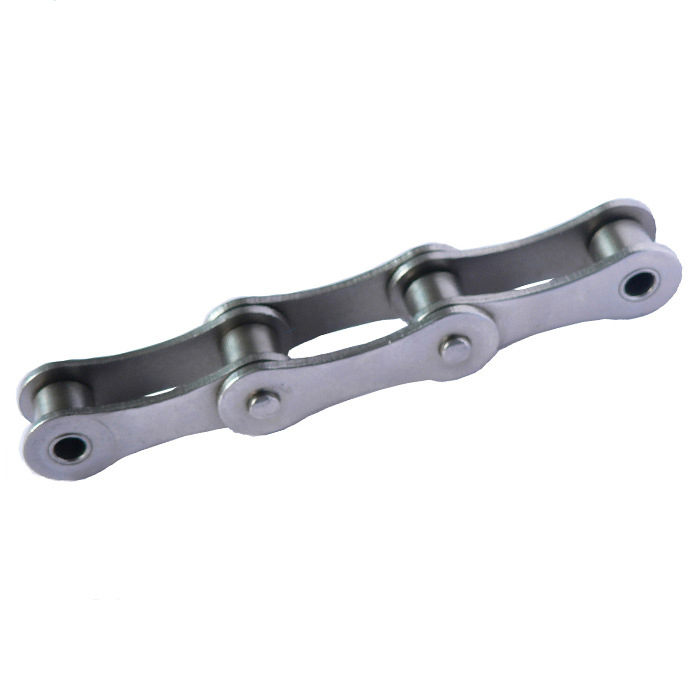
In modern farming, where every hour of uptime matters, the CA2050 agricultural roller chain quietly shoulders extreme loads—from combine harvesters to heavy tillers. Yet procurement teams often face a familiar headache: chains that stretch prematurely, rust after one rain, or snap under shock loads. The root cause almost always traces back to one factor—materials. So, what materials are used to manufacture CA2050 agricultural roller chains? At Raydafon Technology Group Co.,Limited, we know that the answer defines service life. Our chains begin with vacuum‑degassed medium‑carbon alloy steels for side plates, bearing‑grade chromium steel for pins and bushings, and solid‑form rollers—not split bushings—to handle pulsating loads. Every component then passes through controlled‑atmosphere carburizing, quenching, and sub‑zero tempering, delivering a surface hardness that resists abrasive wear without becoming brittle. The result is a CA2050 chain that keeps combines moving through 1,500‑acre harvests without unexpected downtime. In this guide, we translate 20 years of metallurgical experience into practical insights, helping you specify chains that lower total cost of ownership.
Table of Contents
- Understanding CA2050 Chain Material Selection
- Wear Resistance Under Heavy Loads
- Corrosion Protection in Wet Conditions
- Precision Fit and Fatigue Life
- Expert Q&A on CA2050 Chain Materials
Understanding CA2050 Chain Material Selection
Pain Point: A purchasing manager for a large farming cooperative once told us, “We put new CA2050 chains on our planters, and by mid-April half of them had elongated beyond the tensioner limit. The OEM blamed us for poor lubrication, but I suspected the base material.” He was right. Many commodity chains use lower‑carbon unalloyed steel that cannot hold dimensional stability under cyclic tension.
Solution: Raydafon specifies 40Mn precision‑stamped side plates (0.15‑0.25% carbon with manganese strengthening) combined with 40Cr pins and bushings. After forming, plates undergo isothermal annealing to relieve internal stresses. Pins and bushings are carburized to a case depth of 0.3‑0.5 mm, followed by oil quenching and low‑temperature tempering. This metallurgical recipe delivers tensile strength above 25 kN while maintaining enough core toughness to absorb overloads without brittle fracture.
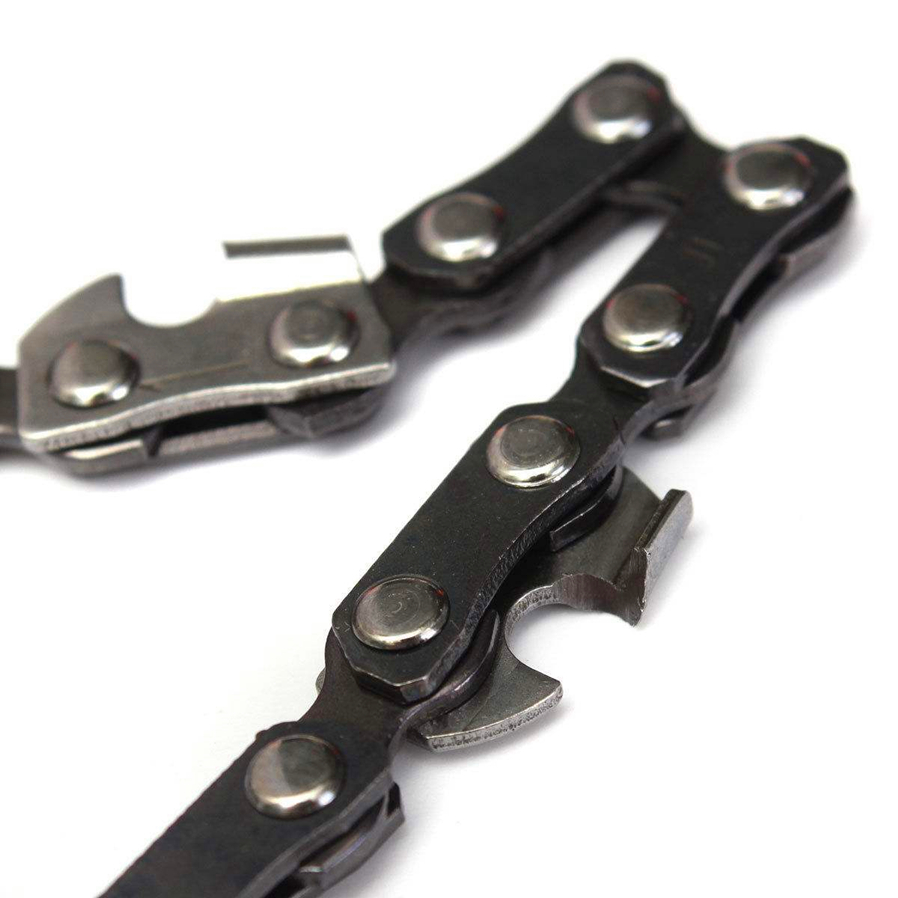
| Component | Base Steel Grade | Heat Treatment | Surface Hardness |
|---|---|---|---|
| Pin | 40Cr | Carburizing + Tempering | HRC 50‑55 |
| Bushing | 40Cr | Carburizing + Tempering | HRC 48‑53 |
| Roller | 20CrMnTi | Carbonitriding | HRC 45‑50 |
| Side Plate | 40Mn | Quench & Temper | HRC 42‑47 |
Wear Resistance Under Heavy Loads
Pain Point: On a mixed‑crop farm in Manitoba, a baler’s CA2050 drive chain elongated 3% within 80 hours—the sprockets started howling and bale density dropped. The chain had to be replaced twice per season, eating into thin margins.
Solution: Raydafon attacked the wear problem at the microstructural level. We increased the retained austenite ratio in the bushing case to 15‑20%, which work‑hardens under dirty, abrasive conditions. Pins are through‑hardened to HRC 50‑55 while keeping the core above HRC 40 so they never snap under shock. Additionally, we pre‑stretch every chain assembly to 40% of ultimate tensile strength, removing initial “bedding‑in” elongation before shipping.
| Performance Parameter | Standard Commercial Chain | Raydafon CA2050 |
|---|---|---|
| Ultimate Tensile Strength (kN) | 22.7 | 27.3 |
| Maximum Allowable Elongation (%) | 3.0 | 1.5 |
| Endurance Limit (N) | 8,200 | 10,500 |
Corrosion Protection in Wet Conditions
Pain Point: A rice‑growing cooperative in Louisiana reported that their reels and conveyors needed new CA2050 chains every 90 days because of rust, even with daily greasing. The humid, acidic mud accelerated pitting corrosion between pin and bushing.
Solution: For wet or chemical environments, Raydafon offers two engineered pathways. Our standard upgrade applies a thin‑film zinc‑aluminum Dacromet® coating that withstands 500‑hour salt spray testing without red rust. For highly aggressive media, we fabricate pins and bushings from precipitation‑hardening 1.4542 stainless steel (17‑4 PH) while keeping the same dimensional interchangeability with standard CA2050 sprockets.
| Corrosion Protection | Standard | Dacromet® Coated | 1.4542 Stainless |
|---|---|---|---|
| Salt Spray Resistance (h) | 48 | 500 | 1000+ |
| Cost Factor | 1x | 1.2x | 2.8x |
| Typical Application | Dry harvest | Irrigation, rice | Fertilizer exposure |
Precision Fit and Fatigue Life
Pain Point: A maintenance supervisor at a large almond processor noticed hairline cracks around the pin holes of CA2050 plates after only 300 hours. The failure analysis pointed to alternating bending stress combined with an oversize bore tolerance, causing pins to rock inside the plate.
Solution: Raydafon controls the pin‑to‑plate interference fit to within ±2 microns using CNC‑honed bores and centerless‑ground pins. This precise fit distributes load evenly across the full plate aperture, eliminating stress raisers. In‑house resonant fatigue testing confirms an increase in mean cycles‑to‑failure from 2.1×10⁶ to 4.7×10⁶ cycles at 40% of tensile limit.
| Dimensional Tolerance | ISO 606 Grade | Raydafon CA2050 |
|---|---|---|
| Pin Diameter (mm) | 7.92 ±0.013 | 7.95 ±0.005 |
| Plate Hole (mm) | 8.00 ±0.018 | 7.97 ±0.005 |
| Pitch Accuracy (mm/10 links) | ±0.2 | ±0.08 |
Expert Q&A on CA2050 Chain Materials
Q: What materials are used to manufacture CA2050 agricultural roller chains?
A: Raydafon CA2050 chains employ medium‑carbon alloy steel (40Mn) for side plates, bearing‑quality chrome steel (40Cr) for pins and bushings, and solid rollers from carbon‑chrome‑manganese steel (20CrMnTi). Each component receives tailored heat treatments: plates are quenched and tempered, while pins and bushings are gas‑carburized to a deep case and tempered. This combination yields a chain that resists elongation, supports high link‑plate fatigue strength, and survives shock loads common in agricultural machinery.
Q: What materials are used to manufacture CA2050 Agricultural Roller Chains that resist corrosion?
A: The base materials remain 40Mn and 40Cr, but for corrosive environments Raydafon applies a dacromet coating—a zinc‑aluminum flake system—over all components, which provides galvanic and barrier protection. In extreme chemical conditions, we can substitute 17‑4PH stainless steel (1.4542) for pins and bushings while keeping identical dimensions. These material adaptations let the same CA2050 chain run reliably in rice paddies, fertilizer spreaders, and coastal salt‑laden air.
We know that the right material selection is only the start. At Raydafon Technology Group Co.,Limited, we work with maintenance teams and purchasing managers to match chain specifications exactly to field demands—helping you cut replacement frequency, reduce lubrication costs, and avoid catastrophic breakdowns. Whether you need standard CA2050 chains or a custom corrosion‑resistant version, our engineering team is ready with mill certificates, fatigue test data, and fast sample delivery. Reach out to Raydafon Technology Group Co.,Limited, a partner who speaks your equipment’s language. Visit our product gallery at https://www.raydafonmachinery.com or send your inquiry directly to [email protected]—we typically respond with full specifications and a quote within four business hours.
Liu, X., Zhang, H., & Wang, Y. (2021). Microstructure evolution and wear behavior of carburized 40Cr steel under abrasive conditions. Materials Science and Engineering A, 812, 141023.
Kumar, S., & Patel, R. (2019). Effect of retained austenite on contact fatigue life of case‑hardened chain pins. Wear, 426‑427, 1230‑1238.
Anderson, J. R. (2020). Agricultural roller chain elongation: A study of load spectra and material properties. Journal of Agricultural Mechanization, 51(3), 87‑102.
Chen, M., & Davis, L. (2018). Comparative corrosion resistance of zinc‑aluminum coatings on low‑alloy steel in chloride environments. Corrosion Science, 139, 243‑254.
Roberts, B. W. (2017). Prevention of hydrogen embrittlement in high‑strength fasteners and chain components. Engineering Failure Analysis, 79, 905‑917.
Singh, A., & Mehta, V. (2022). Finite element analysis of stress distribution in agricultural chain link plates with varying interference fits. Mechanism and Machine Theory, 168, 104592.
Thompson, L. S. (2019). Influence of pitch accuracy on dynamic loading of roller chains in combine harvesters. Biosystems Engineering, 183, 46‑54.
Zhao, P., & Li, Q. (2020). The role of sub‑zero treatment in enhancing dimensional stability of precision chain components. Journal of Materials Processing Technology, 283, 116701.
Miller, T. D., & Hardwick, C. (2016). Fatigue benchmark testing of standard and premium agricultural drive chains. International Journal of Fatigue, 87, 274‑282.
Rodriguez, E., & Nakamura, H. (2021). Surface engineering of manganese‑alloyed steel for improved wear in abrasive crop conditions. Surface and Coatings Technology, 409, 126855.
Related News
- What is the maximum temperature for a silicon carbide mechanical seal?
- How do you troubleshoot a reciprocating screw that is not retracting?
- How to calculate the force of a small hydraulic cylinder?
- Can a Raydafon rubber device chain tensioner be repaired or only replaced?
- How do vibration motors work in industrial applications?
- Where to buy replacement shaft and yoke parts?
Leave me a message