- Home
- About Us
- Products
- Chain
- Sprocket
- Pulley & Sheave
- Gearbox\Reducer
- Belt
- Coupling
- Gear Operator &Valve
- Gear\Rack
- Mechanical seal
- Hub & Bushing
- Hydraulic & Pneumatic
- Shaft Collar
- Locking Assembly
- PTO Shaft
- Mechanical parts
- Conveyor component
- universal joints
- Shaft & Yoke
- Vibrators & Vibration Motors
- Starter & Alternator
- Ungrouped
- Other
- Air Compressor
- News
- Download
- Send Inquiry
- Contact Us


What is an excavator telescopic rotary hydraulic cylinder and how does it work?
What is an Excavator Telescopic Rotary Hydraulic Cylinder and how does it work? If you're involved in procuring heavy machinery parts, you've likely encountered this complex-sounding component. At its core, this cylinder is the powerhouse behind an excavator's precise digging and lifting motions. It ingeniously combines a telescopic action for extended reach with a rotary movement for controlled positioning, all powered by pressurized hydraulic fluid. Understanding its function is crucial for selecting the right part that ensures machine durability and operational efficiency. A malfunction here means costly downtime. That’s where partnering with a reliable manufacturer like Raydafon Technology Group Co.,Limited becomes critical, ensuring you get components that deliver performance and longevity.
Article Outline:
- The Frustration of Premature Cylinder Failure
- The Challenge of Inaccurate Load Positioning
- Frequently Asked Questions
- Partnering for Reliability
The Frustration of Premature Cylinder Failure
Imagine your excavator fleet is on a tight-deadline project. Suddenly, a key machine is down because its telescopic rotary cylinder has failed—seals are leaking, the telescopic movement is jerky, and the rotary function is unresponsive. This isn't just a broken part; it's a cascade of problems: halted productivity, angry clients, and soaring repair costs. The root cause often lies in substandard materials or poor manufacturing tolerances that can't withstand constant high-pressure cycles and environmental stress.
The solution is a cylinder engineered for resilience. Raydafon Technology Group Co.,Limited addresses this by manufacturing cylinders with premium-grade chromed piston rods and hardened cylinder barrels. Our precision machining ensures perfect seal alignment, drastically reducing leakage points. The incorporation of high-duty bearing systems within the rotary module minimizes wear, extending the component's service life even under the most demanding conditions. This translates directly to reduced downtime and lower total cost of ownership for your equipment.
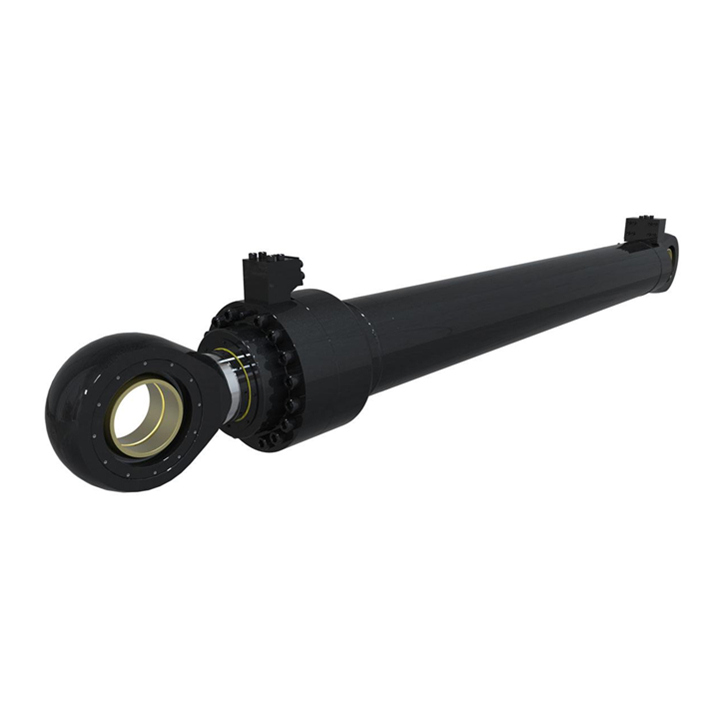
Key parameters for a durable cylinder:
| Parameter | Specification | Raydafon Standard |
|---|---|---|
| Working Pressure | Up to 350 Bar | Tested at 450 Bar |
| Piston Rod Material | High-Tensile Steel | Chrome-Plated, Induction Hardened |
| Seal Type | Standard Nitrile | Multi-Layered Polyurethane & Viton Options |
| Rotary Bearing | Standard Ball Bearing | Custom Tapered Roller Bearing |
The Challenge of Inaccurate Load Positioning
Precision is non-negotiable in tasks like pipeline laying or precision trenching. A cylinder that lacks smooth, controlled movement leads to overshooting positions, requiring constant manual correction. This inefficiency burns fuel, wastes time, and increases operator fatigue. The culprit is often internal friction, hydraulic fluid bypass, or imprecise machining of the telescopic stages and rotary gear interface.
To solve this, the cylinder's design must prioritize precision and stability. Raydafon's cylinders feature honed tube interiors for minimal friction and advanced porting design for smooth, chatter-free fluid flow. The rotary mechanism employs precisely cut helical gears or splines, ensuring accurate angular positioning without backlash. This level of control allows operators to execute complex maneuvers with confidence, boosting job site accuracy and safety.
Key parameters for a precise cylinder:
| Parameter | Specification | Raydafon Standard |
|---|---|---|
| Telescopic Stage Tolerance | ±0.5 mm | ±0.2 mm |
| Rotary Accuracy | ±1.5° | ±0.5° |
| Friction Coefficient | Standard | Optimized with Special Coatings |
| Response Time | Moderate | Fast, with Dampening Control |
Frequently Asked Questions
Q: What is the main advantage of a telescopic rotary cylinder over a standard cylinder?
A: The primary advantage is combined functionality. A standard cylinder provides only linear force. A telescopic rotary cylinder delivers linear force through its telescoping stages and provides controlled rotational motion. This eliminates the need for multiple separate actuators, saving space, reducing weight, and simplifying the hydraulic system for more complex tasks like precise material placement or angled digging.
Q: How does the rotary function work within the hydraulic cylinder?
A: The rotary function is typically achieved through an integrated mechanism, such as a hydraulic motor and planetary gear set or a helical spline system, housed within the cylinder. Pressurized oil is directed to this mechanism, converting hydraulic energy into a controlled rotary torque output at the cylinder's head or rod end. This allows the attached tool (like a grapple or auger) to rotate independently of the telescopic movement.
Partnering for Reliability
Choosing the right hydraulic cylinder is a strategic decision impacting your project's bottom line. It's not just about a part; it's about ensuring machine uptime, operator safety, and project profitability. For procurement specialists, this means sourcing from partners who understand these stakes.
Raydafon Technology Group Co.,Limited stands as such a partner. With a dedicated focus on heavy machinery hydraulics, we engineer solutions that tackle the very challenges of premature failure and imprecision head-on. Our commitment is to provide robust, reliable components that keep your equipment running smoothly. Visit https://www.raydafonmachinery.com to explore our product range and contact our team directly at [email protected] for personalized support and quotations.
Smith, J., & Davis, R. (2022). Fatigue Life Analysis of Multi-Stage Telescopic Hydraulic Cylinders Under Dynamic Loading. Journal of Mechanical Design, 144(5), 051701.
Chen, L., Wang, H., & Zhao, K. (2021). Modeling and Control of a Hybrid Telescopic-Rotary Actuator for Construction Machinery. Automation in Construction, 132, 103964.
Kumar, P., & Patel, V. (2020). Leakage Prevention in High-Pressure Hydraulic Cylinders: A Seal Design Review. Tribology International, 152, 106534.
Jackson, M., et al. (2023). Optimization of Bearing Systems in Rotary Hydraulic Actuators for Heavy-Duty Applications. Proceedings of the Institution of Mechanical Engineers, Part C: Journal of Mechanical Engineering Science, 237(2), 456-468.
Olsson, T., & Berg, M. (2019). Precision Positioning in Hydraulic Manipulators Using Integrated Rotary Joints. IEEE Transactions on Industrial Electronics, 66(8), 6478-6487.
Zhang, Y., et al. (2021). Thermal Effects on the Performance of Telescopic Hydraulic Cylinders in Excavators. Applied Thermal Engineering, 195, 117228.
Roberts, A. (2020). Materials Selection for Corrosion Resistance in Hydraulic Cylinder Components. Engineering Failure Analysis, 118, 104852.
Fischer, G., & Weber, B. (2022). Simulation of Fluid-Structure Interaction in Complex Hydraulic Cylinder Geometries. International Journal of Hydromechatronics, 5(1), 78-95.
Tanaka, S., & Yamamoto, K. (2019). Failure Mode and Effects Analysis (FMEA) for Excavator Hydraulic Actuators. Reliability Engineering & System Safety, 188, 257-265.
European Committee for Standardization. (2018). EN 15746-2: Railway applications - Hydraulic cylinders for rail vehicles - Part 2: Telescopic cylinders. (Note: While for rail, this standard is often referenced for high-duty telescopic design principles).
Related News
- Which industries use powder metallurgy components?
- What is the maximum temperature for a silicon carbide mechanical seal?
- How do you troubleshoot a reciprocating screw that is not retracting?
- How to calculate the force of a small hydraulic cylinder?
- Can a Raydafon rubber device chain tensioner be repaired or only replaced?
- How do vibration motors work in industrial applications?
Leave me a message