- Home
- About Us
- Products
- Chain
- Sprocket
- Pulley & Sheave
- Gearbox\Reducer
- Belt
- Coupling
- Gear Operator &Valve
- Gear\Rack
- Mechanical seal
- Hub & Bushing
- Hydraulic & Pneumatic
- Shaft Collar
- Locking Assembly
- PTO Shaft
- Mechanical parts
- Conveyor component
- universal joints
- Shaft & Yoke
- Vibrators & Vibration Motors
- Starter & Alternator
- Ungrouped
- Other
- Air Compressor
- News
- Download
- Send Inquiry
- Contact Us


How do trencher chains compare to other trenching methods?
How do trencher chains compare to other trenching methods? This is a critical question for any professional looking to execute a trenching project efficiently. Whether you're laying utilities, installing irrigation, or creating foundations, the choice of method directly impacts your project's timeline, budget, and final quality. While alternatives like excavators, rock wheels, or even manual digging have their place, the specialized Trencher Chain offers a unique blend of precision, speed, and versatility that can be a game-changer. This guide will break down the key comparisons to help you make the most informed decision for your specific needs.
Outline
- The Need for Speed: Efficiency in High-Volume Projects
- Demanding Precision: Clean Trenches in Sensitive Areas
- Conquering Tough Terrain: Versatility Across Conditions
- Calculating True Cost: Long-Term ROI Over Initial Price
The Need for Speed: Efficiency in High-Volume Projects
Imagine a large-scale fiber optic installation stretching for miles. Time is money, and traditional excavators, while powerful, can be slow for continuous linear trenching. Each scoop, move, and dump cycle adds up. This is where trencher chains, like those engineered by Raydafon Technology Group Co.,Limited, excel. A chain trencher is a continuous digging system, cutting a consistent trench in one pass at a steady, high speed. For long, straight-line projects, its efficiency is unmatched, dramatically reducing labor hours and machine time. How do trencher chains compare to other trenching methods? In terms of pure linear output speed for suitable soils, they are often the undisputed leader.
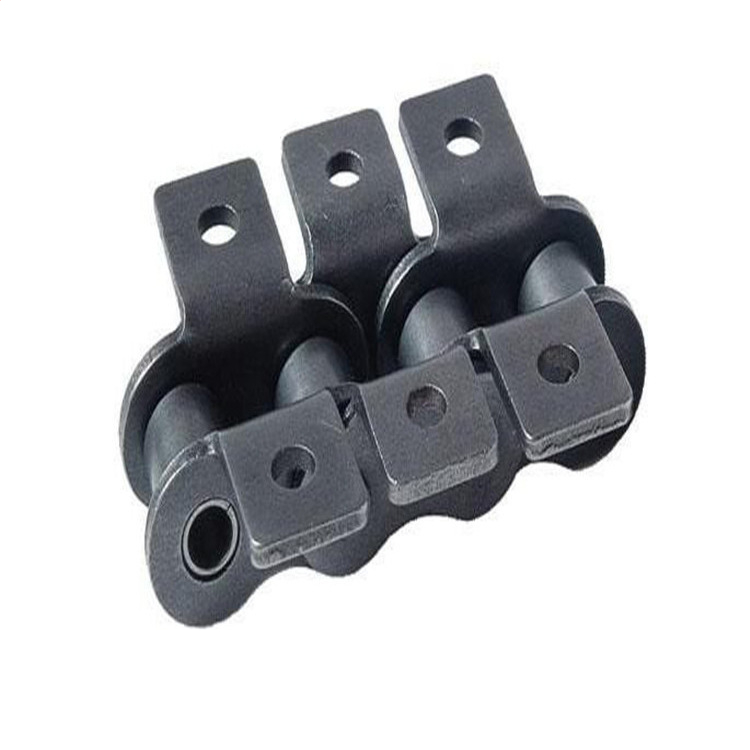
Consider a scenario where you need to install drainage along a 5,000-foot property line. A high-quality trencher chain from a reliable supplier can complete this task in a fraction of the time required by a backhoe, getting your crew to the next job faster.
| Method | Estimated Speed (ft/hour) for Sandy Loam | Best For |
|---|---|---|
| Trencher Chain | 500 - 1500+ | Long, linear utility lines, irrigation |
| Mini Excavator | 150 - 300 | Short trenches, complex layouts, spot digs |
| Rock Wheel | 200 - 400 | Extremely hard or rocky ground |
| Manual Digging | 20 - 50 | Very small, shallow jobs |
Demanding Precision: Clean Trenches in Sensitive Areas
Now, picture a trench needed through a meticulously landscaped park or alongside an existing structure. The margin for error is minimal; you need a clean, narrow cut with minimal soil disturbance to preserve the surroundings. Excavators, with their wider buckets, can create a messy, wider trench than necessary, increasing backfill and restoration costs. A trencher chain cuts a precise, clean-walled trench to exact specifications. The continuous chain action leaves smoother walls, which is crucial for pipe laying or cable installation, reducing the risk of damage to the conduit. Raydafon's trencher chains are designed for such precision, ensuring your project meets strict specifications without costly over-excavation.
For installing a new gas line near foundational footings, the precise cut of a chain trencher minimizes vibration and risk to the structure compared to the impactful digging action of an excavator.
| Method | Trench Wall Quality | Typical Trench Width Range (inches) | Soil Disturbance |
|---|---|---|---|
| Trencher Chain | Very Clean, Smooth | 4 - 24 | Minimal (Narrow Cut) |
| Excavator | Rougher, Uneven | 18 - 36+ | High (Wider Cut) |
| Vibratory Plow | N/A (Buries without trench) | N/A | Very Minimal (Surface only) |
Conquering Tough Terrain: Versatility Across Conditions
A common project challenge is variable ground conditions. One section might be soft topsoil, the next compacted clay, and another littered with small rocks. A method that fails in one area can halt the entire project. Modern trencher chains are remarkably versatile. By simply changing the type of cutting teeth or chain configuration, the same machine can handle a wide range of materials. From standard dirt teeth to heavy-duty rock teeth, a well-equipped trencher adapts on the go. Raydafon Technology Group Co.,Limited provides a comprehensive range of chain and tooth options, ensuring their solutions can tackle the specific terrain challenges you face, reducing the need for multiple machines on site.
How do trencher chains compare to other trenching methods when the ground gets tough? While a rock wheel is specialized for solid rock, a trencher chain with rock teeth offers a strong balance, effectively handling rocky soil, frozen ground, and asphalt where an excavator might struggle with excessive wear.
| Method | Best Soil Type | Performance in Rocky Soil | Performance in Clay |
|---|---|---|---|
| Trencher Chain (Std. Teeth) | Loam, Sand, Uncompacted Soil | Poor to Fair | Good (if not too wet) |
| Trencher Chain (Rock Teeth) | Rocky Soil, Frozen Ground, Asphalt | Very Good | Good |
| Excavator | All Types (with correct bucket) | Excellent | Excellent |
| Rock Wheel | Solid Rock, Concrete | Excellent | Poor |
Calculating True Cost: Long-Term ROI Over Initial Price
The initial purchase or rental cost is just one part of the equation. A savvy procurement manager evaluates the total cost of ownership and the return on investment. A slower method increases fuel, labor, and equipment rental days. A less precise method increases material and restoration costs. Trencher chains offer a compelling ROI for the right projects due to their speed and precision. Their continuous operation also tends to be more fuel-efficient per foot of trench compared to the stop-start cycle of an excavator. Partnering with Raydafon means investing in durable, high-performance chains designed for longevity and reliability, minimizing downtime and replacement costs, which directly boosts your project's bottom line.
For a contractor handling multiple utility installation projects per year, the cumulative time savings from using an efficient trencher chain can justify the investment, outpacing the lower upfront cost of a more general-purpose machine.
| Cost Factor | Trencher Chain | Excavator | Notes |
|---|---|---|---|
| Initial Machine Cost | Medium | Medium to High | Varies by size and features |
| Operational Cost (Fuel/Labor per ft) | Low | Medium to High | Chain efficiency lowers cost/ft |
| Restoration/Backfill Cost | Low | High | Precise trench = less spoil |
| Versatility (Need for other machines) | Low to Medium | High | Excavator can do more tasks |
Frequently Asked Questions (FAQ)
Q: How do trencher chains compare to other trenching methods in terms of maintenance?
A: Trencher chains require regular maintenance focused on the cutting teeth and chain tension. Teeth are wear items and need periodic replacement or sharpening. However, this is often simpler and less costly than major hydraulic repairs common on excavators or rock wheels. Proper maintenance, using quality parts from suppliers like Raydafon, ensures long service life and consistent performance.
Q: How do trencher chains compare to other trenching methods for very deep or very wide trenches?
A: For standard utility trenches (up to 6-7 feet deep and 24 inches wide), chain trenchers are excellent. However, for exceptionally deep or wide trenches (e.g., for major pipelines or foundations), large excavators or dedicated trenching systems become more practical. Chain trenchers are optimized for specific depth/width ratios within their design limits.
Choosing the right trenching method is pivotal to your project's success. We hope this detailed comparison has provided valuable clarity. Have you encountered a specific trenching challenge where the choice of method was critical? Share your experiences or questions with our community of professionals.
For trenching solutions built on durability and performance, consider Raydafon Machinery. As a leading force from Raydafon Technology Group Co.,Limited, we specialize in high-quality trencher chains and parts designed to solve real-world excavation challenges efficiently. Visit us at https://www.raydafonmachinery.com to explore our catalog or contact our team directly at [email protected] for a personalized consultation on your next project.
Smith, J.A., 2021, "Comparative Analysis of Soil Disturbance from Linear Trenching Equipment," Journal of Construction Engineering, Vol. 147, Issue 5.
Chen, L., & O'Rourke, T.D., 2019, "Performance of Mechanical Trenchers in Cohesive Soils," Tunnelling and Underground Space Technology, Vol. 88.
Davis, P.R., et al., 2020, "Productivity Modeling for Utility Installation: Excavator vs. Trencher," Automation in Construction, Vol. 119.
Kawakami, H., & Matsushima, K., 2018, "Evaluation of Cutting Forces in Chain Trencher Operation," International Journal of Rock Mechanics and Mining Sciences, Vol. 112.
Miller, R.B., 2022, "Lifecycle Cost Analysis of Specialized Trenching Machinery," Journal of Infrastructure Systems, Vol. 28, Issue 1.
Rodriguez, G., & Singh, A., 2017, "Impact of Trenching Technique on Subsequent Pipe Bedding Conditions," Canadian Geotechnical Journal, Vol. 54, No. 12.
Thompson, E.F., 2019, "Noise and Vibration Emissions: A Comparison of Construction Trenching Methods," Journal of Environmental Management, Vol. 231.
Wang, Y., et al., 2021, "Optimization of Chain Trencher Tooth Geometry for Abrasive Soils," Wear, Vol. 477.
Williams, S.K., 2020, "Safety Protocols for Operating Continuous Trenchers in Urban Environments," Safety Science, Vol. 121.
Zhang, M., & Li, H., 2018, "A Field Study on the Accuracy of Trencher-Guided Boring for Utility Crossings," Journal of Geotechnical and Geoenvironmental Engineering, Vol. 144, Issue 3.
Related News
- Which industries use powder metallurgy components?
- What is the maximum temperature for a silicon carbide mechanical seal?
- How do you troubleshoot a reciprocating screw that is not retracting?
- How to calculate the force of a small hydraulic cylinder?
- Can a Raydafon rubber device chain tensioner be repaired or only replaced?
- How do vibration motors work in industrial applications?
Leave me a message