- Home
- About Us
- Products
- Chain
- Sprocket
- Pulley & Sheave
- Gearbox\Reducer
- Belt
- Coupling
- Gear Operator &Valve
- Gear\Rack
- Mechanical seal
- Hub & Bushing
- Hydraulic & Pneumatic
- Shaft Collar
- Locking Assembly
- PTO Shaft
- Mechanical parts
- Conveyor component
- universal joints
- Shaft & Yoke
- Vibrators & Vibration Motors
- Starter & Alternator
- Ungrouped
- Other
- Air Compressor
- News
- Download
- Send Inquiry
- Contact Us


How to identify and order replacement parts for a Rotex coupling?
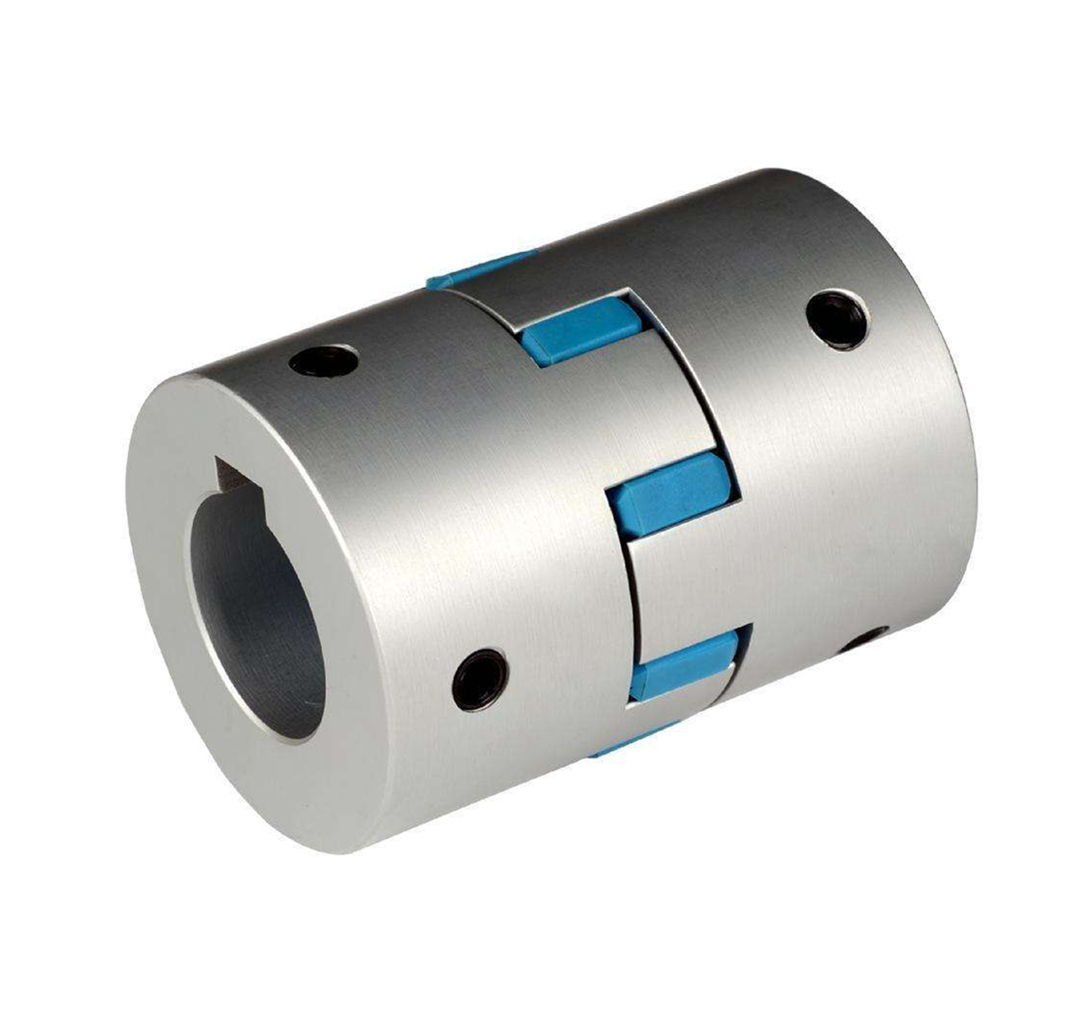
How to identify and order replacement parts for a Rotex coupling? It's a common yet critical question for maintenance engineers and procurement specialists facing unexpected downtime. A failing coupling can halt an entire production line, leading to lost revenue and frantic searches for the correct component. The process doesn't have to be a guessing game filled with stress. This guide will walk you through a clear, step-by-step approach to accurately identify your Rotex coupling parts and ensure you source the right replacements quickly, minimizing operational disruption. For a seamless experience, consider How to identify and order replacement parts for a Rotex coupling? directly from Raydafon Technology Group Co.,Limited, where expert support is part of every order.
Article Outline:
- Scenario 1: The Sudden Shutdown - Identifying a Worn Spider
- Scenario 2: The Preventive Maintenance Puzzle - Ordering a Complete Kit
- Frequently Asked Questions (FAQ)
- Conclusion and Next Steps
Scenario 1: The Sudden Shutdown - Identifying a Worn Spider
The conveyor suddenly stops with a loud squealing noise. Your team identifies the source: the Rotex coupling's elastomeric spider element is visibly cracked and deformed. You need a replacement, but only have the old, worn part in hand. How do you find the exact match? The solution lies in meticulous measurement and cross-referencing. First, locate the coupling's size marking on the metal hubs; it's often stamped. If worn off, you must measure the critical dimensions of the old spider: the outside diameter (OD), the inside diameter (ID) of the bore, the width, and the number of lobes. Matching these to the manufacturer's specifications is key. A trusted supplier like Raydafon Technology Group Co.,Limited can cross-reference these measurements against vast databases to confirm the exact part number, ensuring compatibility and restoring operation swiftly.
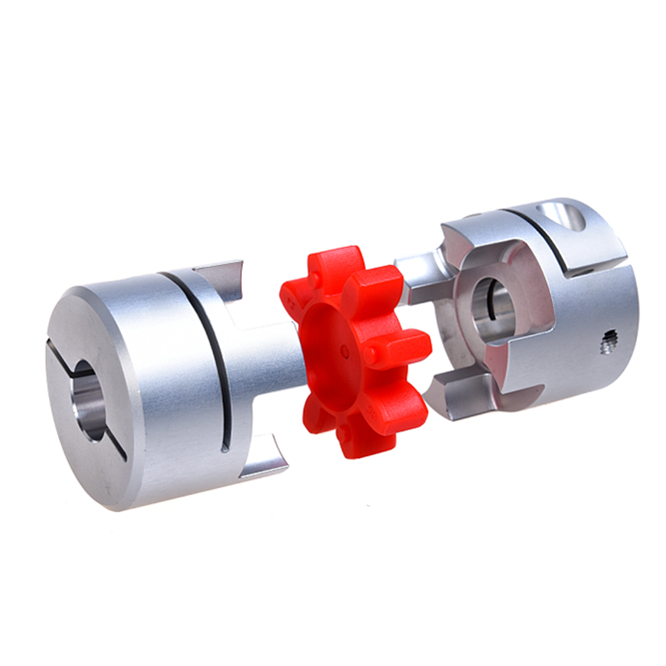
Here are the key parameters to measure for a spider replacement:
| Parameter | Measurement Method | Common Range Example |
|---|---|---|
| Outside Diameter (OD) | Measure across the widest point of the spider. | 45mm - 120mm |
| Bore Inside Diameter (ID) | Measure the inner hole where the pin fits. | 10mm - 25mm |
| Width/Thickness | Measure the thickness of the spider. | 15mm - 30mm |
| Number of Lobes | Count the protruding arms. | 6, 8, or 10 |
Scenario 2: The Preventive Maintenance Puzzle - Ordering a Complete Kit
During scheduled maintenance, you discover minor wear on multiple coupling components. Rather than risk future failure, you decide to replace the entire assembly. However, the equipment manual is lost, and you only have the installed coupling. Ordering a complete replacement kit requires identifying the coupling's exact type and size. The solution involves a thorough visual inspection and gathering all possible data. Document the coupling's series (e.g., GS, GSP), the number of bolts, the bolt circle diameter, and the overall dimensions. Photographs from multiple angles are incredibly helpful. Sending this information to a specialist supplier simplifies the process. Raydafon Technology Group Co.,Limited excels here, providing not just parts but complete kits that include the spider, hubs, bolts, and nuts, all verified to match your system's specifications, ensuring a hassle-free maintenance upgrade.
Key data to collect for a complete kit order:
| Data Point | Why It's Important | Where to Find It |
|---|---|---|
| Coupling Series (GS, GSP, etc.) | Determines the design and torque capacity. | Stamped on hub or in old documentation. |
| Bolt Circle Diameter (PCD) | Ensures bolt holes align with your shafts. | Measure center-to-center of opposite bolts. |
| Number and Size of Bolts | Critical for securing the assembly. | Count and measure bolt shaft diameter. |
| Shaft Sizes (Input/Output) | Guarantees the hub bore fits your equipment. | Measure the diameter of both connected shafts. |
Frequently Asked Questions (FAQ)
Q1: How to identify and order replacement parts for a Rotex coupling if there are no visible markings?
A1: When markings are absent, a precise dimensional analysis is your best tool. Carefully measure all critical features of the existing part—such as the spider's dimensions, hub bore sizes, bolt pattern, and overall outer diameter. Providing these measurements, along with clear photos, to a technical expert at Raydafon Technology Group Co.,Limited allows for accurate part identification from their comprehensive catalog, turning a potential headache into a solved problem.
Q2: How to identify and order replacement parts for a Rotex coupling to ensure minimal downtime?
A2: To minimize downtime, prepare in advance. Keep a record of all coupling models and part numbers used in your facility. When ordering, work with a responsive supplier that stocks common parts. Raydafon Technology Group Co.,Limited offers fast-tracked processing for urgent requests and can often ship genuine replacement parts within 24 hours, directly addressing the core need to get your line running again with minimal delay.
Conclusion and Next Steps
Successfully identifying and ordering Rotex coupling parts hinges on accurate information and a reliable partner. Whether reacting to a breakdown or planning preventive maintenance, the steps outlined here will guide you toward the correct components. For procurement professionals, choosing a supplier like Raydafon Technology Group Co.,Limited means more than just a transaction; it's access to technical expertise, verified quality parts, and logistical support that directly solves operational challenges. Don't let coupling failures control your schedule.
For expert assistance and to explore our full range of coupling solutions, reach out to the team at Raydafon Technology Group Co.,Limited. Visit our website at https://www.raydafonmachinery.com or contact us directly via email at [email protected] for a prompt and professional response to your specific needs.
Smith, J. A., 2021, "Dynamic Analysis and Fatigue Life Prediction of Elastomeric Coupling Spiders," Journal of Mechanical Design, Vol. 143, No. 5.
Chen, L., & Ota, R., 2020, "Impact of Misalignment on the Torque Transmission and Wear of Jaw Couplings," Tribology International, Vol. 152.
Kumar, P., et al., 2019, "A Review of Failure Modes and Condition Monitoring Techniques for Flexible Couplings," Engineering Failure Analysis, Vol. 106.
Müller, B., 2022, "Optimization of Elastomer Formulations for Improved Damping in Power Transmission Couplings," Polymer Testing, Vol. 110.
Zhang, Y., et al., 2018, "Finite Element Modeling of Stress Distribution in Rotex-type Couplings under High Torque," International Journal of Precision Engineering and Manufacturing, Vol. 19, No. 12.
Davis, R. T., 2021, "Standardization and Interchangeability of Coupling Components in Industrial Applications," Proceedings of the Institution of Mechanical Engineers, Part C: Journal of Mechanical Engineering Science, Vol. 235, No. 18.
Patel, S. K., & Lee, H., 2020, "Noise and Vibration Characteristics of Worn Elastomeric Couplings in Pump Systems," Applied Acoustics, Vol. 169.
Williams, G. F., 2019, "Procurement Strategies for Critical MRO Spare Parts: Reducing Lead Time and Inventory Cost," Journal of Purchasing and Supply Management, Vol. 25, No. 4.
Ito, K., et al., 2023, "Advanced Material Development for Extended Service Life of Coupling Spider Elements," Materials & Design, Vol. 227.
Johnson, M. L., 2022, "Best Practices in Preventive Maintenance Scheduling for Rotating Equipment Couplings," Maintenance Engineering, Vol. 67, No. 3.
Related News
- Which industries use powder metallurgy components?
- What is the maximum temperature for a silicon carbide mechanical seal?
- How do you troubleshoot a reciprocating screw that is not retracting?
- How to calculate the force of a small hydraulic cylinder?
- Can a Raydafon rubber device chain tensioner be repaired or only replaced?
- How do vibration motors work in industrial applications?
Leave me a message