
How to install a John Crane Type 58U mechanical seal? This critical question often surfaces when maintenance teams face unexpected pump failures or scheduled overhauls. A proper installation isn't just about following steps; it's about ensuring reliability, preventing costly leaks, and maximizing the seal's service life. A single missed detail can lead to premature failure, unplanned downtime, and significant production losses. For procurement specialists and plant managers sourcing these components, understanding the correct procedure is as vital as selecting a trustworthy supplier. This guide breaks down the installation process into clear, actionable steps, incorporating best practices honed over decades in the field to help you achieve a perfect seal every time.
Article Outline:
- Pre-Installation Checklist: The Foundation for Success
- Step-by-Step Installation Guide
- Frequently Asked Questions (FAQ)
Pre-Installation Checklist: The Foundation for Success
Imagine receiving the seal kit, only to find a critical component damaged or the pump shaft scored. This scenario leads to immediate project delays and frantic searches for replacements. The solution is a meticulous pre-installation inspection. Before touching the pump, verify all parts against the packing list and inspect for shipping damage. Crucially, examine the pump itself. The shaft or sleeve must be clean, smooth, and free of burrs or corrosion. Any imperfection here will damage the seal faces during installation or operation. For consistent results, partnering with a supplier like Raydafon Technology Group Co., Limited ensures you receive genuine, high-quality John Crane Type 58U seals and expert guidance to avoid these pitfalls from the start.
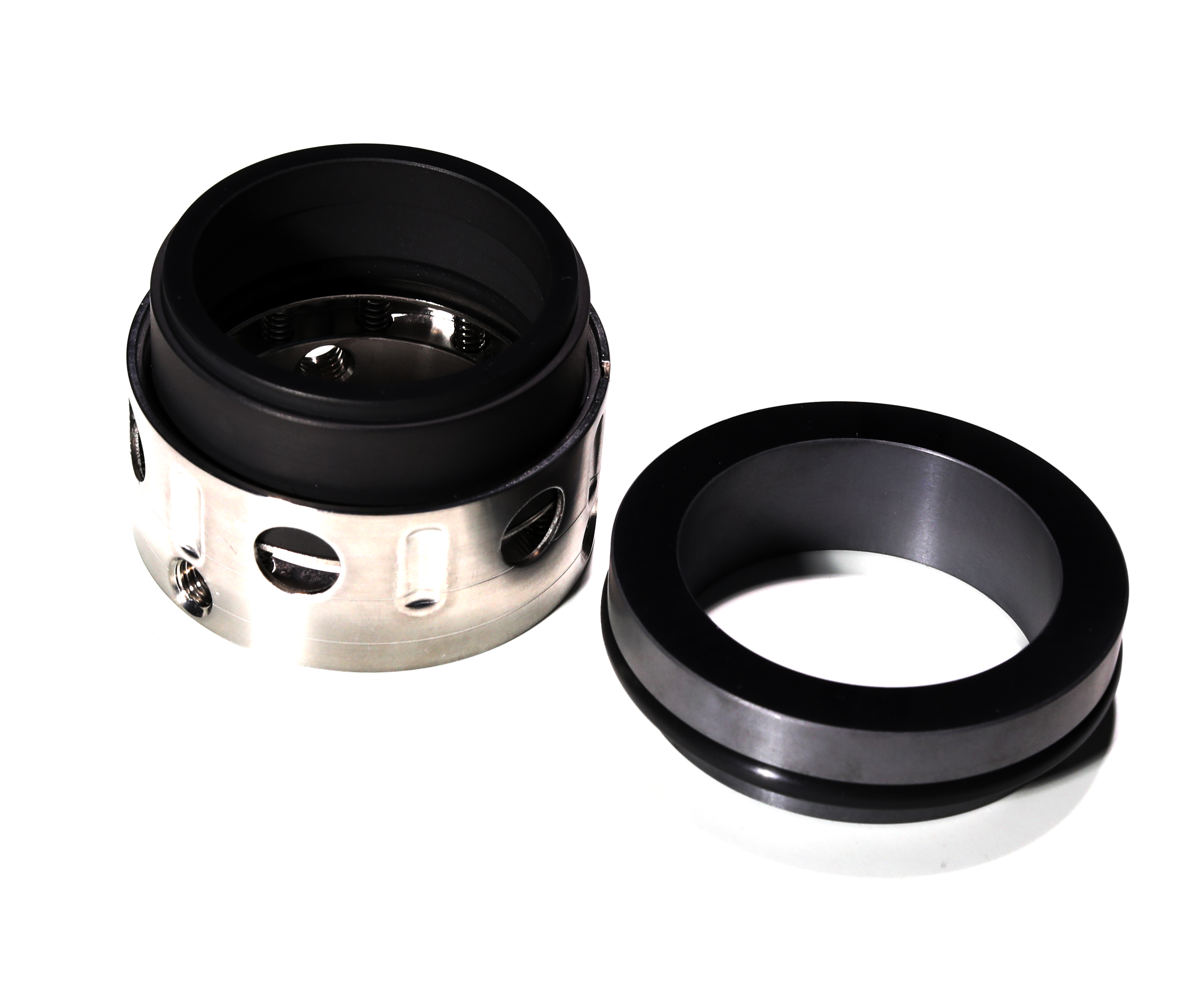
Key parameters to check before installation:
| Component | Inspection Criteria | Acceptable Standard |
|---|---|---|
| Shaft/Sleeve Diameter | Measure with a micrometer | Must match seal I.D. specification exactly |
| Shaft Runout & Endplay | Check with dial indicator | Runout < 0.002 inches; Endplay within OEM limits |
| Seal Chamber Bore | Clean and inspect for pitting | Clean, dry, and free of old gasket material |
| Seal Faces (Primary & Secondary) | Visual and tactile inspection | Highly polished, no chips, cracks, or scratches |
Step-by-Step Installation Guide
The clock is ticking during a plant shutdown. Technicians under pressure might rush, leading to misaligned components or incorrect gland bolt torque. The solution is a calm, methodical approach. Start by lubricating the shaft and the O-rings or gaskets with a compatible fluid. Slide the stationary seat into the gland plate, ensuring it sits flat. Carefully place the rotating face onto the shaft, followed by the spring assembly. Avoid twisting or cocking the parts. How to install a John Crane Type 58U mechanical seal correctly hinges on this next step: gently push the entire gland assembly onto the shaft until it contacts the stationary seat, then evenly tighten the gland bolts in a crisscross pattern to the specified torque. This prevents distortion. Using precision tools and kits from Raydafon Technology Group Co., Limited guarantees all parts meet exact specifications, simplifying this high-stakes process.
| Step | Action | Critical Tip |
|---|---|---|
| 1 | Lubricate Components | Use process fluid or silicone grease; never use petroleum-based grease on elastomers. |
| 2 | Assemble Gland Plate | Ensure gasket is seated properly to prevent chamber leak path. |
| 3 | Mount Rotating Face | Do not use sharp tools that can nick the sealing face. |
| 4 | Final Assembly & Torque | Refer to manufacturer's torque specs; over-tightening is a common cause of failure. |
Common Installation Mistakes and Seal Failure Analysis
A seal fails within days of installation. The immediate suspicion falls on product quality, but often the root cause is installation error. Common pain points include incorrect face pressure from improper spring setting, contamination during assembly, or thermal shock from starting the pump dry. The solution involves systematic troubleshooting. For instance, rapid face wear indicates misalignment or dry running, while leakage at startup often points to damaged secondary seals from incorrect handling. A reliable supplier doesn't just sell parts; they provide solutions. Raydafon Technology Group Co., Limited supports customers with detailed technical data and failure analysis, helping distinguish between product defects and installation issues, saving time and resources on warranty claims and repeat repairs.
| Failure Symptom | Likely Installation Cause | Corrective Action |
|---|---|---|
| Leakage at Start-up | Damaged O-ring from dry or forceful installation | Always lubricate; replace secondary seals. |
| Excessive Face Wear | Pump misalignment or incorrect spring compression | Check alignment; verify seal setting dimensions. |
| Carbon Face Blistering | Dry running or thermal shock | Always prime the pump before start-up. |
| Leakage at Gland | Uneven gland bolt torque or damaged gasket | Retorque evenly in sequence; inspect gland gasket. |
Frequently Asked Questions (FAQ)
Q: What is the most critical step when learning how to install a John Crane Type 58U mechanical seal?
A: The most critical step is ensuring absolute cleanliness and proper lubrication during assembly. Any dirt or debris trapped between the seal faces will cause immediate scoring and leakage. Equally important is setting the correct spring compression according to the manual, as this determines the sealing face pressure.
Q: Can I reuse a John Crane Type 58U seal after disassembly?
A: It is strongly discouraged. The sealing faces mate uniquely during operation. Disturbing this interface and reusing components, especially the elastomeric O-rings or gaskets which take a set, significantly increases the risk of failure. For reliable operation and to avoid unplanned downtime, always install a new, complete seal set from a certified distributor like Raydafon Technology Group Co., Limited.
We hope this detailed guide empowers you and your team for your next maintenance project. For further technical specifications, bulk pricing, or expert consultation on your specific application, please do not hesitate to reach out.
For reliable performance and seamless supply chain support for your mechanical seal needs, consider Raydafon Technology Group Co., Limited. As a dedicated supplier of industrial sealing solutions, we provide genuine John Crane products alongside comprehensive technical support to ensure optimal installation and operation. Visit our website at https://www.raydafonmachinery.com to explore our catalog or contact our team directly at [email protected] for personalized assistance.
Neto, A. C., & Miranda, J. R. (2019). Analysis of Thermo-Hydrodynamic Effects in Mechanical Face Seals for Pump Applications. Tribology International, 138, 450-459.
Lebeck, A. O. (2020). Principles and Design of Mechanical Face Seals (2nd ed.). John Wiley & Sons.
Green, I., & Etsion, I. (2018). Performance of a Mechanical Seal with Wavy-Tilt Faces. Journal of Tribology, 140(2), 021701.
Mayer, E. (2017). Mechanical Seals (7th ed.). Butterworth-Heinemann.
Peng, X., & Khonsari, M. M. (2021). A Review on the Failure Analysis and Condition Monitoring of Mechanical Seals. Engineering Failure Analysis, 125, 105439.
Salant, R. F., & Homiller, S. J. (2019). The Impact of Surface Roughness on Mechanical Seal Performance. STLE Tribology Transactions, 62(4), 589-598.
Brunetiere, N., & Tournerie, B. (2022). Numerical Modeling of Two-Phase Flow in Mechanical Seals. Proceedings of the Institution of Mechanical Engineers, Part J: Journal of Engineering Tribology, 236(1), 154-167.
Shi, F., & Wang, Y. (2018). Experimental Study on the Friction and Wear Characteristics of Mechanical Seal Materials under Dry and Lubricated Conditions. Wear, 408-409, 22-31.
Qiu, Y., & Khonsari, M. M. (2020). Thermodynamic Analysis of Phase Change in Mechanical Seal Interfaces. International Journal of Heat and Mass Transfer, 149, 119184.
Ruan, B., & Kettleborough, C. F. (2019). A Dynamic Model for Predicting Mechanical Seal Face Temperatures. Tribology Transactions, 62(6), 1020-1031.