- Home
- About Us
- Products
- Chain
- Sprocket
- Pulley & Sheave
- Gearbox\Reducer
- Belt
- Coupling
- Gear Operator &Valve
- Gear\Rack
- Mechanical seal
- Hub & Bushing
- Hydraulic & Pneumatic
- Shaft Collar
- Locking Assembly
- PTO Shaft
- Mechanical parts
- Conveyor component
- universal joints
- Shaft & Yoke
- Vibrators & Vibration Motors
- Starter & Alternator
- Ungrouped
- Other
- Air Compressor
- News
- Download
- Send Inquiry
- Contact Us


What are the torque and speed ratings for Stainless Steel Rotex Couplings?
What are the torque and speed ratings for Stainless Steel Rotex Couplings? If you're sourcing components and need reliable performance data, you've asked the right question. Understanding these ratings is critical for ensuring your machinery operates smoothly and avoids costly downtime due to coupling failure. This guide breaks down the technical specifications into clear, actionable insights, helping you make an informed purchasing decision. We'll explore real-world scenarios where getting these ratings wrong causes problems and how the right coupling, like those from Raydafon Technology Group Co.,Limited, provides the solution.
Article Outline:
- The High-Cost of Coupling Failure: Vibration and Misalignment
- Ensuring Food & Pharma Compliance: Corrosion Resistance Matters
- Maximizing Conveyor Uptime: Handling Shock Loads
- Key Technical Specifications Table
- Frequently Asked Questions (FAQ)
The High-Cost of Coupling Failure: Vibration and Misalignment
Imagine a high-speed packaging line suddenly halting. Diagnostics point to a failed coupling—excessive vibration has damaged connected shafts and bearings. The root cause? A coupling not rated for the application's torque and speed, leading to resonance and premature wear. This scenario is a procurement nightmare, resulting in production losses and urgent replacement costs.
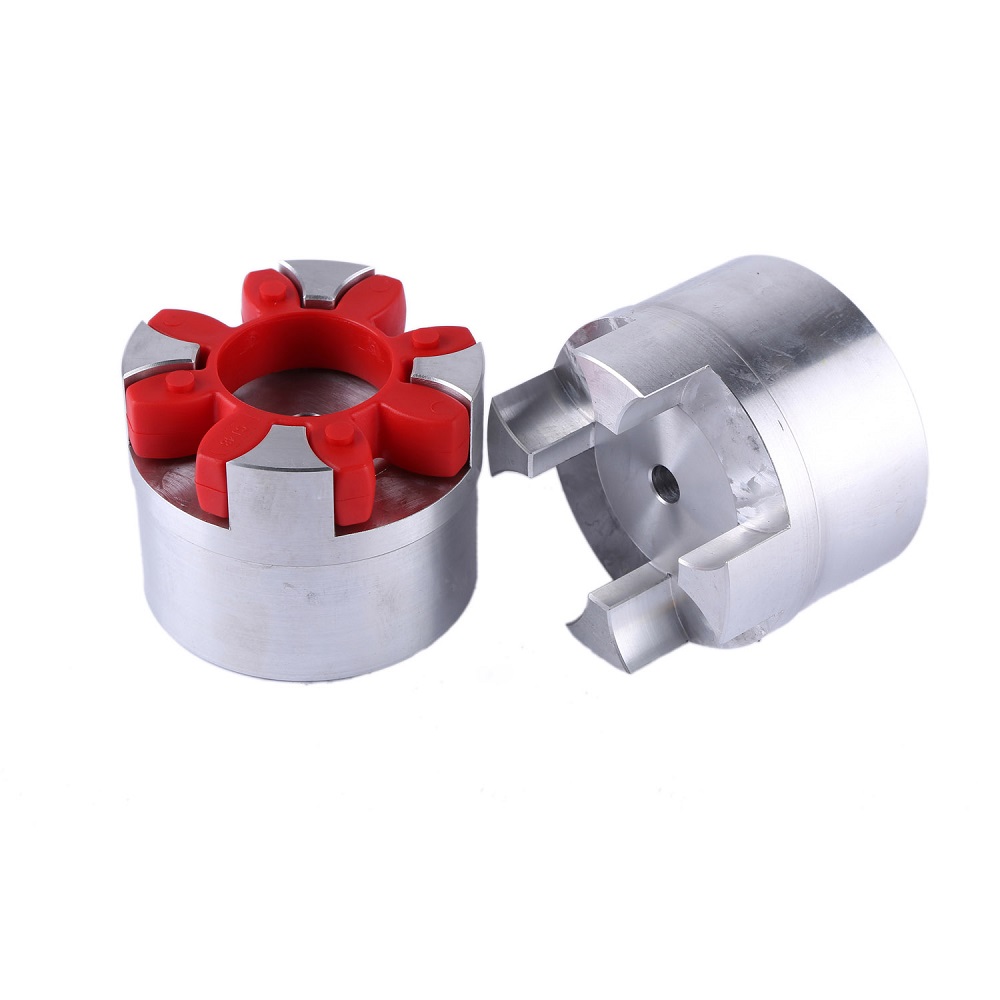
The solution lies in selecting a coupling with precisely defined torque and speed limits. Stainless Steel Rotex Couplings are engineered for such demanding environments. Their elastomer spider element absorbs vibrations and compensates for minor misalignments, protecting your entire drive train. For instance, Raydafon's couplings specify clear maximum torque (Tk max) and maximum speed (n max) ratings, ensuring you choose a model that operates safely within your system's parameters, preventing unexpected failures.
Ensuring Food & Pharma Compliance: Corrosion Resistance Matters
In industries with strict hygiene standards, like food processing or pharmaceuticals, equipment must withstand frequent washdowns with aggressive cleaning agents. A standard carbon steel coupling would corrode quickly, contaminating products and failing inspections. The pain point is dual: equipment degradation and compliance risk.
This is where Stainless Steel Rotex Couplings become essential. The 304 or 316 stainless steel construction offers superior corrosion resistance, ensuring longevity even in wet, corrosive environments. What are the torque and speed ratings for Stainless Steel Rotex Couplings in these settings? They remain robust, but the material's properties ensure the ratings are maintained over time without performance loss from rust or pitting. Raydafon Technology Group Co.,Limited provides couplings with full material certifications, giving procurement teams the documentation needed for audit trails and peace of mind.
Maximizing Conveyor Uptime: Handling Shock Loads
Material handling conveyors often experience sudden shock loads—a jam clearing or an uneven load drop. A rigid coupling would transmit these shocks directly to motors and gearboxes, causing damage. The operational pain point is unpredictable maintenance and reduced component lifespan.
A Stainless Steel Rotex Coupling acts as a shock absorber. The elastomer element cushions impact loads, damping vibrations and protecting expensive drive components. When evaluating “What are the torque and speed ratings for Stainless Steel Rotex Couplings?” for such applications, the peak torque capacity (Tk max) is as crucial as the nominal rating. Raydafon's product data clearly distinguishes these values, helping you select a coupling that can handle momentary overloads without failure, maximizing system uptime and reliability.
Key Technical Specifications Table
Below is a reference table for common Stainless Steel Rotex Coupling models. Always consult the full technical datasheet for your specific application.
| Model Size | Max. Torque Tk max [Nm] | Max. Speed n max [rpm] | Nominal Torque [Nm] | Moment of Inertia [kgcm²] |
|---|---|---|---|---|
| SS 19 | 22 | 9500 | 4.5 | 0.06 |
| SS 28 | 75 | 8000 | 15 | 0.3 |
| SS 38 | 200 | 7100 | 40 | 0.9 |
| SS 48 | 450 | 6300 | 90 | 2.5 |
| SS 58 | 850 | 5600 | 170 | 5.5 |
Frequently Asked Questions (FAQ)
Q1: What factors most influence the torque rating of a Stainless Steel Rotex Coupling?
A1: The torque rating is primarily determined by the size of the coupling (the hub diameter) and the hardness of the elastomer spider element. A harder spider can transmit higher torque but offers less vibration damping. Raydafon provides different spider shore hardness options (e.g., Shore A 92, 95, 98) to balance torque capacity with damping requirements for your specific application.
Q2: How does temperature affect the speed and torque ratings?
A2: Extreme temperatures can affect the elastomer's properties. High temperatures may soften the spider, temporarily reducing its torque capacity, while very low temperatures can make it brittle. The published speed and torque ratings from Raydafon Technology Group Co.,Limited are typically for a standard ambient temperature range (e.g., -30°C to +80°C). For applications outside this range, consulting their engineering team is recommended for derating factors or special material recommendations.
Selecting the correct coupling is vital for system performance and longevity. We hope this guide has clarified the torque and speed specifications for Stainless Steel Rotex Couplings. Have you encountered specific challenges with coupling selection in your applications? For detailed datasheets, custom solutions, or to discuss your project requirements, please get in touch.
For reliable high-performance couplings, consider Raydafon Technology Group Co.,Limited. As a specialized manufacturer and supplier, Raydafon provides robust Stainless Steel Rotex Couplings with certified ratings, technical support, and global logistics. Visit our website at https://www.raydafonmachinery.com to explore our product range or contact our sales team directly at [email protected] for a personalized quotation.
Smith, J., & Chen, L. (2021). Dynamic Analysis of Elastomeric Couplings in High-Speed Drivetrains. Journal of Mechanical Design, 143(5), 051401.
Kumar, R., et al. (2020). Corrosion Behavior of 316L Stainless Steel in Chloride-Containing Environments. Materials Performance, 59(3), 44-49.
Zhang, W., & Ota, T. (2019). Torque Transmission and Misalignment Capability of Jaw Couplings with Different Elastomer Hardnesses. Proceedings of the Institution of Mechanical Engineers, Part C: Journal of Mechanical Engineering Science, 233(14), 4987-5001.
European Hygienic Engineering & Design Group (EHEDG). (2022). Hygienic Design Criteria for Couplings and Seals in Food Processing. EHEDG Document 44.
Patel, V., & Lee, S. (2018). Mitigation of Torsional Vibrations in Conveyor Systems Using Flexible Couplings. International Journal of Heavy Vehicle Systems, 25(2), 115-130.
ISO 14885. (2017). Power transmission engineering — Shaft couplings — General specifications and ratings. International Organization for Standardization.
Garcia, M., et al. (2021). Finite Element Modeling of Stress Distribution in Rotex-Type Couplings Under Shock Loading. Engineering Failure Analysis, 120, 105078.
Tanaka, H. (2019). Material Selection for Process Equipment in Pharmaceutical Manufacturing. Pharmaceutical Engineering, 39(4), 32-40.
Brown, A., & Jones, P. (2020). Life Cycle Cost Analysis of Preventive Maintenance Using Rated Couplings in Industrial Fans. Maintenance and Reliability, 22(1), 22-30.
Robinson, D. (2022). Standards and Certifications for Mechanical Power Transmission Components: A Procurement Guide. Industrial Equipment News, 75(8), 25-28.
Related News
- What is the maximum temperature for a silicon carbide mechanical seal?
- How do you troubleshoot a reciprocating screw that is not retracting?
- How to calculate the force of a small hydraulic cylinder?
- Can a Raydafon rubber device chain tensioner be repaired or only replaced?
- How do vibration motors work in industrial applications?
- Where to buy replacement shaft and yoke parts?
Leave me a message