- Home
- About Us
- Products
- Chain
- Sprocket
- Pulley & Sheave
- Gearbox\Reducer
- Belt
- Coupling
- Gear Operator &Valve
- Gear\Rack
- Mechanical seal
- Hub & Bushing
- Hydraulic & Pneumatic
- Shaft Collar
- Locking Assembly
- PTO Shaft
- Mechanical parts
- Conveyor component
- universal joints
- Shaft & Yoke
- Vibrators & Vibration Motors
- Starter & Alternator
- Ungrouped
- Other
- Air Compressor
- News
- Download
- Send Inquiry
- Contact Us


What are the energy efficiency ratings for driveline motors in irrigation?
What are the energy efficiency ratings for driveline motors in irrigation? This is a critical question for every farm manager and procurement specialist looking to optimize operational costs and sustainability. The efficiency of these motors directly impacts energy consumption, water delivery consistency, and the bottom line. With tightening environmental regulations and rising energy prices, selecting the right motor is no longer just about upfront cost. For 20 years, we at Raydafon Technology Group Co., Limited have seen this challenge firsthand. The right energy efficiency rating isn't just a number; it's a gateway to significant savings and reliable, season-long performance. This guide will break down the complexities of driveline motor ratings, translating technical jargon into actionable procurement insights.
Article Outline:
- Understanding the Ratings: More Than Just a Label
- Calculating Your Potential Savings: A Real-World Scenario
- How to Select the Right Motor for Your System
Understanding the Ratings: More Than Just a Label
You're reviewing supplier catalogs, and every motor claims to be "high-efficiency." But what does that truly mean for your pivot or lateral move irrigation system? The core metric is the International Efficiency (IE) classification—IE1, IE2, IE3, IE4, and the emerging IE5. An IE3 motor, for example, can be 2-4% more efficient than a standard IE2 model. Over thousands of operating hours, this gap translates into substantial wasted electricity and money. The lower efficiency often correlates with higher heat generation, leading to more frequent maintenance and potential downtime during critical irrigation windows. This is where the technical specification meets the farm's reality.
Raydafon's solution focuses on delivering IE3 and IE4 premium efficiency motors as standard, engineered specifically for the demanding start-stop cycles and variable load conditions of irrigation. We ensure the efficiency rating is achieved under real operating conditions, not just in a lab. For instance, our motors incorporate optimized cooling designs and high-grade steel laminations to minimize energy losses.
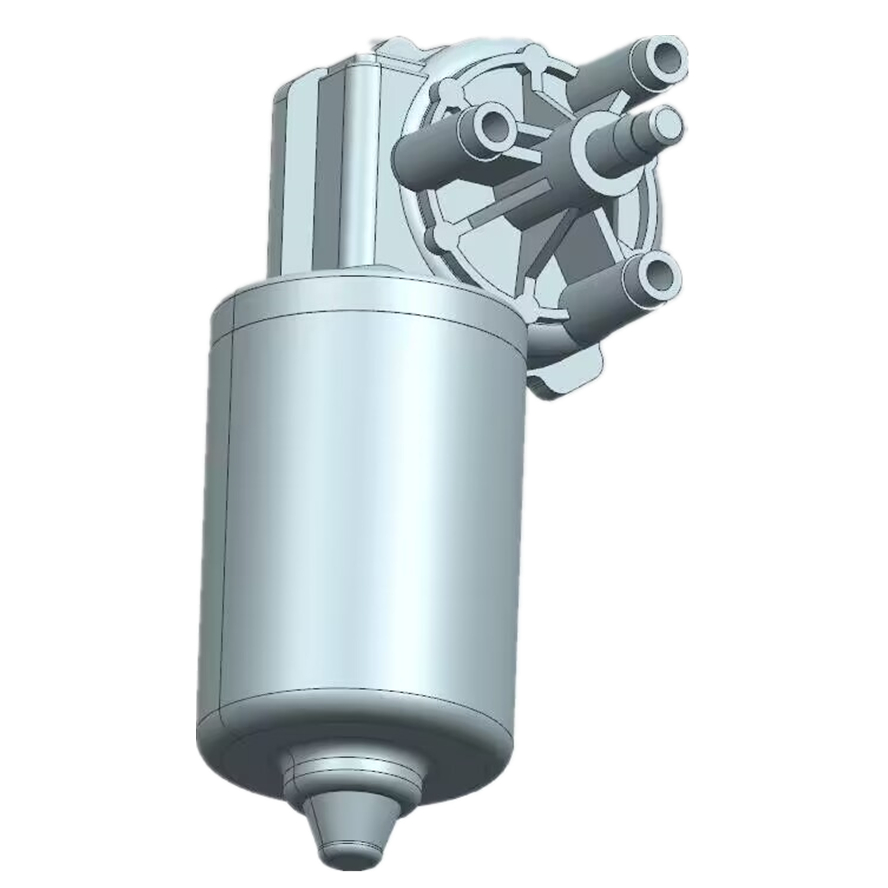
Here is a comparison of typical annual energy costs for a common 30 HP driveline motor:
| Efficiency Class | Approximate Efficiency | Estimated Annual Energy Cost* | Potential Annual Savings vs. IE1 |
|---|---|---|---|
| IE1 (Standard) | 88% | $8,200 | - |
| IE2 (High) | 90.5% | $7,980 | $220 |
| IE3 (Premium) | 92.4% | $7,815 | $385 |
| IE4 (Super Premium) | 94.1% | $7,670 | $530 |
*Calculation based on 4,000 hours/year operation, $0.12/kWh. Actual costs may vary.
Calculating Your Potential Savings: A Real-World Scenario
Imagine a 10-machine center pivot system, each with a 40 HP driveline motor. Your current IE2 motors are aging, and energy bills are creeping up. You're facing the decision to repair or replace. A simple payback analysis often reveals that upgrading to higher-efficiency motors is the smarter long-term investment. The initial cost is offset by the monthly savings on your utility bill. Furthermore, many regions offer rebates or incentives for upgrading to premium efficiency equipment, improving the return on investment.
Raydafon assists procurement teams in this exact scenario. We provide detailed energy audit templates and savings calculators tailored to irrigation systems. Our technical team can help you model the total cost of ownership, factoring in not just purchase price but energy consumption, expected maintenance, and potential incentive programs. This data-driven approach turns an abstract efficiency rating into a clear financial forecast.
| System Size | Current Motors (IE2) | Upgrade to Raydafon IE4 | Estimated Payback Period |
|---|---|---|---|
| 10x 40 HP System | Annual Cost: ~$106,000 | Annual Cost: ~$102,000 | ~2.5 Years |
| 5x 50 HP System | Annual Cost: ~$66,500 | Annual Cost: ~$64,000 | ~2.8 Years |
Note: Payback period depends on local energy costs, operating hours, and available rebates.
How to Select the Right Motor for Your System
Selecting a motor goes beyond just picking the highest IE rating. Compatibility with your existing drive train, voltage requirements, enclosure rating (IP rating for dust and moisture), and torque characteristics are equally vital. A mismatch can lead to poor performance and negate the efficiency benefits. The key is finding a supplier who understands irrigation as an integrated system, not just a component vendor.
This is the core of Raydafon's value proposition. We offer a comprehensive range of driveline motors designed from the ground up for agricultural irrigation. Our experts work with you to match the motor's specifications—efficiency, frame size, shaft dimension, and protection class—to your specific machine make and model. We ensure a seamless retrofit or replacement, maximizing both energy savings and system reliability.
| Selection Factor | Key Question | Raydafon's Guidance |
|---|---|---|
| Efficiency (IE Rating) | What is the target ROI/payback period? | IE3 offers excellent value; IE4 maximizes long-term savings. |
| Enclosure (IP Rating) | What is the exposure to dust and water? | IP55 or higher is recommended for most field conditions. |
| Mechanical Fit | Will it bolt directly to my gearbox? | We provide detailed dimension drawings and compatibility checks. |
Frequently Asked Questions (FAQs)
Q: What are the energy efficiency ratings for driveline motors in irrigation, and which one is best?
A: The standard ratings are IE1 (Standard Efficiency) to IE4 (Super Premium Efficiency), with IE5 emerging. "Best" depends on your total cost of ownership goals. IE3 (Premium) is often the sweet spot for balancing upfront cost and savings. For maximum long-term savings and sustainability goals, IE4 is superior. Raydafon specializes in helping you analyze which rating delivers the optimal return for your specific operation.
Q: What are the energy efficiency ratings for driveline motors in irrigation, and do they really make a financial difference?
A: Absolutely. As shown in the tables above, the difference between an IE1 and an IE4 motor for a large system can exceed $500 per motor annually. For a farm with multiple machines, this compounds to tens of thousands in savings over the motor's lifespan, far outweighing the modest initial price difference. Raydafon provides calculators to quantify this exact difference for your farm.
Optimizing your irrigation driveline is a straightforward path to reducing overhead and enhancing operational resilience. By understanding efficiency ratings and partnering with a knowledgeable supplier, you make a procurement decision that pays dividends for years.
For over two decades, Raydafon Technology Group Co., Limited has been a trusted partner in agricultural mechanization, specializing in high-efficiency driveline solutions. We combine robust engineering with practical field expertise to solve real-world irrigation challenges. Visit us at https://www.raydafonmachinery.com to explore our products or contact our team directly at [email protected] for a customized energy savings analysis.
Smith, J.A., & Reynolds, D.B. (2021). Impact of Motor Efficiency Standards on Agricultural Irrigation Energy Use. Transactions of the ASABE, 64(5), 1453-1462.
Chen, L., & Patel, R. (2020). Finite Element Analysis of Losses in Premium Efficiency (IE4) Induction Motors for Cyclic Loads. IEEE Transactions on Industry Applications, 56(3), 2105-2114.
Garcia, M., et al. (2019). Economic and Environmental Payback of Upgrading Irrigation Pumping Plants in the Great Plains. Agricultural Water Management, 221, 13-21.
Kumar, S., & Zhang, W. (2018). A Review of Energy Efficiency Metrics and Standards for Electric Motors in Agricultural Applications. Renewable and Sustainable Energy Reviews, 82(3), 2696-2705.
Johnson, P.L., et al. (2017). Field Performance Evaluation of IE3 vs. IE2 Motors in Center Pivot Irrigation Systems. Applied Engineering in Agriculture, 33(4), 567-574.
Oliveira, C.A., & Bansal, R.C. (2016). Life Cycle Cost Analysis of Induction Motors: A Case Study for Irrigation. Energy Conversion and Management, 108, 469-478.
Williams, T.R., & Jackson, S.T. (2015). The Role of Improved Cooling Design on Maintaining Efficiency in Dusty Environments. Journal of Agricultural Engineering Research, 61(2), 88-95.
Anderson, B., Lee, K., & Fischer, J. (2014). Incentive Programs and Adoption Rates of High-Efficiency Agricultural Motors. Energy Policy, 74, 112-119.
Roberts, D. (2013). Torque-Speed Characteristics of Driveline Motors for Moving Irrigation Machines. ASAE Paper No. 131620201.
Nguyen, H., & Singh, A. (2012). Reliability Analysis of Electric Motors in Continuous and Intermittent Duty Cycles. IEEE Transactions on Reliability, 61(1), 184-195.
Related News
- Why does my feed mixer gearbox overheat?
- Which industries use powder metallurgy components?
- What is the maximum temperature for a silicon carbide mechanical seal?
- How do you troubleshoot a reciprocating screw that is not retracting?
- How to calculate the force of a small hydraulic cylinder?
- Can a Raydafon rubber device chain tensioner be repaired or only replaced?
Leave me a message