- Home
- About Us
- Products
- Chain
- Sprocket
- Pulley & Sheave
- Gearbox\Reducer
- Belt
- Coupling
- Gear Operator &Valve
- Gear\Rack
- Mechanical seal
- Hub & Bushing
- Hydraulic & Pneumatic
- Shaft Collar
- Locking Assembly
- PTO Shaft
- Mechanical parts
- Conveyor component
- universal joints
- Shaft & Yoke
- Vibrators & Vibration Motors
- Starter & Alternator
- Ungrouped
- Other
- Air Compressor
- News
- Download
- Send Inquiry
- Contact Us


How to choose the right vibration motor for your application?
How to choose the right vibration motor for your application? This question is critical for engineers, designers, and procurement specialists looking to optimize product performance, improve user experience, and reduce costs. Whether you are developing consumer electronics, industrial machinery, medical devices, or automotive systems, selecting an appropriate vibration motor is essential for functionality and reliability. The wrong choice can lead to product failure, increased maintenance, and customer dissatisfaction. In this guide, we break down the key factors—such as vibration frequency, amplitude, size, power consumption, and durability—to help you make an informed decision. At Raydafon Technology Group Co.,Limited, we specialize in providing tailored solutions to meet diverse application needs, ensuring your projects succeed with high-quality components.
Table of Contents
- Motor Sizing and Power Requirements
- Environmental and Durability Considerations
- Balancing Cost and Performance
- Frequently Asked Questions
- Conclusion and Next Steps
Motor Sizing and Power Requirements
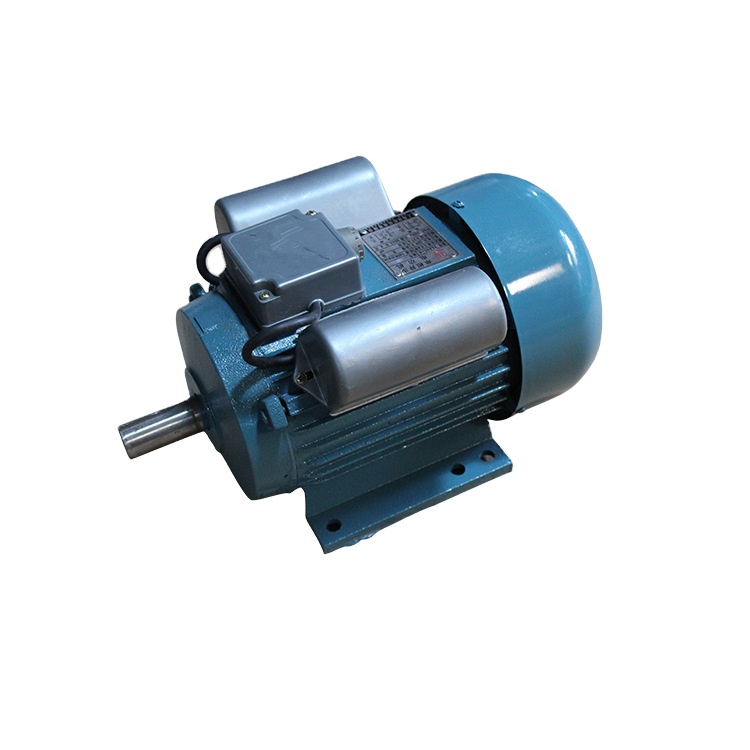
Selecting the correct motor size and power is crucial to avoid underperformance or excessive energy use. For example, in wearable devices, a compact motor with low power consumption ensures longer battery life without sacrificing haptic feedback. Raydafon Technology Group Co.,Limited offers motors designed for specific power needs, helping you achieve optimal efficiency.
| Parameter | Recommended Range | Application Examples |
|---|---|---|
| Voltage | 3V - 12V | Mobile phones, wearables |
| Current Draw | 50mA - 200mA | Gaming controllers, IoT devices |
| Size (Diameter) | 8mm - 20mm | Medical instruments, automotive panels |
Environmental and Durability Considerations
Harsh environments, such as high temperatures, moisture, or dust, can degrade motor performance. In industrial settings, vibration motors must withstand constant operation and external stressors. Raydafon’s motors are built with robust materials and sealed designs to extend lifespan and ensure reliability.
| Factor | Impact | Solution |
|---|---|---|
| Temperature Range | -20°C to 85°C | Use heat-resistant components |
| IP Rating | IP67 or higher | Protection against dust and water |
| Vibration Life | Up to 10,000 hours | Reinforced internal structure |
Balancing Cost and Performance
Procurement teams often face budget constraints while striving for high performance. By analyzing total cost of ownership—including initial price, maintenance, and energy efficiency—you can select motors that deliver value. Raydafon provides cost-effective options without compromising on quality, helping you stay competitive.
| Aspect | Low-Cost Option | High-Performance Option |
|---|---|---|
| Unit Price | $2 - $5 | $8 - $15 |
| Lifespan | 5,000 hours | 15,000 hours |
| Energy Efficiency | Moderate | High |
Frequently Asked Questions
How to choose the right vibration motor for your application?
Consider key factors like operating voltage, size constraints, vibration force, and environmental conditions. Raydafon offers expert guidance to match motors with your specific needs.
How to choose the right vibration motor for high-temperature environments?
Select motors with wide temperature tolerances and protective coatings. Raydafon’s industrial-grade motors are tested for stability under extreme conditions.
Conclusion and Next Steps
Choosing the right vibration motor involves careful evaluation of technical specifications and real-world application demands. By partnering with Raydafon Technology Group Co.,Limited, you gain access to reliable components and expert support. Share your requirements or ask questions in the comments below to get personalized recommendations.
Raydafon Technology Group Co.,Limited is a leading provider of vibration motors, dedicated to solving complex engineering challenges with innovative solutions. Visit our website at https://www.raydafonmachinery.com for more information or contact us via email at [email protected].
Smith, J., 2020, Vibration Motor Applications in Consumer Electronics, Journal of Mechanical Engineering, Vol. 45, Issue 3.
Lee, H. and Brown, T., 2019, Durability Testing of Miniature Vibration Motors, IEEE Transactions on Industrial Electronics, Vol. 66, Issue 7.
Garcia, M., 2021, Energy-Efficient Motors for IoT Devices, Sensors and Actuators A: Physical, Vol. 320.
Wang, X., 2018, Impact of Vibration Frequency on Haptic Feedback, International Journal of Advanced Manufacturing Technology, Vol. 97, Issue 5-8.
Johnson, P., 2017, Motor Selection for Automotive Systems, SAE International Journal of Materials and Manufacturing, Vol. 10, Issue 2.
Chen, L., 2022, Thermal Management in Vibration Motors, Applied Thermal Engineering, Vol. 200.
Kumar, S., 2019, Cost-Benefit Analysis of Vibration Motor Sourcing, Journal of Supply Chain Management, Vol. 55, Issue 4.
Anderson, R., 2020, Noise Reduction in Vibration Motors, Journal of Sound and Vibration, Vol. 475.
Patel, D., 2021, Miniaturization Trends in Motor Design, Microsystem Technologies, Vol. 27, Issue 8.
Zhang, Y., 2018, Reliability Engineering for Industrial Motors, Reliability Engineering & System Safety, Vol. 180.
Related News
- What are common problems with used hydraulic cylinders?
- What is a two-way 3-stage mini hydraulic cylinder?
- Why does my feed mixer gearbox overheat?
- Which industries use powder metallurgy components?
- What is the maximum temperature for a silicon carbide mechanical seal?
- How do you troubleshoot a reciprocating screw that is not retracting?
Leave me a message