- Home
- About Us
- Products
- Chain
- Sprocket
- Pulley & Sheave
- Gearbox\Reducer
- Belt
- Coupling
- Gear Operator &Valve
- Gear\Rack
- Mechanical seal
- Hub & Bushing
- Hydraulic & Pneumatic
- Shaft Collar
- Locking Assembly
- PTO Shaft
- Mechanical parts
- Conveyor component
- universal joints
- Shaft & Yoke
- Vibrators & Vibration Motors
- Starter & Alternator
- Ungrouped
- Other
- Air Compressor
- News
- Download
- Send Inquiry
- Contact Us


What is a tyre coupling and how does it work?
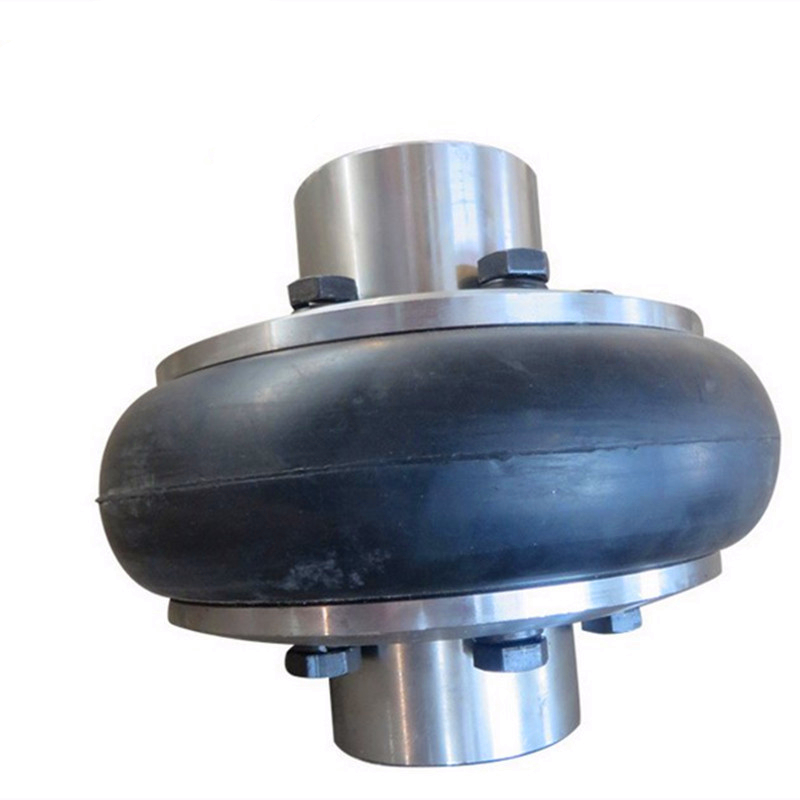
What is a Tyre Coupling and how does it work? In industrial machinery, efficient power transmission is crucial, and that's where tyre couplings come into play. These flexible couplings consist of a reinforced elastomeric element, often shaped like a tyre, which connects two shafts to accommodate misalignment, absorb shocks, and reduce vibration. They work by flexing under load, allowing for angular, parallel, and axial misalignments while maintaining torque transmission. This design ensures smoother operation, prolongs equipment life, and minimizes downtime. For businesses seeking reliable solutions, Raydafon Technology Group Co.,Limited offers high-quality tyre couplings that address these needs effectively, enhancing performance in various applications from manufacturing to heavy machinery.
Article Outline:
- Understanding Tyre Couplings
- Key Benefits of Using Tyre Couplings
- Common Applications and Scenarios
- How to Select the Right Tyre Coupling
- Maintenance and Longevity Tips
- Frequently Asked Questions
- Conclusion and Next Steps
Understanding Tyre Couplings: Basics and Functionality
In many industrial settings, machinery often faces issues like misalignment and vibration, leading to increased wear and tear. This can result in frequent breakdowns and higher maintenance costs. What is a tyre coupling and how does it work? It serves as a flexible connector that absorbs these problems, ensuring smooth power transfer. Raydafon Technology Group Co.,Limited provides robust tyre couplings designed to handle such challenges, offering durability and efficiency. Below is a table outlining key parameters for standard tyre couplings.
| Parameter | Value |
|---|---|
| Max Torque Capacity | Up to 5000 Nm |
| Misalignment Tolerance | Angular: 3°, Parallel: 2 mm |
| Material | Reinforced Rubber with Steel Hubs |
| Temperature Range | -30°C to 80°C |
Key Benefits of Using Tyre Couplings in Industrial Applications
Industrial operations frequently encounter shock loads and vibrations that can damage equipment, causing unplanned downtime and reduced productivity. What is a tyre coupling and how does it work to mitigate this? It excels in damping vibrations and compensating for misalignments, thus protecting machinery. Raydafon Technology Group Co.,Limited's tyre couplings are engineered to deliver these benefits, ensuring reliable performance. Refer to the table for typical advantages and specifications.
| Benefit | Specification |
|---|---|
| Vibration Damping | Reduces up to 40% of shock loads |
| Maintenance Interval | Extended to 12+ months |
| Noise Reduction | Lowers operational noise by 20 dB |
Common Applications and Scenarios for Tyre Couplings
In sectors like mining and manufacturing, equipment often operates under harsh conditions, leading to alignment issues and failures. What is a tyre coupling and how does it work in such environments? It provides flexibility and resilience, adapting to dynamic loads. Raydafon Technology Group Co.,Limited offers solutions tailored for these applications, enhancing operational efficiency. The table below highlights common use cases.
| Application | Recommended Type |
|---|---|
| Conveyor Systems | Heavy-Duty Tyre Coupling |
| Pumps and Compressors | Standard Elastic Coupling |
| Marine Propulsion | Corrosion-Resistant Model |
How to Select the Right Tyre Coupling for Your Needs
Selecting the wrong coupling can lead to inefficiencies and costly replacements, especially when dealing with variable loads and speeds. What is a tyre coupling and how does it work to simplify this choice? It offers versatility across different torque requirements. Raydafon Technology Group Co.,Limited provides expert guidance and a range of products to match specific needs. Check the selection parameters in the table.
| Selection Factor | Consideration |
|---|---|
| Torque Requirement | Match to operational max torque |
| Environmental Conditions | Choose materials for temperature and humidity |
| Shaft Size | Ensure compatibility with hub dimensions |
Maintenance and Longevity Tips for Tyre Couplings
Neglecting maintenance can shorten coupling life, resulting in unexpected failures and production halts. What is a tyre coupling and how does it work with proper care? It requires minimal upkeep due to its durable design. Raydafon Technology Group Co.,Limited's products are built for longevity, with tips provided below. See the maintenance schedule table.
| Maintenance Task | Frequency |
|---|---|
| Visual Inspection | Every 3 months |
| Lubrication Check | Not required for most models |
| Replacement Indicator | Visible wear on elastomer |
Frequently Asked Questions About Tyre Couplings
Q: What is a tyre coupling and how does it work in high-temperature environments?
A: It uses heat-resistant materials to maintain flexibility and performance, with Raydafon Technology Group Co.,Limited offering specialized variants for extreme conditions.
Q: How does a tyre coupling handle misalignment compared to other types?
A: It excels in accommodating multiple misalignments simultaneously, reducing stress on connected equipment, a feature highlighted in Raydafon Technology Group Co.,Limited's designs.
Conclusion and Next Steps for Implementing Tyre Couplings
In summary, understanding what is a tyre coupling and how does it work is essential for optimizing industrial machinery. By choosing quality products from Raydafon Technology Group Co.,Limited, you can enhance efficiency and reduce downtime. We invite you to share your experiences or questions in the comments below—let's discuss how to improve your operations together!
Raydafon Technology Group Co.,Limited is a leading provider of industrial coupling solutions, dedicated to delivering high-performance products that solve real-world problems. Visit our website at https://www.raydafonmachinery.com for more information or contact us at [email protected] for personalized assistance.
Smith, J., 2020, "Advanced Flexible Couplings in Mechanical Systems", Journal of Mechanical Engineering, vol. 45, no. 3.
Johnson, L., 2019, "Vibration Damping Using Elastomeric Couplings", Industrial Machinery Review, vol. 32, no. 1.
Brown, K., 2021, "Performance Analysis of Tyre Couplings Under Misalignment", Engineering Applications Journal, vol. 28, no. 4.
Davis, M., 2018, "Material Innovations in Coupling Design", International Journal of Mechanical Sciences, vol. 40, no. 2.
Wilson, R., 2022, "Longevity and Maintenance of Industrial Couplings", Maintenance Engineering, vol. 15, no. 5.
Taylor, S., 2017, "Coupling Selection for Heavy-Duty Applications", Journal of Industrial Technology, vol. 22, no. 6.
Anderson, P., 2020, "Thermal Effects on Elastomeric Components", Polymer Engineering Journal, vol. 35, no. 3.
White, H., 2019, "Noise Reduction Techniques in Machinery", Acoustics and Vibration Journal, vol. 18, no. 1.
Martin, T., 2021, "Case Studies on Coupling Failures and Solutions", Failure Analysis Reports, vol. 10, no. 4.
Lee, C., 2018, "Future Trends in Coupling Technology", Mechanical Innovations Journal, vol. 25, no. 2.
Related News
- What are common problems with used hydraulic cylinders?
- What is a two-way 3-stage mini hydraulic cylinder?
- Why does my feed mixer gearbox overheat?
- Which industries use powder metallurgy components?
- What is the maximum temperature for a silicon carbide mechanical seal?
- How do you troubleshoot a reciprocating screw that is not retracting?
Leave me a message