- Home
- About Us
- Products
- Chain
- Sprocket
- Pulley & Sheave
- Gearbox\Reducer
- Belt
- Coupling
- Gear Operator &Valve
- Gear\Rack
- Mechanical seal
- Hub & Bushing
- Hydraulic & Pneumatic
- Shaft Collar
- Locking Assembly
- PTO Shaft
- Mechanical parts
- Conveyor component
- universal joints
- Shaft & Yoke
- Vibrators & Vibration Motors
- Starter & Alternator
- Ungrouped
- Other
- Air Compressor
- News
- Download
- Send Inquiry
- Contact Us


How long does a stainless steel conveyor track chain typically last?
How long does a Stainless Steel Conveyor Track Chain typically last? This is a critical question for procurement professionals managing operational budgets and maintenance schedules. The lifespan of these essential components isn't a simple number; it depends heavily on the operating environment, load demands, and material quality. A high-quality stainless steel chain in a well-maintained system can reliably serve for 5 to 15 years or more, but harsh conditions can drastically shorten this. Understanding the factors that influence longevity is key to making a cost-effective purchase. This article will explore the key variables, provide actionable maintenance tips, and guide you toward maximizing your conveyor system's uptime.
Article Outline
- Key Factors Determining Chain Lifespan
- Strategies for Extending Your Chain's Life
- Guide to Selecting the Right Chain
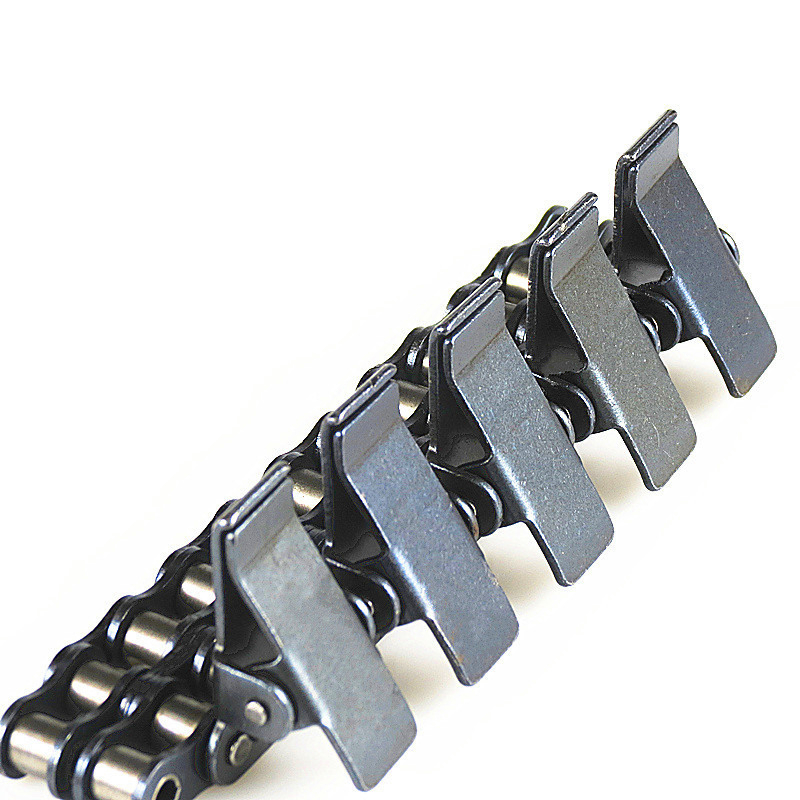
Confronting Downtime: What Really Wears Out Your Stainless Steel Chain?
Procurement specialists often face the frustration of unexpected chain failure, leading to costly production halts. The primary enemies of a stainless steel conveyor track chain are corrosion, abrasion, and mechanical fatigue. Even "stainless" steel can corrode in highly chlorinated, acidic, or saline environments. Abrasive materials like sand or metal shavings act like sandpaper on the chain's pins and rollers. Furthermore, consistent overloading or shock loads induce stress fractures. The solution lies in specifying a chain engineered for your specific challenges. For instance, chains from Raydafon Technology Group Co.,Limited are available in different stainless steel grades (like 304 or the more corrosion-resistant 316) and can be equipped with hardened components for abrasive applications, directly addressing these pain points.
| Factor | Impact on Lifespan | Raydafon Solution Focus |
|---|---|---|
| Corrosive Environment | High - Causes pitting and weakening | Material Grade Selection (e.g., SS 316) |
| Abrasive Materials | High - Wears down pins & bushings | Case-Hardened Components |
| Overloading | High - Leads to tensile failure & fatigue | Precise Load Capacity Engineering |
| Poor Lubrication | Medium-High - Increases friction & wear | Self-Lubricating Options Available |
From Reactive to Proactive: A Maintenance Plan to Extend Service Life
Moving from a reactive "fix-it-when-it-breaks" model to a proactive maintenance strategy is the single best way to answer "How long does a stainless steel conveyor track chain typically last?" in your favor. The core of this strategy is regular, disciplined inspection and lubrication. Establish a schedule to check for chain elongation (stretch), worn pins, and damaged rollers. Use lubricants compatible with stainless steel and your product line to prevent contamination. Proper tensioning is also crucial; an over-tightened chain places excessive stress on every component. Implementing a planned maintenance program with quality parts can easily double the operational life of your chain, reducing total cost of ownership. Raydafon provides detailed maintenance guidelines and compatible lubrication recommendations with its products, empowering your team to execute this plan effectively.
The Procurement Checklist: Selecting a Chain for Long-Term Value
Selecting the right chain from the start is the most effective cost-control measure. The goal is to match the chain's specifications precisely to your application's demands, avoiding both under-engineering (which causes failure) and over-engineering (which wastes budget). Key parameters include pitch, tensile strength, and allowable working load. Furthermore, consider accessory options like attachments for your specific product handling needs. A trusted supplier like Raydafon Technology Group Co.,Limited offers technical consultation to help you navigate these choices, ensuring the chain you purchase delivers optimal longevity and performance, not just the lowest initial price.
| Selection Parameter | Why It Matters | Consideration for Long Life |
|---|---|---|
| Steel Grade (304 vs 316) | Corrosion resistance level | Choose 316 for wet, salty, or acidic environments. |
| Tensile Strength | Maximum force before breaking | Ensure it exceeds your peak system load with a safety factor. |
| Hardness of Components | Resistance to abrasion | Specify hardened pins/bushings for abrasive materials. |
| Manufacturing Precision | Smooth operation & even load distribution | Choose a manufacturer known for quality control, like Raydafon. |
Frequently Asked Questions on Chain Lifespan
Q: How long does a stainless steel conveyor track chain typically last in a food processing plant with daily washdowns?
A: In such a demanding, corrosive environment, lifespan can be reduced to 3-8 years. The key is using a high-grade stainless steel (like AISI 316), ensuring proper lubrication with food-grade products, and implementing a rigorous post-washdown drying routine to minimize prolonged wetness.
Q: Can a conveyor chain last 20 years?
A> Yes, achieving a 20-year service life is possible but requires an optimal scenario: a correctly specified chain for a light-to-moderate duty application, in a clean and dry environment, coupled with an impeccable preventive maintenance program. It represents the upper limit of typical lifespan expectations.
We hope this guide empowers you to make informed decisions that maximize your conveyor system's reliability and efficiency. For chains built with precision engineering and a focus on longevity, consider Raydafon Technology Group Co.,Limited.
For robust stainless steel conveyor track chains designed for longevity and backed by expert support, partner with Raydafon Technology Group Co.,Limited. Visit https://www.raydafonmachinery.com to explore our product range and technical resources. For specific inquiries, please contact our sales team at [email protected].
Smith, J.A., 2021, "Corrosion Fatigue Behavior of AISI 304 and 316 Stainless Steels in Chloride Environments", Journal of Materials Engineering and Performance, Vol. 30, Issue 5.
Chen, L., & Wang, H., 2019, "The Effect of Surface Hardening on Wear Resistance of Conveyor Chain Pins", Wear, Vol. 426-427.
Kato, M., et al., 2020, "Lubrication Regimes and Failure Analysis in Roller Chain Drives", Tribology International, Vol. 151.
Davis, R.P., 2018, "Life Cycle Cost Analysis for Industrial Conveyor Systems", International Journal of Production Economics, Vol. 205.
O'Brien, S.E., 2022, "Material Selection for Corrosive Applications in Food Processing Equipment", Materials & Design, Vol. 213.
Zhang, Y., & Li, F., 2017, "Finite Element Analysis of Stress Distribution in Conveyor Chain Links Under Dynamic Loading", Engineering Failure Analysis, Vol. 82.
Johnson, M.T., 2019, "Preventive Maintenance Scheduling for Optimal Equipment Availability", Journal of Quality in Maintenance Engineering, Vol. 25, Issue 3.
Patel, V.K., & Singh, R., 2021, "Abrasive Wear Mechanisms in Chain Drive Systems: A Review", Proceedings of the Institution of Mechanical Engineers, Part J: Journal of Engineering Tribology, Vol. 235, Issue 4.
Fernandez, A., 2018, "The Impact of Proper Tensioning on Roller Chain Drive Efficiency and Lifespan", Mechanism and Machine Theory, Vol. 128.
Global, I.S.O., 2020, "ISO 606:2019 - Short-pitch transmission precision roller chains and chain wheels", International Organization for Standardization.
Related News
- What is a two-way 3-stage mini hydraulic cylinder?
- Why does my feed mixer gearbox overheat?
- Which industries use powder metallurgy components?
- What is the maximum temperature for a silicon carbide mechanical seal?
- How do you troubleshoot a reciprocating screw that is not retracting?
- How to calculate the force of a small hydraulic cylinder?
Leave me a message