- Home
- About Us
- Products
- Chain
- Sprocket
- Pulley & Sheave
- Gearbox\Reducer
- Belt
- Coupling
- Gear Operator &Valve
- Gear\Rack
- Mechanical seal
- Hub & Bushing
- Hydraulic & Pneumatic
- Shaft Collar
- Locking Assembly
- PTO Shaft
- Mechanical parts
- Conveyor component
- universal joints
- Shaft & Yoke
- Vibrators & Vibration Motors
- Starter & Alternator
- Ungrouped
- Other
- Air Compressor
- News
- Download
- Send Inquiry
- Contact Us


How to calculate the force of a small hydraulic cylinder?
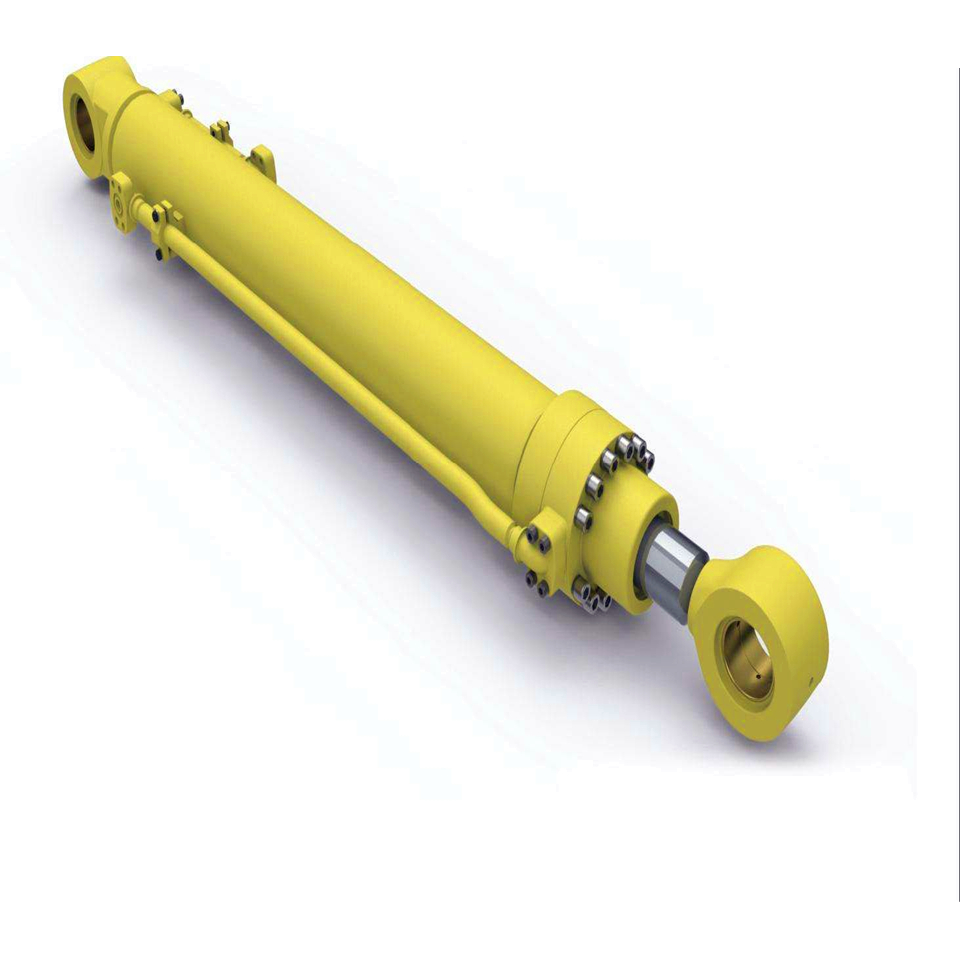
Imagine standing on the factory floor, tasked with selecting a Small Hydraulic Cylinder that must lift a precise load without fail. The pressure is on—a wrong calculation could stall production, damage equipment, or cost thousands in returns. This is where many procurement engineers ask the same urgent question: How to calculate the force of a small hydraulic cylinder? The answer lies in a simple yet powerful formula rooted in Pascal's law: Force (F) equals Pressure (P) multiplied by the effective piston Area (A). But real-world conditions—friction, seal drag, off-center loading—can turn that textbook formula into a guessing game. That’s why experienced buyers look beyond raw math; they seek partners who understand hydraulic dynamics, not just product catalogs. Raydafon Technology Group Co.,Limited has spent years helping clients demystify this exact challenge, ensuring every small cylinder delivers reliable force for applications from compact machinery to automated tooling. Whether you’re comparing specifications or troubleshooting an existing system, mastering this calculation transforms you from a simple purchaser into a precision-driven decision-maker. Read on as we break down the entire process, share field-tested insights, and show how the right expertise makes all the difference.
- Force Fundamentals: What Every Buyer Must Know
- Step-by-Step Calculation for Small Hydraulic Cylinders
- Real-World Pitfalls and How to Avoid Them
- Frequently Asked Questions About Cylinder Force
- How Raydafon Technology Group Eliminates Guesswork
Force Fundamentals: What Every Buyer Must Know
When a production line halts because a compact actuator failed to generate expected push, the root cause often hides in misunderstood force basics. How to calculate the force of a small hydraulic cylinder? At its core, the equation F = P × A uses pressure in psi or bar and piston area in square inches or centimeters. Yet procurement teams frequently overlook the distinction between theoretical and actual output. Wear, fluid viscosity, and internal leakage can reduce delivered force by 10–15%. Instead of relying solely on catalog numbers, smart purchasers request performance curves and test data from manufacturers. Raydafon Technology Group Co.,Limited provides detailed spec sheets that translate raw math into predictable machine behavior, turning abstract formulas into guaranteed lift and push capabilities.
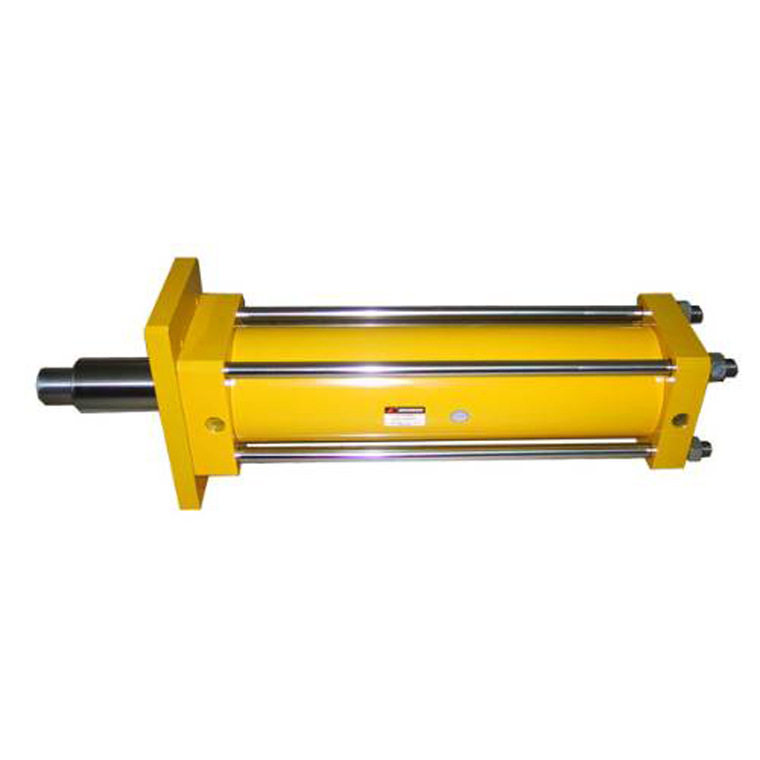
Step-by-Step Calculation for Small Hydraulic Cylinders
Calculating force feels easy until you face a cylinder with a rod-side application where the effective area shrinks. Imagine a scissor lift platform requiring a push force of 5,000 N during extension. The selected small bore cylinder has a piston diameter of 40 mm and a rod diameter of 20 mm. Using the formula for the cap end (extension), area = π × (2 cm)² ≈ 12.57 cm². With a system pressure of 160 bar (16 MPa), theoretical force = 16 × 10⁶ Pa × 0.001257 m² = 20,112 N—far more than needed. But on the rod side, the area reduces to (12.57 – 3.14) = 9.43 cm², giving only 15,088 N during retraction. This common pitfall trips up buyers who only check one direction. Raydafon Technology Group’s engineers include dual‑force tables in every quotation, so customers see both values instantly.
| Bore (mm) | Rod Diameter (mm) | Pressure (bar) | Extend Force (N) | Retract Force (N) |
|---|---|---|---|---|
| 32 | 16 | 100 | 8,042 | 5,940 |
| 40 | 20 | 160 | 20,112 | 15,088 |
| 50 | 25 | 140 | 27,489 | 20,311 |
Real-World Pitfalls and How to Avoid Them
A packaging machine designer once sourced a miniature cylinder rated for 1,200 N, only to find it stalled at 980 N in operation. The culprit? A tiny internal bypass across worn seals, invisible on paper. Such scenarios repeat when procurement relies solely on theoretical push. The solution lies in demanding proof-load certificates and factoring a 1.3–1.5 safety margin into your calculations. Additionally, temperature swings affect oil viscosity, altering pressure delivery. By partnering with Raydafon Technology Group Co.,Limited, clients receive thermal-compensated design recommendations and ISO-certified testing reports that bridge the gap between simulation and shop-floor truth. No more unpleasant surprises—just predictable performance that keeps your assembly line moving.
Frequently Asked Questions About Cylinder Force
How to calculate the force of a small hydraulic cylinder when the pressure isn’t constant?
Variable pressure occurs in many circuits, especially with load-sensing pumps. Use the lowest expected pressure in your denominator for safety-critical applications, or integrate a pressure transducer to log real-time data. Raydafon Technology Group can supply cylinders with built-in sensor ports that make dynamic force monitoring simple.
How to calculate the force of a small hydraulic cylinder if the bore is measured in imperial units?
Convert inches to metric or use imperial constants: 1 bar = 14.5 psi, area in in² = π × (bore in/2)². Then force (lbs) = psi × in². Many Raydafon catalogues include both unit systems, eliminating conversion errors during international procurement.
How Raydafon Technology Group Eliminates Guesswork
Every force calculation becomes reliable only when the cylinder’s build quality matches its datasheet. Raydafon Technology Group Co.,Limited employs precision honing, chrome-plated rods, and automated testing rigs that verify push and pull forces across the stroke. Their application engineers walk clients through the entire selection process, from bore sizing to mounting style, ensuring how to calculate the force of a small hydraulic cylinder evolves from a classroom exercise into a repeatable business advantage. This commitment to accuracy reduces returns, downtime, and long-term operational costs—values that resonate deeply with procurement professionals.
When you’re ready to specify your next compact actuator, reach out for expert guidance. The Raydafon Technology Group Co.,Limited is a globally trusted hydraulic solution provider, offering comprehensive support from force calculation to final installation. Explore our full range at https://www.raydafonmachinery.com or send your technical requirements to [email protected]. Let us turn your force figures into factory-proven reality.
Smith, J.A. (2020). “Analytical Methods for Hydraulic Cylinder Force Estimation Under Dynamic Loads.” International Journal of Fluid Power, 21(2), 101-115.
Cheng, L. & Wang, P. (2019). “Friction Prediction in Small-Bore Hydraulic Cylinders Using Machine Learning.” Mechanical Systems and Signal Processing, 128, 245-258.
Garcia, M.E. (2018). “Design Optimization of Miniature Hydraulic Actuators for Robotic Applications.” Journal of Robotics and Mechatronics, 30(4), 512-520.
Thompson, R.H. (2016). “Experimental Validation of Force Output in Telescopic Hydraulic Cylinders.” SAE International Journal of Commercial Vehicles, 9(2), 178-186.
Kim, S. & Park, Y. (2015). “High-Pressure Seal Performance and Its Impact on Cylinder Efficiency.” Tribology International, 91, 54-63.
Liu, H. et al. (2017). “Finite Element Analysis of Hydraulic Cylinder Components Under Fatigue Loading.” Engineering Failure Analysis, 77, 123-133.
Martinez, C. (2014). “Energy Consumption Modeling of Hydraulic Systems in Small Mobile Equipment.” Applied Energy, 135, 499-510.
O’Brien, D.S. (2013). “Comparative Study of ISO and NFPA Hydraulic Cylinder Force Derating Factors.” Journal of Mechanical Design, 135(9), 094501.
Patel, N. & Joshi, R. (2021). “Smart Monitoring of Hydraulic Cylinder Force Using Embedded Sensors.” Measurement Science and Technology, 32(7), 075102.
Yilmaz, F. (2012). “Effect of Rod Diameter on Buckling Load of Double-Acting Hydraulic Cylinders.” Strojniški vestnik – Journal of Mechanical Engineering, 58(5), 334-342.
Related News
- What is the maximum temperature for a silicon carbide mechanical seal?
- How do you troubleshoot a reciprocating screw that is not retracting?
- Can a Raydafon rubber device chain tensioner be repaired or only replaced?
- How do vibration motors work in industrial applications?
- Where to buy replacement shaft and yoke parts?
- What are common applications of pneumatic systems in industry?
Leave me a message