- Home
- About Us
- Products
- Chain
- Sprocket
- Pulley & Sheave
- Gearbox\Reducer
- Belt
- Coupling
- Gear Operator &Valve
- Gear\Rack
- Mechanical seal
- Hub & Bushing
- Hydraulic & Pneumatic
- Shaft Collar
- Locking Assembly
- PTO Shaft
- Mechanical parts
- Conveyor component
- universal joints
- Shaft & Yoke
- Vibrators & Vibration Motors
- Starter & Alternator
- Ungrouped
- Other
- Air Compressor
- News
- Download
- Send Inquiry
- Contact Us


What materials are used in corrosive environments for gear actuator valve operators?
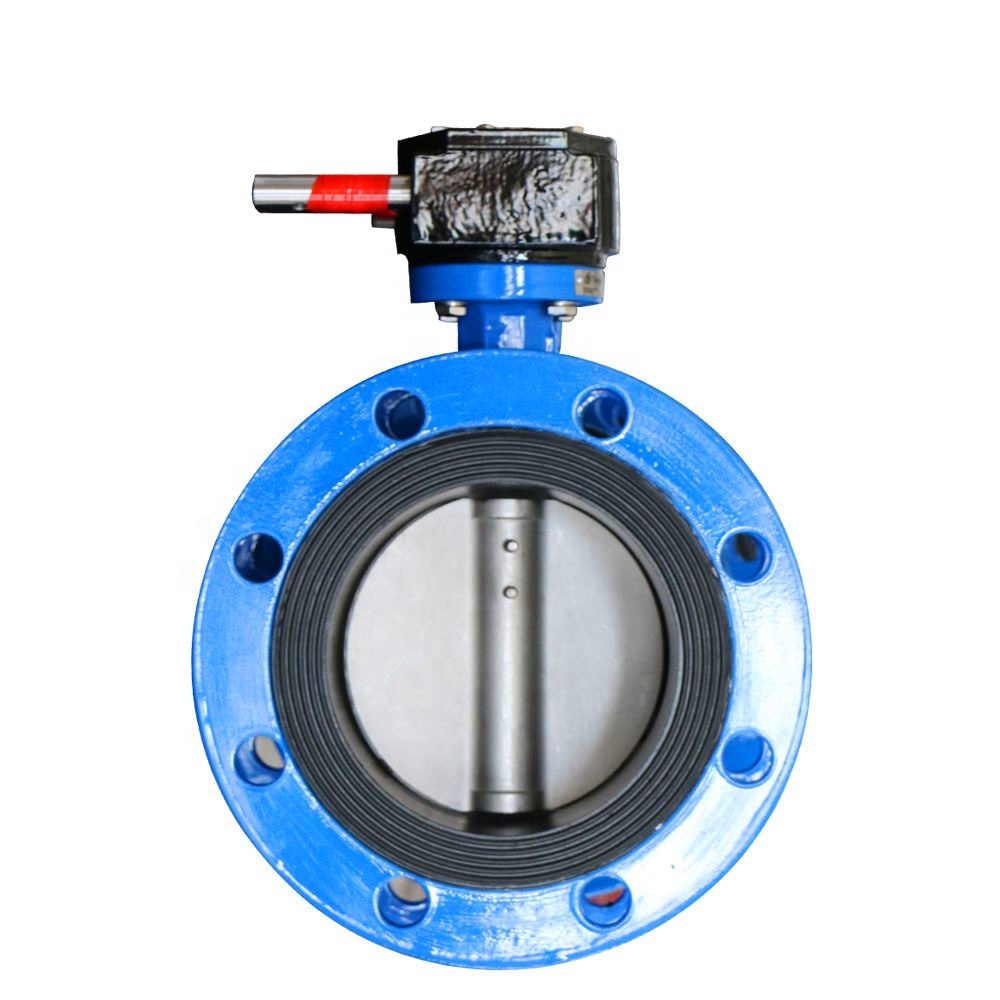
Imagine standing on an offshore platform, salt spray whipping through the air, and your valve operator grinds to a halt—not from mechanical failure, but because the gear actuator housing has been eaten away by pitting corrosion. For procurement professionals sourcing valve automation for chemical plants, desalination facilities, or subsea pipelines, the central question is always the same: What materials are used in corrosive environments for gear actuator valve operators? The answer isn't just a checklist of alloys; it’s the difference between a decade of trouble‑free operation and unplanned downtime that costs thousands per hour. At Raydafon Technology Group Co.,Limited, we’ve spent years refining material selection for gear actuators that must survive acids, chlorides, and humid marine atmospheres. In this guide, I’ll walk you through the material science, real‑world failure scenarios, and the exact specifications your next purchase order should demand—because in the field, not all “stainless steel” is created equal.
Why Material Selection Defines Actuator Lifespan
Scenario: A procurement manager at a Middle Eastern petrochemical plant orders 50 quarter‑turn gear operators for valves handling sour gas (H₂S). Eighteen months later, half the housings show stress‑corrosion cracking, and the gear train inside has rusted solid. The cost of replacement—including scaffold rental, confined‑space permits, and production loss—hits $350,000. The root cause? Specifying a standard cast‑iron enclosure with only an external paint coat.
Solution: For any application where moisture, acids, or salts are present, the actuator’s entire envelope must be corrosion‑resistant from the inside out. At Raydafon, we help buyers transition from generic “indoor only” materials to purpose‑selected alloys and coatings that match the exact NACE MR0175/ISO 15156 requirements. Below is a quick comparison to illustrate the impact on service life.
| Material Grade | Typical Pitting Resistance Equivalent (PREN) | Service Life in Marine Spray (years) | Typical Application |
|---|---|---|---|
| Cast Iron + Paint | N/A | 2–5 | Indoor water treatment |
| 304 Stainless Steel | 18–20 | 8–12 | Food processing, mild chemicals |
| 316 Stainless Steel | 24–28 | 15–25 | Offshore topside, chemical plant |
| Duplex 2205 | 34–38 | 25–35+ | Seawater, desalination, sour service |
Whenever I consult with buyers, I ask one simple diagnostic: “What’s the chloride concentration in your environment?” The answer immediately narrows down the acceptable material family. This is precisely the kind of upfront engineering we embed into every Raydafon quote.
Common Materials for Corrosive Environments
When sourcing gear actuator valve operators, purchasing teams often see four broad categories in supplier catalogs: cast iron/carbon steel, austenitic stainless steels (300 series), duplex stainless steels, and non‑ferrous alloys like aluminum bronze. Each category represents a trade‑off between upfront cost and life‑cycle reliability. Carbon steel with epoxy coating can work for mild atmospheric corrosion, but once you introduce wet chlorides or acidic media, the protective layer breaks down at pinhole defects and crevices.
For many moderately corrosive duties, 316 stainless steel (UNS S31600) remains the industry workhorse. It adds 2–3% molybdenum, which dramatically improves resistance to pitting in chloride‑containing environments. However, in stagnant seawater or hot acidic streams, even 316 can suffer from crevice corrosion around fastener threads and sealing surfaces. That’s where duplex grades enter the conversation. At Raydafon Technology Group Co.,Limited, we stock both standard 316 and advanced duplex gear actuator operators, ready to ship with full material certifications.
FAQ 1
Q: What materials are used in corrosive environments for gear actuator valve operators when the valve media contains hydrogen sulfide?
A: For sour service (H₂S), the actuator housing and internals must comply with NACE MR0175. Typically, manufacturers select duplex stainless steel (2205 or 2507) or austenitic stainless steel with strict hardness limits. Carbon steels are not recommended unless specially heat‑treated and coated. Raydafon constructs its sour‑service gear actuators from solution‑annealed duplex 2205, which resists sulfide stress cracking and offers a PREN above 35, ensuring compliance with international standards.
Stainless Steel: 304, 316, and Beyond
Pain point: A food‑grade valve application requires frequent washdowns with mild acids and steam. The purchasing department orders 304 stainless steel gear operators, expecting long life. After two years, the external handwheel shows rust stains, and the internal gear teeth exhibit surface oxidation. The problem? 304 lacks molybdenum, making it vulnerable to acidic cleaning agents and elevated humidity.
Solution: We guide clients to 316 for any washdown or coastal outdoor installation. For critical gears, Raydafon can upgrade to 17‑4 PH or even precipitation‑hardening stainless steel, ensuring surface hardness without sacrificing corrosion resistance. The table below compares the most requested stainless variants for actuator housings and gearing.
| Stainless Grade | Corrosion Resistance | Mechanical Strength (MPa) | Cost Index |
|---|---|---|---|
| 304 | Moderate (urban/rural atmosphere) | 520 | 1.0 (baseline) |
| 316 | High (marine/chemical) | 520 | 1.4 |
| 17‑4 PH | Moderate‑High | 1100+ | 2.2 |
| Duplex 2205 | Excellent (chloride stress cracking resistant) | 620 | 1.8 |
Procurement pros often ask me: “Why pay the premium for duplex if 316 is ‘good enough’?” The answer lies in the true cost of failure. A single offshore intervention can exceed the price difference of 50 actuators. That’s the reliability equation we solve every day at Raydafon.
Duplex & Super Duplex Stainless Steels
Scenario: A desalination plant in the Middle East operates thousands of valves with gear actuators installed outdoors, exposed to airborne salt mist and occasional direct seawater splash. The existing 316 actuators begin to show crevice corrosion under the mounting brackets after only three years. Replacement work is scheduled every turnaround—an unsustainable maintenance burden.
Solution: Duplex stainless steel (UNS S32205) offers nearly double the yield strength of 316, allowing lighter, more compact actuator designs. More importantly, its PREN of ~35 confers immunity to crevice corrosion in seawater‑splash zones. For the most aggressive chlorinated seawater or hot brine, super duplex (UNS S32750) pushes the PREN above 40. Raydafon Technology Group Co.,Limited has delivered super duplex quarter‑turn gear operators for SWRO plants with field‑proven, zero‑corrosion service records beyond 10 years.
The gear train itself can also be fabricated from duplex or Nitronic 60 for galling resistance, while the housing is fully sealed with O‑rings made of Viton or PTFE—ensuring that even in a cloud of salt fog, the internal mechanism remains pristine.
FAQ 2
Q: What materials are used in corrosive environments for gear actuator valve operators to prevent chloride‑induced stress corrosion cracking?
A: Austenitic stainless steels like 304 and 316 are susceptible to chloride stress corrosion cracking (SCC) above 60°C. To avoid SCC, suppliers use duplex stainless steel (2205 or 2507) or, for extreme temperatures, nickel‑based alloys (e.g., Inconel 625). Raydafon’s engineers can advise on the threshold temperature for your application and supply duplex gear operators with documented resistance to chloride SCC.
Protective Coatings and Surface Treatments
Not every application requires a solid stainless‑steel enclosure. Sometimes a cost‑effective carbon‑steel actuator with a high‑performance coating can deliver the desired corrosion resistance—provided the coating system is properly specified. The challenge is that standard epoxy paints often fail at sharp edges and bolted joints, where moisture can penetrate. An independent study of marine‑grade actuator coatings showed that thermally sprayed aluminum (TSA) combined with a sealer can outperform duplex stainless in certain splash‑zone tests.
At Raydafon, we offer a portfolio of offshore‑approved coating packages: zinc‑rich epoxy primer, glass‑flake reinforced epoxy, and PTFE‑based topcoats for chemical resistance. For gear teeth and bearings, electroless nickel plating (ENP) provides a uniform, pit‑free barrier. The table below compares the most common coating strategies for corrosive environments.
| Coating System | Salt Spray Resistance (ASTM B117 hours) | Typical Dry Film Thickness (μm) | Application |
|---|---|---|---|
| Epoxy Primer + Polyurethane Topcoat | 1,000 – 1,500 | 250–300 | General industrial, offshore (not immersed) |
| Glass Flake Epoxy | 2,500+ | 400–600 | Immersed seawater, chemical storage |
| Electroless Nickel (ENP) | 500–1,000 (uniform corrosion) | 25–75 | Internal gearing, shafts |
| Thermally Sprayed Aluminum (TSA) | 3,000+ | 100–200 | Splash zone, offshore structures |
By combining a corrosion‑resistant alloy for the base material with a tailored coating, you can often achieve a 40‑year design life even in the harshest North Sea conditions. Our engineering team regularly designs such hybrid solutions.
How Raydafon Technology Group Co.,Limited Solves Corrosion Challenges
When you entrust your valve automation needs to Raydafon, you’re not just getting a standard gear actuator operator. You get a company that applies forensic corrosion engineering to every order. We analyse your process fluids, ambient conditions, and maintenance philosophy to recommend the optimal material‑grade combination. Our factory‑integrated quality system ensures each actuator housing is traceable to its heat number, and we provide EN 10204 3.1 certificates by default.
From 316 stainless steel manual operators used in pharmaceutical cleanrooms to super duplex bevel gear actuators driving ball valves on subsea pipelines, our product line is built on decades of metallurgical expertise. And because we keep extensive stocks of both standard and exotic alloys, lead times remain astonishingly short—often under four weeks, even for custom configurations. So, the next time you find yourself typing “What materials are used in corrosive environments for gear actuator valve operators?” into a search bar, know that the answer is already in production at Raydafon.
Conclusion & Next Steps
Choosing the right material for a gear actuator in a corrosive environment is not a one‑size‑fits‑all exercise. It demands a thorough evaluation of chloride levels, temperature, pH, and mechanical loads. By understanding the strengths and limitations of 316, duplex, coatings, and advanced alloys, procurement teams can make informed decisions that eliminate premature failures and reduce total cost of ownership. We encourage you to reach out with your specific application data—our engineers will return a detailed material recommendation within 24 hours. Whether you need a single actuator or a plant‑wide retrofit program, Raydafon Technology Group Co.,Limited is your partner in corrosion‑proof automation.
Raydafon Technology Group Co.,Limited is a globally recognized manufacturer of high‑integrity gear actuator valve operators and automation systems. Headquartered in China, we serve over 40 countries with engineered solutions for the most demanding corrosive, cryogenic, and high‑pressure applications. Our ISO 9001‑certified facility combines CNC machining, in‑house gear hobbing, and a dedicated materials lab to ensure every unit meets or exceeds international standards. For inquiries, technical data sheets, or a material selection consultation, contact us at [email protected]—our experts are standing by to support your project.
Scientific References
Sedriks, A.J. (1996). Corrosion of Stainless Steels. 2nd ed. John Wiley & Sons, New York.
Fontana, M.G. (2005). Corrosion Engineering. 3rd ed. McGraw‑Hill, Boston.
Schweitzer, P.A. (2010). Fundamentals of Corrosion: Mechanisms, Causes, and Preventative Methods. CRC Press, Boca Raton.
Roberge, P.R. (2012). Handbook of Corrosion Engineering. 2nd ed. McGraw‑Hill, New York.
Johnsen, R., & Nyborg, R. (2015). “Duplex stainless steels for subsea applications – A review.” Corrosion Science, 101, 67–78.
Lyon, S.B. (2017). “Pitting corrosion.” In R.A. Cottis (Ed.), Shreir’s Corrosion (pp. 845–870). Elsevier, Oxford.
Francis, R. (2018). “Experience with super duplex stainless steel in seawater.” Corrosion Reviews, 36(1), 45–56.
Khoshhal, R., & Toroghinejad, M.R. (2020). “Effect of electroless Ni‑P coating on the corrosion fatigue of carbon steel.” Surface and Coatings Technology, 384, 125335.
Liu, C., Revilla, R.I., Li, Z., & De Graeve, I. (2021). “Corrosion of 316L stainless steel in marine and chemical environments: A comparative study.” Materials and Corrosion, 72(9), 1423–1434.
NACE International. (2022). MR0175/ISO 15156: Petroleum and natural gas industries—Materials for use in H₂S‑containing environments in oil and gas production. NACE, Houston.
Related News
- What is a two-way 3-stage mini hydraulic cylinder?
- Why does my feed mixer gearbox overheat?
- Which industries use powder metallurgy components?
- What is the maximum temperature for a silicon carbide mechanical seal?
- How do you troubleshoot a reciprocating screw that is not retracting?
- How to calculate the force of a small hydraulic cylinder?
Leave me a message