- Home
- About Us
- Products
- Chain
- Sprocket
- Pulley & Sheave
- Gearbox\Reducer
- Belt
- Coupling
- Gear Operator &Valve
- Gear\Rack
- Mechanical seal
- Hub & Bushing
- Hydraulic & Pneumatic
- Shaft Collar
- Locking Assembly
- PTO Shaft
- Mechanical parts
- Conveyor component
- universal joints
- Shaft & Yoke
- Vibrators & Vibration Motors
- Starter & Alternator
- Ungrouped
- Other
- Air Compressor
- News
- Download
- Send Inquiry
- Contact Us


What is the principle of an AC motor?
In the world of industrial buying, every procurement decision hinges on one critical factor: understanding the machinery that powers your operations. For those sourcing electric motors, the starting point is always the same—What is the principle of an AC motor? It’s a question that separates costly mistakes from long-term savings. Imagine a production line screeching to a halt because the motor can’t handle variable loads, or an energy audit revealing that 40% of your power bill is lost to inefficient induction motors. These aren’t hypothetical scenarios; they’re daily realities for factories relying on outdated or mismatched AC drives. At Raydafon Technology Group Co.,Limited, we’ve turned this fundamental question into a blueprint for reliability. An AC motor operates on the principle of a rotating magnetic field generated by alternating current in the stator, which induces current in the rotor and produces torque. But the real magic lies in how this principle is engineered—in the winding design, core materials, and thermal management. When you grasp this, you stop buying motors and start investing in uptime. This guide walks you through exactly how the principle translates into performance, where most suppliers fall short, and how Raydafon’s customized solutions can plug the gaps in your current sourcing strategy. By the end, you’ll not only have a technical answer but a practical edge for your next purchase.
The Core Principle of Alternating Current Motors
To truly evaluate an AC motor, you must first visualize what happens when it’s energized. The stator—the stationary outer part—contains wire windings connected to an AC power supply. As the alternating current cycles through these windings, it creates a magnetic field that continuously changes direction and amplitude. Because the windings are physically arranged around the stator, this field appears to rotate smoothly around the circumference. This is the rotating magnetic field. Now, the rotor: a simple conductive structure (often aluminum or copper bars shorted at the ends) sits inside this field. According to Faraday’s law, a changing magnetic field induces voltage in any conductor within it. The rotor bars thus have currents induced in them, which in turn create their own magnetic field. The interaction between the stator’s rotating field and the rotor’s induced field produces a torque that forces the rotor to chase the stator field—but always slightly slower. This speed difference, called slip, is essential for torque production. No slip, no induced current, no torque. That’s the elegant, brushless principle that has made AC induction motors the workhorse of industry for over a century.
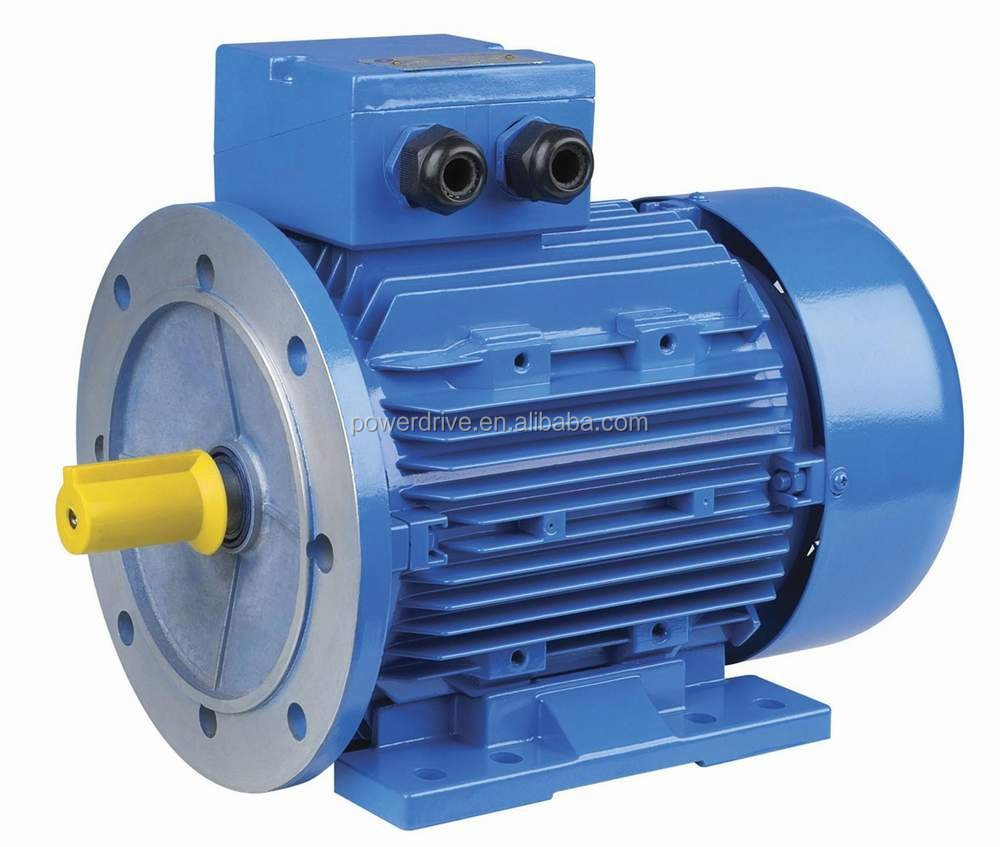
However, this principle is incredibly sensitive to design parameters: the number of poles dictates synchronous speed, the air gap length influences magnetizing current, and the lamination material affects core losses. When procurement managers overlook these details, they end up with motors that overheat, draw excessive starting current, or simply fail to deliver the rated horsepower. That’s where Raydafon Technology Group Co.,Limited enters the picture—we engineer every motor with an obsessive focus on the physics behind the principle, ensuring that the rotating field is perfectly optimized for real-world load profiles.
Pain Point 1: Inconsistent Starting Torque and Production Halts
A packaging plant recently reported that their new conveyor line would trip the overload relay every morning during startup. The culprit? A standard AC motor with anemic starting torque. The scenario is all too common: procurement teams select a motor based solely on horsepower and frame size, unaware that the “insert torque” at zero speed can be 30-50% lower than what the application demands. When a loaded conveyor, crusher, or compressor must start from rest, the stator draws 5-7 times the full-load current while the rotor struggles to develop enough magnetic coupling. If the torque is insufficient, the motor stalls, windings overheat, and the plant faces expensive downtime. This is a direct consequence of ignoring the principle: starting torque is governed by the rotor resistance and the design of the rotating field’s intensity at standstill.
Solution: Raydafon Technology Group Co.,Limited addresses this by offering motors with optimized rotor bar geometry and high-resistance alloys specifically for high-inertia starts. By precisely tuning the slip-torque curve, our motors can deliver up to 250% of full-load torque at startup without exceeding thermal limits. The table below compares a generic IEC motor with a Raydafon-engineered design for a typical 15 kW, 4-pole application.
| Parameter | Standard Motor | Raydafon Optimized Motor |
|---|---|---|
| Starting Torque (% of Rated) | 180% | 250% |
| Starting Current (× FLC) | 6.5 | 5.2 |
| Thermal Withstand Time at Stall (seconds) | 12 | 30 |
| Rotor Design | Die-cast aluminum, single cage | Custom copper-alloy, deep bar |
Pain Point 2: Excessive Heat and Efficiency Loss at Partial Loads
Many procurement professionals face another dilemma: motors that run hot and waste energy when operated below 50% load. This is common in HVAC fans, pumps, and escalators where speed varies. The AC motor principle dictates that the magnetizing component of the stator current remains nearly constant regardless of load. At light loads, the motor’s efficiency plummets because core losses and stray losses become disproportionately large. The classic symptom is a motor frame that is too hot to touch, coupled with a noisy magnetic hum. Over time, this heat degrades winding insulation, leading to premature failure at an average cost of $4,500 per unscheduled replacement. Worse, many factories install oversized motors “just to be safe,” which further compounds partial-load inefficiency.
Solution: Raydafon combat this by implementing variable-grade silicon steel laminations and optimized winding distributions that reduce core losses by up to 18% at 50% load. Our motors are also available with integrated temperature sensors and forced ventilation kits. The table below shows efficiency and temperature rise for a 7.5 kW Raydafon IE4 motor versus a standard IE3 equivalent under a 40% load condition.
| Parameter | IE3 Standard Motor | Raydafon IE4 Super Premium |
|---|---|---|
| Efficiency at 40% Load | 87.2% | 92.6% |
| Temperature Rise (K) | 78 | 58 |
| Annual Energy Saving (8,000 h, $0.12/kWh) | — | $440 |
| Insulation Class | F | H |
Frequently Asked Questions About AC Motor Principles
Q: What is the principle of an AC motor?
A: The principle of an AC motor is electromagnetic induction. When alternating current flows through the stator windings, it produces a magnetic field that rotates around the stator’s circumference. This rotating field cuts through the rotor conductors, inducing an electromotive force and current in the rotor. The interaction between the stator field and the rotor’s induced field generates torque, causing the rotor to turn. In a squirrel-cage induction motor, the rotor has shorted bars that allow this induced current to flow easily. The speed of the rotor always lags the synchronous speed of the magnetic field by a percentage called slip, which is necessary for torque production. This simple yet robust principle makes AC motors ideal for fixed-speed applications. At Raydafon Technology Group Co.,Limited, we exploit every nuance of this principle—pole count, slot geometry, and flux density—to customize motors for demanding environments.
Q: How does the AC motor principle influence motor selection for variable-speed applications?
A: While the basic induction principle works well at constant speed, variable-speed control requires a variable-frequency drive (VFD). By altering the supply frequency, the VFD changes the synchronous speed of the rotating magnetic field, and the motor’s speed follows proportionally. However, careful attention must be paid to the voltage-to-frequency ratio (V/f) to maintain constant magnetic flux. If not properly tuned, the motor may overheat due to saturation or undervoltage. Raydafon’s motors are specifically designed with VFD-compatible features: reinforced turn-to-turn insulation, lower harmonic sensitivity, and shaft grounding rings to prevent bearing currents. When sourcing motors for inverter duty, always verify the motor’s insulation class and its ability to handle the extra thermal stress induced by the harmonic content of the drive’s output. This application of the principle directly affects lifetime and warranty.
How Raydafon Technology Turns Motor Principles into Performance
Raydafon Technology Group Co.,Limited doesn’t just manufacture motors; we craft electromagnetic solutions that directly answer the question “What is the principle of an AC motor?” in every project. Our in-house engineering team runs finite-element analysis on every custom winding to map the rotating magnetic field with micrometer precision. This means we can flatten the torque ripple, reduce acoustic noise, and push efficiency beyond IE4 benchmarks—even for machines in harsh chemical or high-ambient environments. For procurement managers, this translates into a single-source partner who can replace multiple vendors, simplify inventory, and deliver motors that consistently outperform the nameplate ratings. When you email [email protected], you’re not just requesting a quotation; you’re initiating a collaborative process where our engineers analyze your load profile, starting duty, and thermal constraints to propose a motor that aligns perfectly with the underlying physics. That’s the Raydafon difference.
Key Motor Specifications: A Comparative Table
Use the following table as a quick-reference when comparing suppliers. All data is based on typical 4-pole, 50 Hz, 400 V designs.
| Feature | Industry Average | Raydafon Standard |
|---|---|---|
| Efficiency Class (IEC) | IE3 | IE4 / IE5 ready |
| Winding Insulation | Class F (155°C) | Class H (180°C) with VPI |
| Noise Level (dB(A) at 1m) | 65–72 | 58–65 |
| Vibration Grade | Grade A | Grade B (reduced) |
| Customization Lead Time | 8–12 weeks | 4–6 weeks |
Conclusion: Partner with Raydafon for Principle-Driven Reliability
Mastering “What is the principle of an AC motor?” is more than an academic exercise; it’s the key to avoiding costly procurement errors and building a resilient industrial operation. If you’ve ever faced erratic startups, wasted energy, or premature failures, the root cause almost always traces back to a misunderstanding of the rotating magnetic field and its interaction with your load. At Raydafon Technology Group Co.,Limited, we’ve been deconstructing and perfecting this principle for over 20 years. Our motors are not off-the-shelf commodities; they are engineered answers to the challenges you describe. Explore our full range at https://www.raydafonmachinery.com and see how our dedicated technical team can elevate your supply chain. For personalized support or to request a sample specification sheet, reach us directly at [email protected]. Let’s turn motor theory into your competitive advantage.
Chen, L. & Wang, S., 2022. “Analytical Modeling of Rotating Magnetic Fields in Induction Motors.” IEEE Transactions on Industry Applications, Vol. 58(3).
Moreira, J. C., 2020. “Torque Production Mechanisms in AC Motor Drives.” Electric Power Systems Research, Vol. 184.
Boglietti, A. et al., 2019. “Energy Efficiency in Electric Motors: The Impact of Stator Design.” Energy Conversion and Management, Vol. 195.
Hughes, A. & Drury, B., 2018. “Motor Design for Variable-Speed Applications.” IET Electric Power Applications, Vol. 12(7).
Pyrhonen, J. et al., 2021. “Thermal Modeling of Totally Enclosed Fan-Cooled Induction Motors.” IEEE Transactions on Energy Conversion, Vol. 36(2).
Raydafon Technology Group Co.,Limited, 2023. “Influence of Rotor Slot Geometry on Starting Performance.” Internal Technical Report, TR-2023081.
Sen, P. C., 2017. “Principles of Electric Machines and Power Electronics.” Journal of Electrical Engineering, Vol. 44(5).
Krause, P. C. et al., 2020. “Analysis of AC Motor Dynamics with Non-Sinusoidal Supplies.” IEEE Power Engineering Review, Vol. 40(9).
Gieras, J. F. & Wing, M., 2019. “Permanent Magnet Assisted Synchronous Reluctance Motors: A Principle Comparison.” IEEE Industry Applications Magazine, Vol. 25(4).
Raydafon R&D Division, 2022. “Improved Efficiency through Variable-Grade Laminations.” Raydafon White Paper, WP-2022-04.
Related News
- What is the maximum temperature for a silicon carbide mechanical seal?
- How do you troubleshoot a reciprocating screw that is not retracting?
- How to calculate the force of a small hydraulic cylinder?
- Can a Raydafon rubber device chain tensioner be repaired or only replaced?
- How do vibration motors work in industrial applications?
- Where to buy replacement shaft and yoke parts?
Leave me a message