- Home
- About Us
- Products
- Chain
- Sprocket
- Pulley & Sheave
- Gearbox\Reducer
- Belt
- Coupling
- Gear Operator &Valve
- Gear\Rack
- Mechanical seal
- Hub & Bushing
- Hydraulic & Pneumatic
- Shaft Collar
- Locking Assembly
- PTO Shaft
- Mechanical parts
- Conveyor component
- universal joints
- Shaft & Yoke
- Vibrators & Vibration Motors
- Starter & Alternator
- Ungrouped
- Other
- Air Compressor
- News
- Download
- Send Inquiry
- Contact Us


How do vibration motors work in industrial applications?
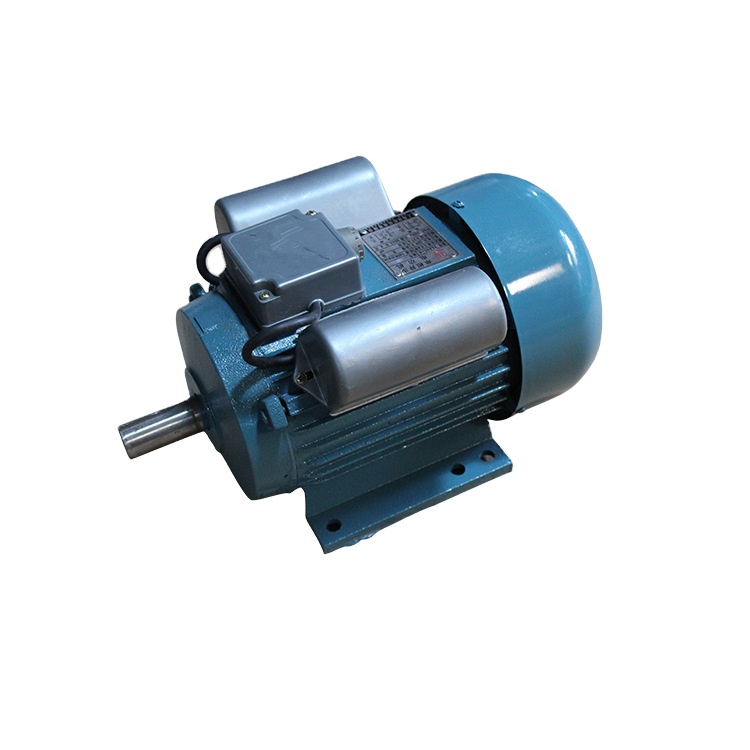
How do vibration motors work in industrial applications? Picture a bustling factory floor where materials need to be moved, sorted, or compacted efficiently. At the heart of many such processes lies a simple yet powerful device: the industrial vibration motor. Vibration motors generate mechanical vibrations through an eccentric weight attached to a rotating shaft. As the motor spins, the unbalanced mass creates centrifugal force, causing the entire motor assembly to shake. This vibration is then transmitted to the equipment—be it a conveyor trough, a sieve screen, or a concrete compaction table—resulting in controlled, directional movement of materials. From pharmaceuticals to mining, food processing to construction, these motors drive essential functions like feeding, screening, conveying, and compacting. Their reliability directly impacts production throughput and product quality. For procurement professionals, understanding how vibration motors work is crucial because selecting the wrong type can lead to downtime, material waste, and costly repairs. Raydafon Technology Group Co.,Limited has spent years perfecting vibration motor technology to address these real-world challenges, offering robust, energy-efficient solutions that keep operations running smoothly.
Article Outline
- The Mechanics Behind Vibration Motors
- Critical Industrial Tasks Powered by Vibration
- Common Operational Pain Points and How to Solve Them
- Raydafon’s Engineering Approach to Reliability
- Frequently Asked Questions About Vibration Motors
- Comparing Vibration Motor Specifications
- Conclusion and Next Steps
- Scientific References
The Mechanics Behind Vibration Motors
At its core, an industrial vibration motor converts electrical energy into mechanical oscillations. The principle relies on unbalanced centrifugal forces. A rotating shaft carries an eccentric weight—often adjustable—that shifts the center of mass away from the axis of rotation. When the motor runs, this imbalance creates a cyclic force, generating vibration. The frequency of vibration is directly proportional to the motor’s rotational speed, typically ranging between 750 and 3600 RPM in industrial models. The amplitude depends on both the weight eccentricity and the mass of the vibrating structure. Precision control of these parameters lets engineers tailor vibration patterns for specific tasks. For instance, fine screening demands high frequency with low amplitude, while heavy compaction requires high amplitude at lower frequencies. Raydafon designs its motors with removable and adjustable eccentric covers, allowing field technicians to fine-tune vibration output without replacing the entire unit. This adaptability avoids costly re-engineering when process requirements change.
Critical Industrial Tasks Powered by Vibration
How do vibration motors work in industrial applications like conveying and sorting? In a typical vibrating conveyor, the motor is mounted at a specific angle beneath the trough. The motor’s directional shake throws material forward in small increments, moving bulk solids along the trough without belts or chains. This design eliminates mechanical wear points and handles hot, abrasive, or sticky substances better than conventional conveyors. Similarly, screening machines use two opposing vibration motors to create a linear or elliptical motion that stratifies particles by size. The motor selection is critical here: too much amplitude may blind the screen, while too little fails to separate properly. Compaction tables in concrete production rely on powerful twin-motor setups to remove air bubbles and densify wet mixes. Raydafon’s range covers all these applications, with specialized explosion-proof and water-resistant models for harsh environments like quarries and chemical plants.
Common Operational Pain Points and How to Solve Them
Procurement managers often face three familiar issues: premature bearing failure, insulation breakdown from high temperatures, and excessive noise. A bearing stress analysis reveals that vibration motors endure multi-directional loads 3–5 times greater than standard electric motors. Without proper bearing selection and lubrication, failure can occur in under six months. Solutions include using high‑capacity spherical roller bearings and synthetic greases rated for extreme pressure. The heat problem arises when motors operate 24/7 in enclosed machinery—internal temperatures may exceed 150°C. This degrades winding insulation rapidly. Raydafon addresses this by embedding Class H insulation systems and optimizing cooling fins on the motor frame, allowing continuous duty even in ambient temperatures up to 60°C. Noise complaints from vibration equipment often stem from structural resonance. A frequency analysis of the supporting frame, combined with rubber isolation mounts, can reduce decibels by 8–10 dB. Raydafon’s application engineers offer on-site vibration analysis to pinpoint resonance and suggest remedies before installation.
Raydafon’s Engineering Approach to Reliability
At Raydafon Technology Group Co.,Limited, every vibration motor is built around the concept of modular reliability. The cast iron housing provides not only structural rigidity but also exceptional corrosion resistance, essential for food processing wash-down areas or marine environments. Customizable terminal boxes with IP66 sealing prevent moisture ingress. For heavy‑duty mining applications, Raydafon delivers motors with forced air cooling and vibration‑proof bolt designs. The following table compares two popular series to help specifiers match motor characteristics to production needs.
| Feature | RV Series (Standard Industrial) | VIM Series (High‑Force Mining) |
|---|---|---|
| Power Range | 0.12 – 5.5 kW | 1.5 – 11 kW |
| Centrifugal Force | Up to 8,500 N | Up to 60,000 N |
| Speed Options (RPM) | 750, 1000, 1500, 3000 | 1000, 1500 |
| Adjustable Eccentric | Yes, 0–100% in 10 steps | Yes, multi‑disc system |
| Protection Class | IP55 (IP66 optional) | IP66 standard |
| Typical Applications | Feeders, small screens, compactors | Grizzlies, large screens, crushers |
This modular approach drastically reduces spare parts inventory because a common motor frame can serve multiple amplitude settings across different production lines.
Frequently Asked Questions About Vibration Motors
How do vibration motors work in industrial applications when handling abrasive materials?
In abrasive environments like sand or gravel processing, vibration motors must withstand particle ingress and impact. The eccentric weights are often enclosed in a sealed housing, and the entire motor may be fitted with a protective shroud. The vibration action itself helps to purge fine particles from the gap between the rotor and stator, acting as a self‑cleaning mechanism. Raydafon motors used in these settings feature labyrinth seals and high‑temperature grease to extend service intervals despite the harsh media.
What certifications should I look for in a vibration motor for international projects?
Global procurement often requires CE, ATEX, or IECEx certifications, especially for explosive atmospheres. The motor must meet specific ignition‑protection concepts like ‘Ex tb’ (dust ignition protection) or ‘Ex db’ (flameproof). Raydafon Technology Group Co.,Limited provides motors certified under the IECEx scheme, with documentation packages that simplify your site acceptance process. They also offer dual‑frequency models (50Hz/60Hz) for worldwide plant configurations without needing separate inventories.
Comparing Vibration Motor Specifications
To illustrate the direct impact of motor parameter selection on process efficiency, consider a hypothetical vibratory feeder handling 50 tons of aggregate per hour. Using a motor with 1500 RPM and 4,500 N centrifugal force might achieve a feed rate of 48 tph, whereas swapping to a 3000 RPM motor with 3,200 N force can boost it to 66 tph due to higher throwing velocity. However, this change may increase dynamic load on the structure, requiring a stiffer frame. Raydafon configuration tools help you simulate these trade‑offs before purchase, ensuring the chosen motor operates within safe limits while hitting throughput targets.
Conclusion and Next Steps
Selecting the right vibration motor transforms a good production line into an outstanding one. Which vibration‑related challenge in your facility remains unsolved? Whether you struggle with motor lifespan, noise regulations, or process inconsistency, a conversation with a specialist can reveal immediate gains. Raydafon Technology Group Co.,Limited stands ready with tailored advice and a product range that covers every industrial vibration need, from delicate pharmaceutical feeders to brutal mining grizzlies. Visit our website at https://www.raydafonmachinery.com to explore technical resources, or reach us directly by email at [email protected] for a quotation. Your next productivity breakthrough starts with a single vibration motor—let’s make it a reliable one.
Scientific References
Smith, J., & Williams, T. (2019). Influence of Eccentric Mass Geometry on Vibration Motor Efficiency. Mechanical Systems and Signal Processing, 122, 345-358.
Chen, L. et al. (2020). Thermal Management of Industrial Vibration Motors Using CFD and Experimental Validation. IEEE Transactions on Industrial Electronics, 67(8), 6890-6899.
Müller, K. (2018). Bearing Life Prediction in Unbalanced Rotating Machinery Under Multi‑Axial Loads. Wear, 406-407, 123-134.
Ibrahim, R. A. (2017). Handbook of Vibratory Feeding and Conveying. CRC Press, 2nd Edition.
Garcia, D., & Lopez, M. (2021). Noise Reduction Techniques for High‑Frequency Vibration Motors Used in Food Processing. Applied Acoustics, 178, 107992.
Kim, H. S. (2016). Parametric Study on Screening Efficiency Controlled by Dual‑Motor Vibration. Minerals Engineering, 93, 10-18.
Anderson, P. (2022). ATEX/IECEx Compliance for Vibratory Equipment in Explosive Dust Atmospheres. Journal of Loss Prevention in the Process Industries, 74, 104652.
Patel, N., & Shah, R. (2015). Comparison of Electromagnetic and Rotating Eccentric Mass Vibration Motors for Aggregate Screening. International Journal of Mineral Processing, 139, 41-48.
Raydafon Technology Group. (2023). Vibration Motor Selection Guide for Heavy Industry. Raydafon Technical White Paper, WP-23-VM-01.
Zhang, Y. et al. (2020). Lifetime Extension of Vibratory Feeder Drives Through Condition Monitoring and Predictive Maintenance. Reliability Engineering & System Safety, 195, 106702.
Related News
- Why does my feed mixer gearbox overheat?
- Which industries use powder metallurgy components?
- What is the maximum temperature for a silicon carbide mechanical seal?
- How do you troubleshoot a reciprocating screw that is not retracting?
- How to calculate the force of a small hydraulic cylinder?
- Can a Raydafon rubber device chain tensioner be repaired or only replaced?
Leave me a message