- Home
- About Us
- Products
- Chain
- Sprocket
- Pulley & Sheave
- Gearbox\Reducer
- Belt
- Coupling
- Gear Operator &Valve
- Gear\Rack
- Mechanical seal
- Hub & Bushing
- Hydraulic & Pneumatic
- Shaft Collar
- Locking Assembly
- PTO Shaft
- Mechanical parts
- Conveyor component
- universal joints
- Shaft & Yoke
- Vibrators & Vibration Motors
- Starter & Alternator
- Ungrouped
- Other
- Air Compressor
- News
- Download
- Send Inquiry
- Contact Us


Why does my feed mixer gearbox overheat?
At 5:45 a.m., the feed mixer is already working through the first load, but the gearbox housing feels much hotter than it should. The operator reports a burnt-oil smell, and the infrared thermometer shows surface temperatures above 90°C. Why does my Feed Mixer Gearbox overheat? For procurement officers, farm managers, and maintenance teams, this question can mean the difference between a routine feeding day and a costly unplanned stoppage. Overheating is not a single fault; it is a symptom of lubrication breakdown, bearing wear, shaft misalignment, excessive load, or poor heat dissipation. When the gearbox runs too hot, oil film strength drops, pitting and scuffing accelerate, and seals lose flexibility. The result is reduced service life and higher total cost of ownership. In this practical guide, we explain the most common causes in field terms, provide checklists and parameter tables, and show how Raydafon Technology Group Co.,Limited helps buyers solve the problem with robust feed mixer gearbox designs.
- 1. Why Does My Feed Mixer Gearbox Overheat? Common Causes
- 2. Lubrication Problems That Drive Up Heat
- 3. Bearing Wear and Shaft Misalignment
- 4. Overload, Duty Cycle and Ambient Conditions
- 5. Sealing, Contamination and Cooling
- 6. Quick Troubleshooting Guide
- 7. How Raydafon Technology Group Co.,Limited Solves Overheating
- 8. Frequently Asked Questions
- 9. References
Why Does My Feed Mixer Gearbox Overheat? Common Causes
Picture a feedlot maintenance supervisor walking toward a TMR mixer after the morning batch. The gearbox is too hot to touch, the paint near the bearing caps is discolored, and production has stopped. The immediate concern is not just the repair cost but the missed feeding window. Overheating in a feed mixer gearbox usually comes from a short list of root causes: low oil level, wrong oil viscosity, bearing preload issues, shaft misalignment, overloading, or blocked cooling surfaces. The fix starts with a disciplined inspection sequence instead of guessing.
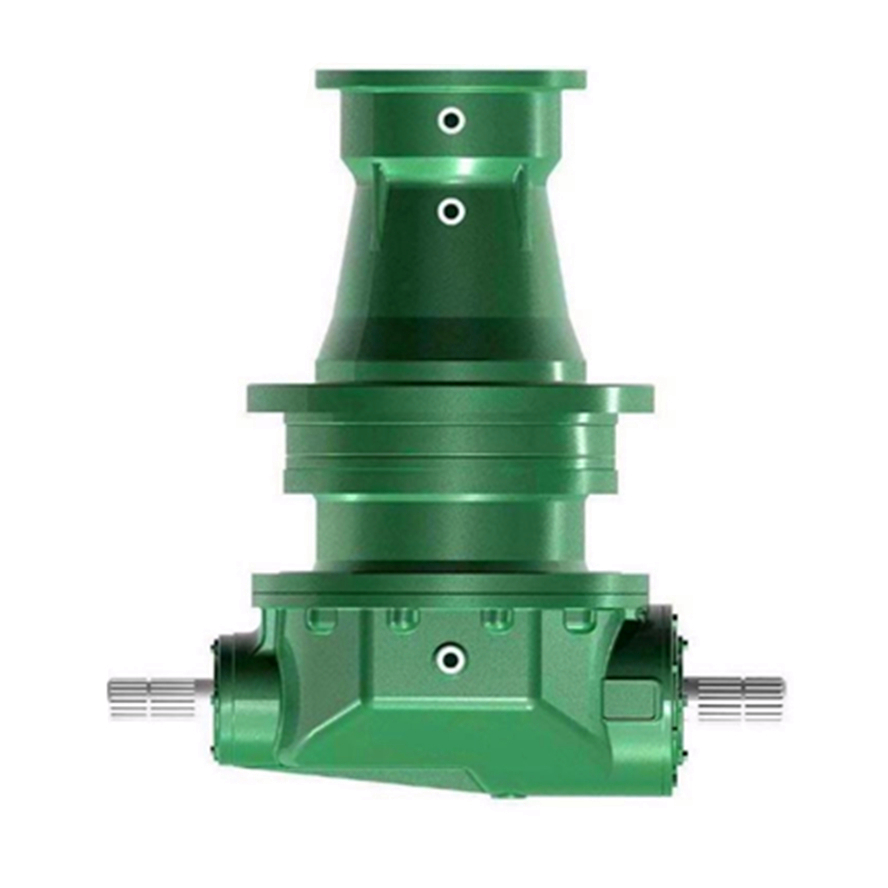
We recommend three checks before opening any covers. First, measure the housing temperature at multiple points and compare with the manufacturer's limit. Second, check oil level and appearance while the mixer is parked on level ground. Third, run the mixer briefly under no load and listen for abnormal bearing noise. Many overheating cases are resolved with an oil change or a cleaned breather, but persistent heat points to a deeper mechanical issue.
| Potential cause | Typical symptom | Normal reference range |
|---|---|---|
| Low lubricant level | Sudden temperature rise, noisy gear mesh | Oil level within sight glass 60-80% |
| Excessive load | High temperature after long mixing cycles | Housing surface below 85°C for standard units |
| Bearing failure | Local hot spots near end caps | Bearing outer ring below 100°C |
Lubrication Problems That Drive Up Heat
A common field story is the buyer who replaces a factory-filled gearbox with a cheaper general-purpose gear oil. Within two weeks, the unit runs 10°C hotter, and the oil darkens quickly. Feed mixer gearboxes operate under high torque and frequent starts, so oil viscosity must match the load and ambient temperature. If the oil is too thick, churning losses increase; if it is too thin, the film collapses under load and metal contact generates heat. Water contamination from cleaning or condensation has the same effect because it reduces film strength.
The solution is to use the viscosity grade specified for the gearbox size and expected ambient range. In many agricultural mixer drives, ISO VG 220 or ISO VG 320 gear oils are suitable for moderate climates, while ISO VG 460 may be needed in hot regions or heavily loaded applications. Check the oil level every week and change oil according to the operating hours, not just the calendar.
| Lubrication parameter | Recommendation | Overheating risk if ignored |
|---|---|---|
| Viscosity grade | ISO VG 220 or ISO VG 320 for most mixer drives | Higher churning loss or metal contact |
| Oil temperature range | 70°C to 90°C continuous | Above 100°C accelerates oil degradation |
| Water content | Below 0.05% by volume | Reduced film strength and corrosion |
Bearing Wear and Shaft Misalignment
Another common scenario is a mixer that passes oil checks but still shows high temperatures at the output shaft bearing. The operator notices a rhythmic vibration and a metallic noise that worsens under load. The real problem is often bearing wear or shaft misalignment. When the shaft is not aligned with the driven auger, the resulting radial load can increase bearing friction and raise the local temperature by 10-20°C. Worn bearings reduce internal clearance, which may cause preload and rapid heat buildup.
Use a dial indicator or laser alignment tool to check coupling alignment. Replace bearings showing excessive radial clearance or roughness. On new installations, verify that the motor and gearbox shafts are aligned within the manufacturer's tolerance before applying full load. This simple step prevents many early-life overheating failures.
| Bearing check | Target / alarm | Action if exceeded |
|---|---|---|
| Bearing outer ring temperature | Below 100°C / alarm above 110°C | Stop and inspect |
| Radial clearance | 0.03-0.08 mm typical for mixer shaft | Replace if outside drawing limits |
| Misalignment tolerance | Below 0.05 mm for rigid coupling | Realign motor and gearbox |
Overload, Duty Cycle and Ambient Conditions
In many feedlot operations, the mixer is pushed beyond its original design because the ration changes or the batch size increases. A gearbox that worked fine at 8 cubic meters may overheat at 10 cubic meters if the motor power and service factor are not upgraded. Overload does not always mean higher motor current; it can also mean longer continuous running time in summer, high ambient temperature, or frequent reversing that does not allow the oil to cool. The thermal balance of a gearbox depends on both mechanical load and cooling time.
The solution is to calculate the actual absorbed power and compare it with the gearbox rated thermal capacity. In hot climates, select a larger unit or use a fan-cooled or air-blast-cooled gearbox option. Reduce the duty cycle during peak temperature hours, and keep the area around the gearbox clear of straw, dust, and feed residue to improve airflow.
| Load parameter | Typical limit | Risk |
|---|---|---|
| Service factor | 1.5-2.0 for mixer drives | Below 1.3 increases heat and wear |
| Ambient temperature | -10°C to 40°C standard | Above 40°C requires derating |
| Continuous run time | 2-4 hours typical | Extended running raises oil temperature |
Sealing, Contamination and Cooling
Dust and feed particles are part of the daily environment in a feed mill. They settle on cooling fins, block the breather, and work into worn seals. A farmer may notice oil weeping from the input seal and then a gradual rise in gearbox temperature. Contaminated oil loses lubricity, and abrasive particles accelerate wear, which creates more heat. Blocked cooling fins reduce heat dissipation even if the internal condition is still acceptable.
Clean the housing cooling surfaces at least once a week in dusty conditions. Replace damaged seals and breathers immediately. If the gearbox is not equipped with an oil sight glass or temperature sensor, consider specifying these features on your next replacement. They allow early detection before overheating damage occurs.
| Seal / cooling item | Inspection frequency | Replacement trigger |
|---|---|---|
| Breather | Weekly | Clogged or oil mist present |
| Output shaft seal | Monthly | Visible leak or wet dust accumulation |
| Cooling fins | Weekly | Dust layer thicker than 3 mm |
Quick Troubleshooting Guide
Use the table below to narrow down the cause of high gearbox temperature. Always record the ambient temperature and operating time before taking measurements.
| Symptom | Likely cause | Recommended action |
|---|---|---|
| Uniform high temperature | Overload or oil breakdown | Check load and oil viscosity |
| Hot spot at bearing cap | Bearing wear | Replace bearing and inspect shaft |
| High temperature after seal replacement | Preload or misalignment | Recheck assembly clearances |
| Temperature rises during summer | Insufficient cooling | Clean fins, reduce duty cycle |
How Raydafon Technology Group Co.,Limited Solves Overheating
Many overheating problems come from selecting a gearbox by horsepower alone without considering thermal capacity, duty cycle, and mounting environment. This is where Raydafon Technology Group Co.,Limited provides a practical advantage. Raydafon feed mixer gearboxes are designed with oversized housings, high-efficiency gear geometry, and reinforced bearing arrangements to reduce heat generation and improve heat dissipation. The company works directly with procurement teams and end users to confirm service factor, oil cooling options, and shaft alignment requirements before shipment.
| Design parameter | Standard gearbox | Raydafon solution |
|---|---|---|
| Thermal capacity margin | Limited in compact housings | Higher via increased surface area |
| Bearing type | Standard ball or tapered roller | Heavy-duty spherical or tapered roller |
| Gear finishing | Conventional cut | Precision ground for lower friction |
| Cooling options | Natural convection | Optional fan or external cooling |
By choosing a gearbox that matches the real operating profile, buyers can avoid repeated overheating and reduce lifetime maintenance costs. Raydafon Technology Group Co.,Limited also supports technical reviews for retrofit projects, so the replacement unit fits the existing mounting without creating alignment-related hot spots.
Frequently Asked Questions
Why does my feed mixer gearbox overheat even when the oil level is normal?
Normal oil level does not mean the oil is doing its job. The oil may be the wrong viscosity, heavily contaminated with water or metal particles, or degraded from extended service. The oil may also be too hot because the breather is blocked, causing pressure build-up and reduced cooling. Check the oil condition, viscosity grade, and breather before looking for mechanical faults.
Why does my feed mixer gearbox overheat after changing the seals or bearings?
After a rebuild, overheating often results from incorrect bearing preload, shaft misalignment, or a seal installed with excessive lip interference. If the bearing preload is too high, the rolling elements generate heat immediately. If the seal lip is pressed too hard against the shaft, friction adds local heat. Recheck the assembly clearances and run the gearbox without load while monitoring the temperature rise.
Need a reliable replacement? Contact Raydafon Technology Group Co.,Limited for application-specific feed mixer gearbox selections. Our team will help you verify thermal load, mounting dimensions, and service factor before you order. Email [email protected] with your mixer model, motor power, and current gearbox ratio.
References
Höhn, B. R., Michaelis, K., & Otto, H. P. (2011). Influence of oil temperature on gear scuffing load capacity. Gear Technology, 28(3), 42-49.
Zhu, D., & Cheng, H. S. (1991). A comprehensive analysis of contact pressure, deformation, and temperature in spur gears. Tribology Transactions, 34(4), 585-593.
Krantz, T. L., & Handschuh, R. F. (2006). A study of spur gear scuffing at elevated oil temperatures. Journal of Tribology, 128(2), 391-398.
Bartz, W. J. (1998). Lubricants and lubrication engineering: A review of gear oil selection. Industrial Lubrication and Tribology, 50(4), 164-171.
Ouyang, T., Liang, J., & Xie, Y. (2018). Thermal analysis of a helical gear transmission system under mixed lubrication conditions. Journal of Mechanical Science and Technology, 32(7), 3181-3190.
Terrell, R. L., & Loewenthal, S. H. (1982). Effect of gear contact temperature on scuffing and pitting in aerospace gear systems. NASA Technical Memorandum, 82912, 1-18.
Li, S., Kahraman, A., & Lim, T. C. (2010). A transient heat transfer model for spur gear pairs. International Journal of Thermal Sciences, 49(7), 1326-1335.
Seireg, A. A. (1965). Thermal considerations in the design of gear drives. Journal of Engineering for Industry, 87(3), 313-318.
Dudley, D. W. (1954). Practical gear design for thermal capacity. Machinery, 61(3), 168-176.
Zhang, J., Song, C., & Zhang, Y. (2021). Influence of oil-jet lubrication on temperature distribution in high-speed gearboxes. Lubrication Science, 33(5), 286-298.
Previous :
-
Related News
- Which industries use powder metallurgy components?
- What is the maximum temperature for a silicon carbide mechanical seal?
- How do you troubleshoot a reciprocating screw that is not retracting?
- How to calculate the force of a small hydraulic cylinder?
- Can a Raydafon rubber device chain tensioner be repaired or only replaced?
- How do vibration motors work in industrial applications?
Leave me a message