- Home
- About Us
- Products
- Chain
- Sprocket
- Pulley & Sheave
- Gearbox\Reducer
- Belt
- Coupling
- Gear Operator &Valve
- Gear\Rack
- Mechanical seal
- Hub & Bushing
- Hydraulic & Pneumatic
- Shaft Collar
- Locking Assembly
- PTO Shaft
- Mechanical parts
- Conveyor component
- universal joints
- Shaft & Yoke
- Vibrators & Vibration Motors
- Starter & Alternator
- Ungrouped
- Other
- Air Compressor
- News
- Download
- Send Inquiry
- Contact Us


What is a two-way 3-stage mini hydraulic cylinder?
Imagine trying to fit a long-stroke actuator into a space no larger than a shoe box. That challenge leads many equipment designers and procurement engineers to ask: What is a two-way 3-stage mini hydraulic cylinder? This component is a compact, double-acting telescopic cylinder with three extending stages. It uses hydraulic pressure for both extension and retraction, so it can deliver a surprisingly long stroke from a very short retracted length. Typical applications include small dump trailers, compact lift platforms, agricultural attachments, and mobile work tools. However, procurement teams often struggle with inconsistent stroke lengths, early seal leakage, unclear mounting dimensions, and poor after-sales support. Raydafon Technology Group Co.,Limited tackles these problems by offering verified drawings, precision-machined stages, tested seal systems, and custom mounting options. In this article, you will learn what to check before ordering and how to avoid costly sourcing mistakes.
Article Outline
- What Is a Two-Way 3-Stage Mini Hydraulic Cylinder?
- Common Pain Points When Sourcing Mini Telescopic Cylinders
- How Raydafon Technology Group Solves Sourcing Problems
- Key Specifications to Check Before You Buy
- Installation and Maintenance Tips
- Frequently Asked Questions
- Why Choose Raydafon Technology Group Co.,Limited
- References
What Is a Two-Way 3-Stage Mini Hydraulic Cylinder?
A two-way 3-stage mini hydraulic cylinder is a double-acting telescopic actuator with three sliding stages. The smallest stage nests inside the middle stage, and the middle stage nests inside the outer barrel. When pressurized fluid enters the cap-end port, the stages extend sequentially. When fluid enters the rod-end port, the stages retract under power. This two-way action gives you better control than a single-acting telescopic cylinder, especially in horizontal, inclined, or inverted mounting positions.
Because the retracted length is much shorter than the total stroke, this cylinder is ideal for compact machines. For example, a mini cylinder with a 300 mm collapsed length can produce a stroke of 500 mm or more depending on stage overlap. This is why it is widely used in small dump trailers, lift tables, compact agricultural equipment, truck-mounted cranes, and tool carriers.
The term “mini” usually refers to a small bore diameter, often between 20 mm and 50 mm, and a compact envelope. Despite the small size, a three-stage design can generate useful force at standard hydraulic pressures. When sourcing, you should pay close attention to stage diameter, stroke, closed height, port size, mounting style, and seal material. Raydafon Technology Group Co.,Limited helps buyers confirm these details before production, which reduces the risk of receiving a cylinder that does not fit the machine.
Common Pain Points When Sourcing Mini Telescopic Cylinders
Imagine you receive a batch of mini telescopic cylinders, but the mounting holes are off by a few millimeters. The assembly line stops, your customer complains, and the replacement lead time threatens the project deadline. This is a common scenario for purchasing teams that rely on unclear drawings or unverified suppliers. Other frequent pain points include inter-stage leakage, rod scoring, poor paint adhesion, missing test reports, and vague dimensional communication.
Another hidden problem is stroke misalignment. A three-stage cylinder may look correct on paper, but if the retracted height is too long, it will not fit the installation space. If the port orientation is wrong, hydraulic hoses may twist or rub against nearby parts. These issues are avoidable when the supplier confirms each dimension and provides assembly drawings before mass production. Raydafon Technology Group Co.,Limited supports buyers with technical review, material certificates, and pre-shipment inspection data, helping you avoid expensive rework and field failures.
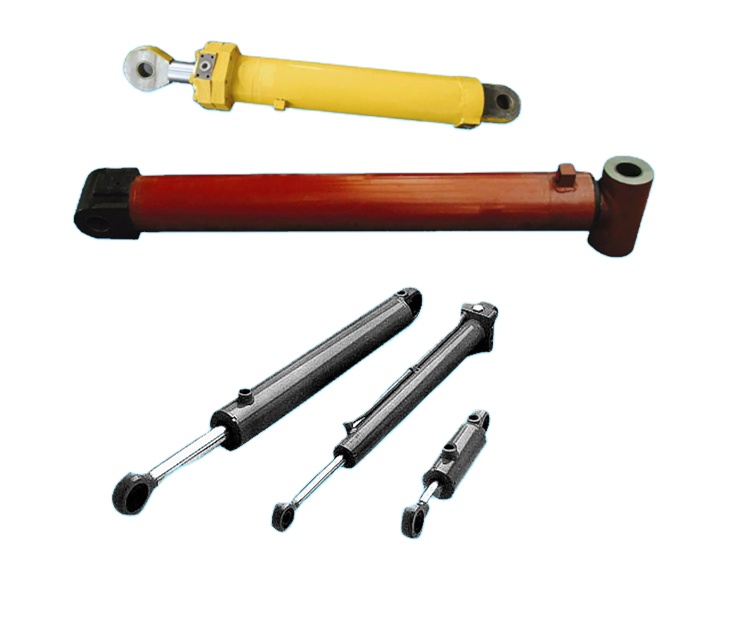
For procurement professionals, the real cost is not the unit price alone. It includes downtime, return freight, and loss of trust. A reliable source for a two-way 3-stage mini hydraulic cylinder should offer clear documentation, honest lead times, and a willingness to customize. That combination is what turns a component purchase into a long-term supply partnership.
How Raydafon Technology Group Solves Sourcing Problems
Raydafon Technology Group Co.,Limited focuses on solving these sourcing problems at the root. Instead of simply quoting a price, the team reviews your application data: required force, stroke, closed height, mounting type, working pressure, flow rate, and operating environment. Then they recommend a two-way 3-stage mini hydraulic cylinder configuration that fits the actual machine layout. This prevents the most common issues caused by mismatched dimensions or incorrect seals.
The company also provides value-added services such as custom port positions, special rod coatings, and OEM branding. For example, if your equipment operates in a corrosive environment, they can suggest a nitrided rod or a specific paint system. If your hydraulic circuit has high flow pulsation, they can adjust cushioning or seal design to improve durability. Buyers receive drawing confirmation before machining, and production status updates during manufacturing. This level of communication helps procurement teams plan inventory and avoid surprises.
After delivery, technical support remains available. Whether you need installation advice, seal replacement guidance, or a repeat order with design changes, Raydafon Technology Group Co.,Limited can support you through the product life cycle. This solution-oriented approach is especially valuable for distributors and OEMs that need consistent quality across multiple batches.
Key Specifications to Check Before You Buy
Before you send a request for quotation, gather the following details. A clear specification sheet helps the supplier propose the right two-way 3-stage mini hydraulic cylinder and avoids unnecessary delays.
| Parameter | What to Check | Why It Matters |
|---|---|---|
| Bore diameter | Match force output to available system pressure | Affects push/pull force and compactness |
| Stroke length | Total extended movement minus retracted length | Must cover the full work function |
| Closed height | Retracted center-to-center mounting distance | Must fit the available space |
| Number of stages | Two, three, or more stages | Three stages offer strong stroke-to-length ratio |
| Working pressure | Typical 10–25 MPa depending on design | Impacts force, seal life, and safety factor |
| Mounting type | Clevis, eye, trunnion, flange | Affects alignment and ease of installation |
| Port size and orientation | Match hose fittings and flow rate | Prevents pressure drop and hose twist |
| Seal material | NBR, PU, FKM, or custom compounds | Must match oil type and temperature |
When comparing suppliers, do not focus only on the lowest price. Check whether the supplier uses honed tubing, hardened chrome-plated rods, and proven seal brands. Ask for a dimensional inspection report and a pressure test report. These documents show whether the cylinder can meet your quality expectations. Raydafon Technology Group Co.,Limited provides such documentation for export orders, which makes incoming quality control easier for the buyer.
Installation and Maintenance Tips
Even the best two-way 3-stage mini hydraulic cylinder can fail early if installed incorrectly. The most common installation mistake is side loading. When the mounting points are not aligned, the rod and stages experience bending stress, which accelerates seal wear and can score the cylinder bore. Always check alignment before tightening the mounting bolts. If the application has slight movement, use a clevis or trunnion mount that allows angular freedom.
Clean hydraulic oil is another critical factor. Contaminated oil can scratch the polished rod and damage seals. Install a high-quality filter and replace the oil according to the equipment manual. Before the first operation, slowly cycle the cylinder several times to remove trapped air. Air in the circuit can cause jerky motion and pressure spikes. If the cylinder is stored outdoors, protect the rod with grease and keep the ports capped to prevent moisture ingress.
For maintenance, inspect the rod surface, wiper seal, and stage joints at scheduled intervals. Early signs of leakage or scoring should be addressed immediately. Raydafon Technology Group Co.,Limited can supply replacement seal kits and technical guidance to extend the service life of your mini hydraulic cylinder.
Frequently Asked Questions
Q: What is a two-way 3-stage mini hydraulic cylinder and where is it used?
A two-way 3-stage mini hydraulic cylinder is a compact double-acting telescopic actuator with three moving stages. It is used in small dump trailers, lift platforms, agricultural attachments, and mobile hydraulic tools where a long stroke must fit into a short collapsed space. Unlike single-acting telescopic cylinders, it uses hydraulic pressure for both extension and retraction, which improves control in any mounting orientation.
Q: How do I determine the correct closed height and stroke for a two-way 3-stage mini hydraulic cylinder?
Measure the available retracted space between mounting points and the required extended distance for the work function. The closed height must be shorter than the available space with some clearance. The stroke must cover the full movement. Share these measurements with Raydafon Technology Group Co.,Limited, and the engineering team will help verify the design before production to avoid interference and misalignment.
Why Choose Raydafon Technology Group Co.,Limited
Choosing the right supplier is as important as choosing the right cylinder. Raydafon Technology Group Co.,Limited combines technical competence with export experience, making it easier for overseas buyers to source a two-way 3-stage mini hydraulic cylinder without the usual communication gaps. The company supports small trial orders, custom dimensions, and consistent batch production. This flexibility helps you test the product in real operating conditions before scaling up.
Quality control includes material inspection, dimensional measurement, pressure testing, and surface finish checks. Every cylinder is built to confirmed drawings, which reduces disputes and returns. For distributors and OEMs, Raydafon Technology Group Co.,Limited can also provide neutral packaging or custom branding. If you are tired of vague supplier responses, unclear lead times, and quality surprises, this is a partner focused on making your sourcing process more predictable.
Do you have a drawing or a set of requirements for a compact telescopic actuator? Send your stroke, bore, mounting style, and working pressure to our team. We will help you identify the right two-way 3-stage mini hydraulic cylinder for your machine and provide a clear quotation with technical support.
If you need a dependable partner for compact hydraulic actuation, Raydafon Technology Group Co.,Limited offers design assistance, precise manufacturing, and responsive export support. Contact the sales team at [email protected] to discuss your next project or request a sample.
References
Zhang, Y., & Liu, H. (2019). Dynamic performance analysis of telescopic hydraulic cylinders under combined loading. Journal of Mechanical Science and Technology, 33(8), 3841–3850.
Chen, W., Wang, X., & Zhao, M. (2020). Seal friction modeling for compact double-acting hydraulic actuators. Proceedings of the Institution of Mechanical Engineers, Part C: Journal of Mechanical Engineering Science, 234(15), 2987–2999.
Kumar, S., & Singh, R. (2018). Design optimization of a three-stage telescopic cylinder for agricultural tipping trailers. Biosystems Engineering, 175, 102–114.
Li, J., & Sun, Q. (2021). Leakage prediction and seal life estimation in miniature hydraulic cylinders. Tribology International, 159, 106956.
Patel, V., & Desai, K. (2017). Finite element analysis of telescopic cylinder stages under eccentric loads. International Journal of Fluid Power, 18(2), 91–104.
Huang, T., Lin, C., & Wu, B. (2022). Experimental study on pressure ripple and positioning accuracy of double-acting telescopic actuators. Journal of Hydraulic Research, 60(4), 621–635.
Müller, J., & Schneider, F. (2016). Compact hydraulic actuation systems for mobile machinery: A review. Mobile Hydraulic Systems, 12(1), 45–58.
Rossi, A., & Bianchi, L. (2020). Surface treatment effects on wear resistance of hydraulic cylinder rods. Wear, 448–449, 203214.
Okafor, E., & Adewale, M. (2019). Reliability assessment of miniature telescopic cylinders in construction attachments. Engineering Failure Analysis, 104, 510–522.
Tanaka, K., & Sato, H. (2023). Energy efficiency improvement in hydraulic circuits using double-acting multi-stage actuators. Journal of Energy and Power Engineering, 17(3), 212–224.
Previous :
-
Related News
- Why does my feed mixer gearbox overheat?
- Which industries use powder metallurgy components?
- What is the maximum temperature for a silicon carbide mechanical seal?
- How do you troubleshoot a reciprocating screw that is not retracting?
- How to calculate the force of a small hydraulic cylinder?
- Can a Raydafon rubber device chain tensioner be repaired or only replaced?
Leave me a message