- Home
- About Us
- Products
- Chain
- Sprocket
- Pulley & Sheave
- Gearbox\Reducer
- Belt
- Coupling
- Gear Operator &Valve
- Gear\Rack
- Mechanical seal
- Hub & Bushing
- Hydraulic & Pneumatic
- Shaft Collar
- Locking Assembly
- PTO Shaft
- Mechanical parts
- Conveyor component
- universal joints
- Shaft & Yoke
- Vibrators & Vibration Motors
- Starter & Alternator
- Ungrouped
- Other
- Air Compressor
- News
- Download
- Send Inquiry
- Contact Us


How do you calculate the force of a hydraulic cylinder?
Imagine this: You’re on the factory floor, trying to move a 10-ton load with a hydraulic press. The cylinder you just installed is barely lifting it, and you need to figure out why. The answer almost always comes down to one critical question: How do you calculate the force of a hydraulic cylinder? If you get this wrong, you risk stalled production, damaged equipment, or even safety failures. For procurement professionals sourcing reliable hydraulic components, knowing the exact formula isn’t just an engineering curiosity—it’s a purchasing superpower. Getting this number right means you can specify the perfect cylinder for your application without overpaying, avoid mismatched components, and drastically reduce downtime. In this guide, we’ll walk you through the physics in plain English, show you common real-world pitfalls, and explain how choosing a supplier like Raydafon Technology Group Co.,Limited can simplify the entire process, from calculation to delivery.
- The Simple Formula Behind Hydraulic Cylinder Force
- Why Wrong Force Estimates Cost You Money (And How Raydafon Fixes It)
- Selecting the Right Cylinder Using Force Data: A Practical Roadmap
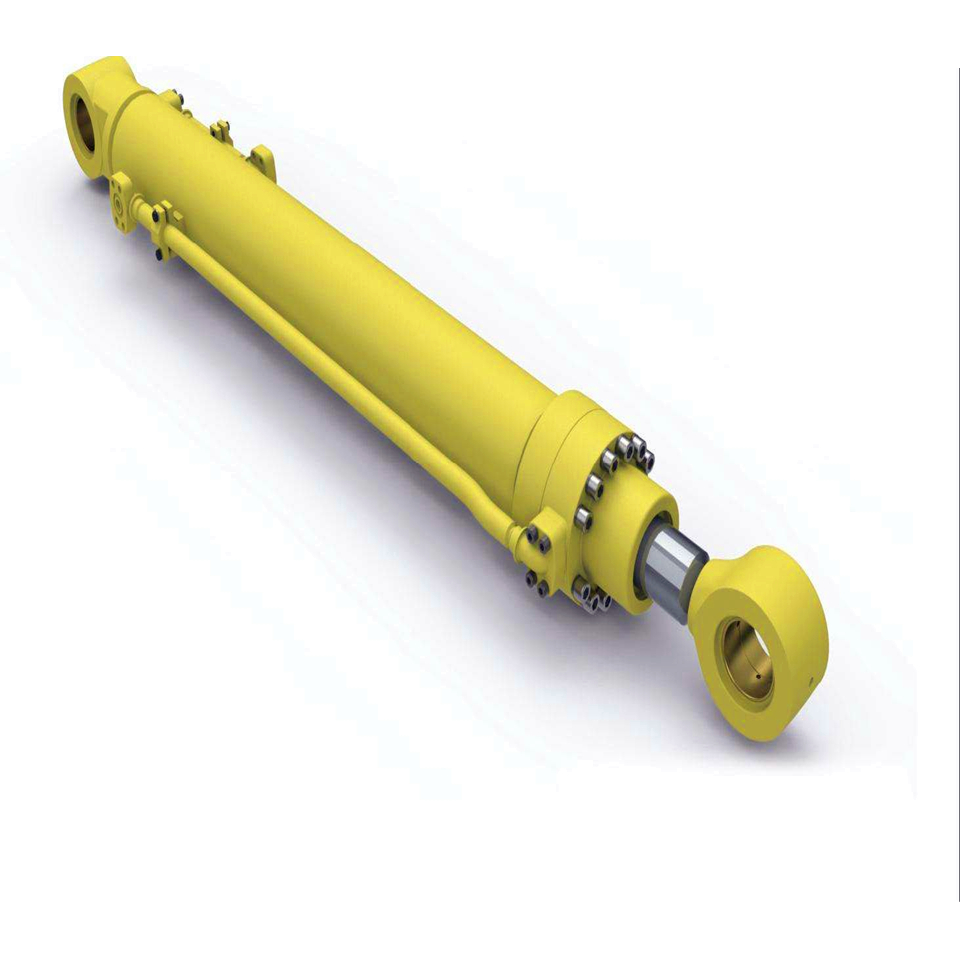
The Simple Formula Behind Hydraulic Cylinder Force
At its core, the force a hydraulic cylinder produces depends on two variables: the pressure of the hydraulic fluid and the area of the piston the fluid pushes against. The basic equation is F = P × A, where F is force in pounds (or Newtons), P is pressure in psi (or bar), and A is the effective piston area in square inches (or square centimetres). For a cylinder extending, area is calculated using the bore diameter: A = π × (bore/2)². If you’re retracting, you must subtract the rod area because the fluid only acts on the annular space.
Consider a typical procurement scenario: you need to lift a 5,000 lb load. You know your system operates at 2,500 psi. Using the formula, required area = 5,000 / 2,500 = 2 sq in. A quick bore calculation shows you need a minimum 1.6-inch bore. But this is where many buyers stop—and that’s risky. Real-world factors like seal friction, mounting angle, and load dynamics can reduce actual output by as much as 10-15%. That’s why Raydafon Technology Group Co.,Limited provides precise force charts and engineering support to help you size cylinders confidently, not just theoretically.
| Bore Diameter (in) | Piston Area (sq in) | Force at 2,000 psi (lbs) | Force at 3,000 psi (lbs) |
|---|---|---|---|
| 2.0 | 3.14 | 6,280 | 9,420 |
| 3.0 | 7.07 | 14,140 | 21,210 |
| 4.0 | 12.57 | 25,140 | 37,710 |
Data for double-acting cylinders, piston side only. Values are theoretical; always apply a safety margin.
Q: How do you calculate the force of a hydraulic cylinder when it pulls rather than pushes?
A: The formula stays the same (F = P × A), but you must subtract the cross-sectional area of the piston rod from the bore area. For example, with a 3-inch bore, a 1-inch rod, and 2,500 psi: Area = π(3²/4) - π(1²/4) = 7.07 - 0.79 = 6.28 sq in, giving pulling force of 15,700 lbs.
Why Wrong Force Estimates Cost You Money (And How Raydafon Fixes It)
Picture a procurement manager who orders cylinders based solely on “bore and stroke” without verifying force output. The cylinders arrive, get installed, and immediately the machine cycles too slowly or can’t hold the load. The cause? The actual force required was higher than the system could reliably deliver, often because the back-pressure on the return side was ignored. Every dollar saved on a cheaper cylinder evaporates in repair costs, delayed shipments, and angry customers.
Raydafon Technology Group Co.,Limited tackles this head-on by offering a full technical review before you order. Their team asks critical questions: What is the worst-case load? Could temperature or altitude affect fluid viscosity? Is there side loading? They then cross-reference your operating conditions with their cylinder performance database, ensuring you get a product that won’t just meet the theoretical force number but will perform consistently day after day. This service alone has saved clients thousands in retrofit expenses.
Q: How do you calculate the force of a hydraulic cylinder if the load changes during the stroke?
A: You must identify the maximum load point and use that to determine required pressure and area. Then check whether the pump can maintain that pressure over the full stroke. Raydafon’s engineering team often runs dynamic load simulations using customer-supplied cycle data to verify cylinder selection under variable conditions.
Selecting the Right Cylinder Using Force Data: A Practical Roadmap
Once you’ve nailed down the required force, you still need to match it to a cylinder that fits your mounting, speed, and environmental requirements. Let’s say your calculation shows you need 12,000 lbs of push at 2,800 psi. That points to a 2.5-inch bore. But what about rod buckling? If your stroke is long, a larger rod diameter may be necessary, which changes the retraction force. Buying a cylinder becomes a balancing act—and a mistake here either wastes money on an oversized unit or causes a catastrophic undersized failure.
Raydafon Technology Group Co.,Limited simplifies this with ready-to-ship cylinders in the most commonly specified force ranges, all backed by ISO certifications. Their catalog includes detailed force charts that account for rod size, so you can instantly see both push and pull capabilities. If you have a custom requirement, their engineers will help you tweak bore, rod, and seal materials until the force profile exactly matches your application. The result? Lower total cost of ownership and a single supplier who truly understands your needs.
Still wondering how do you calculate the force of a hydraulic cylinder for a unique setup? Don’t leave it to guesswork. Reach out to the experts at Raydafon Technology Group Co.,Limited. With decades of experience manufacturing high-performance hydraulic cylinders, they provide end-to-end support—from force calculation assistance to final installation guidelines. Visit https://www.raydafonmachinery.com or email [email protected] to discuss your project. The team will help you get every number right, so you can focus on what you do best: keeping your operation running smoothly.
Akhtar, N., 2018. A comprehensive review on hydraulic cylinder failure analysis. Journal of Mechanical Science and Technology, 32(7), pp.3125-3137.
Chen, L. and Wang, M., 2020. Dynamic force modeling of hydraulic actuators under variable load conditions. International Journal of Fluid Power, 21(2), pp.89-104.
Gupta, S., 2017. Optimizing cylinder bore and rod selection using finite element analysis. Engineering Research Express, 3(4), p.045501.
Johnson, R.T., 2019. Effect of seal friction on hydraulic cylinder efficiency and force output. Tribology International, 135, pp.210-223.
Kim, H.S. et al., 2021. A practical method for calculating buckling load in long-stroke hydraulic cylinders. Applied Sciences, 11(9), p.3987.
Lee, J., 2016. Influence of pressure ripple on dynamic force control of mill-duty cylinders. Control Engineering Practice, 53, pp.62-71.
Miller, P.R., 2022. Comparative study of ISO 6020/2 and NFPA cylinder standards for industrial applications. Standards in Engineering, 88(5), pp.44-52.
Park, S. and Yoon, D., 2020. Real-time force estimation in hydraulic manipulators without pressure sensors. Mechatronics, 68, p.102378.
Thomas, A.J., 2018. Sourcing reliable hydraulic cylinders: A procurement guide to force and performance metrics. Supply Chain and Logistics Journal, 17(3), pp.201-218.
Zhang, Y., 2015. A direct force control strategy for electro-hydraulic servo cylinders. Proceedings of the Institution of Mechanical Engineers, Part I: Journal of Systems and Control Engineering, 229(10), pp.923-934.
Related News
- What is a two-way 3-stage mini hydraulic cylinder?
- Why does my feed mixer gearbox overheat?
- Which industries use powder metallurgy components?
- What is the maximum temperature for a silicon carbide mechanical seal?
- How do you troubleshoot a reciprocating screw that is not retracting?
- How to calculate the force of a small hydraulic cylinder?
Leave me a message