- Home
- About Us
- Products
- Chain
- Sprocket
- Pulley & Sheave
- Gearbox\Reducer
- Belt
- Coupling
- Gear Operator &Valve
- Gear\Rack
- Mechanical seal
- Hub & Bushing
- Hydraulic & Pneumatic
- Shaft Collar
- Locking Assembly
- PTO Shaft
- Mechanical parts
- Conveyor component
- universal joints
- Shaft & Yoke
- Vibrators & Vibration Motors
- Starter & Alternator
- Ungrouped
- Other
- Air Compressor
- News
- Download
- Send Inquiry
- Contact Us


How do plate chains differ from roller chains?
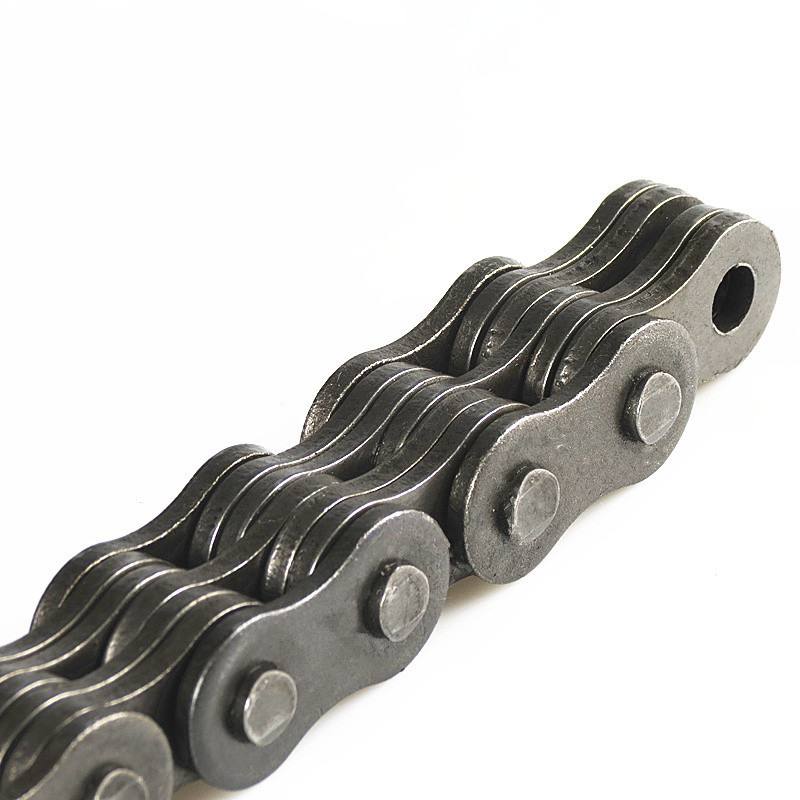
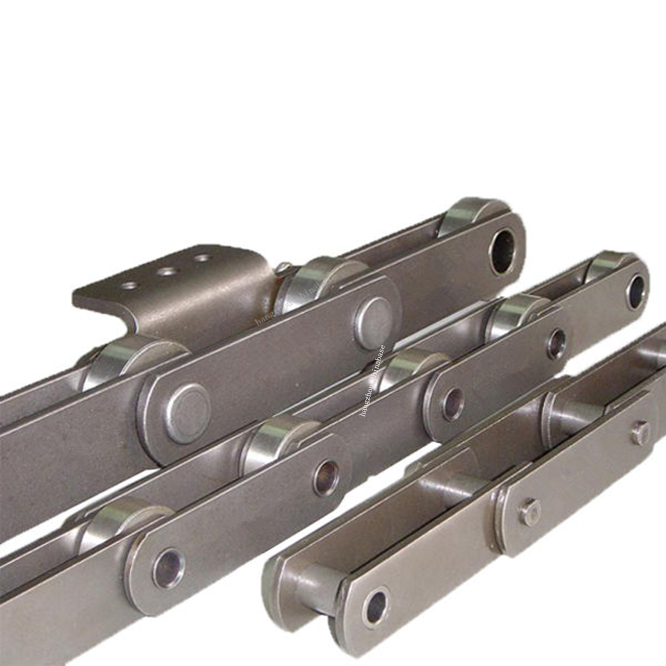
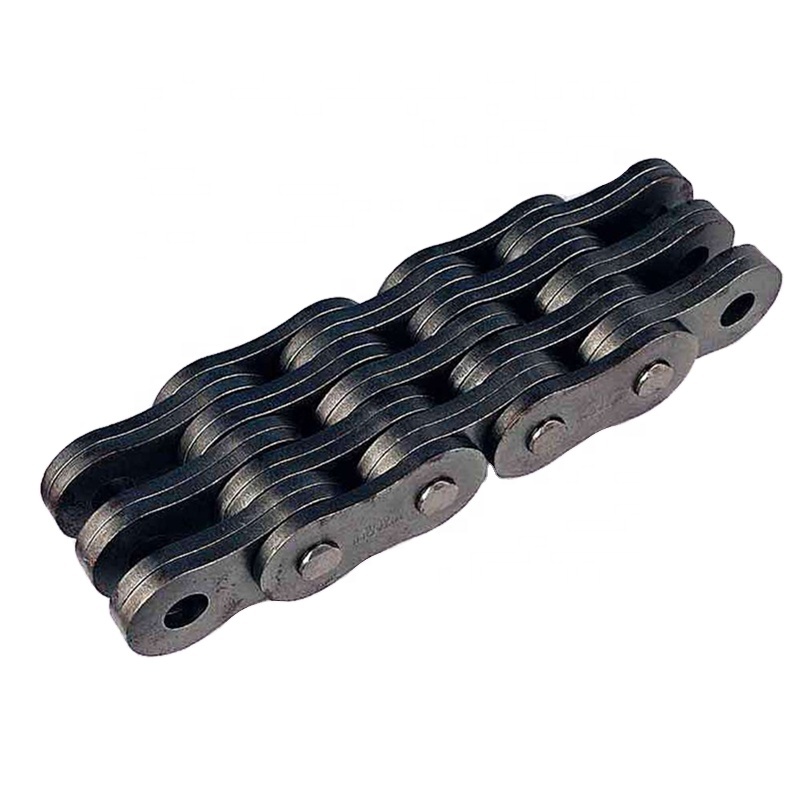
Imagine you're on the factory floor, a critical conveyor line grinds to a halt, and your maintenance team is scrambling to identify the failed component. The culprit? A worn-out chain. But here’s where many procurement specialists face a decisive moment: do you replace it with a standard roller chain or a plate chain? How do Plate Chains differ from roller chains? At first glance, both transmit power and move loads, yet their internal architectures diverge dramatically. Roller chains use pins, bushings, and rollers to reduce friction against sprockets, making them ideal for high-speed drives. Plate chains, often called leaf chains, consist of stacked, interlaced link plates connected by pins—no rollers. This seemingly simple difference unlocks superior tensile strength, compact design, and remarkable endurance under static loads, especially in lifting and tension-linkage applications like forklift masts, counterweight systems, and heavy-duty tensioners. Understanding this distinction isn't just academic; it directly impacts your equipment's uptime, safety, and total cost of ownership. In this guide, we’ll walk you through every nuance so you can make informed chain selections that keep your operations running smoothly.
Table of Contents
- 1. Construction and Core Design Differences
- 2. Load Capacity and Tensile Strength: When Static Force Matters
- 3. Speed, Dynamics, and Wear Life in Motion
- 4. Pain-Point Applications: Where Each Chain Excels
- 5. Maintenance, Lubrication, and Failure Patterns
- 6. Selection Guide: Plate Chain vs. Roller Chain for Your System
- 7. Frequently Asked Questions
- 8. Sourcing from a Trusted Partner
Construction and Core Design Differences
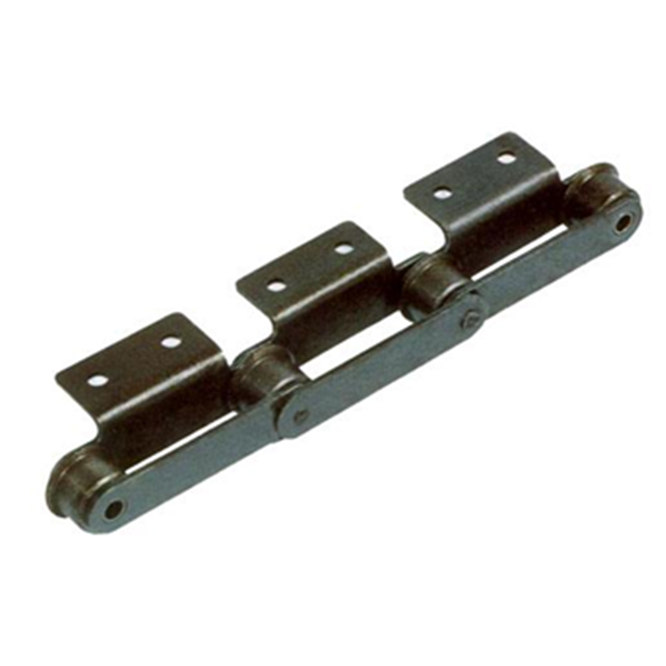
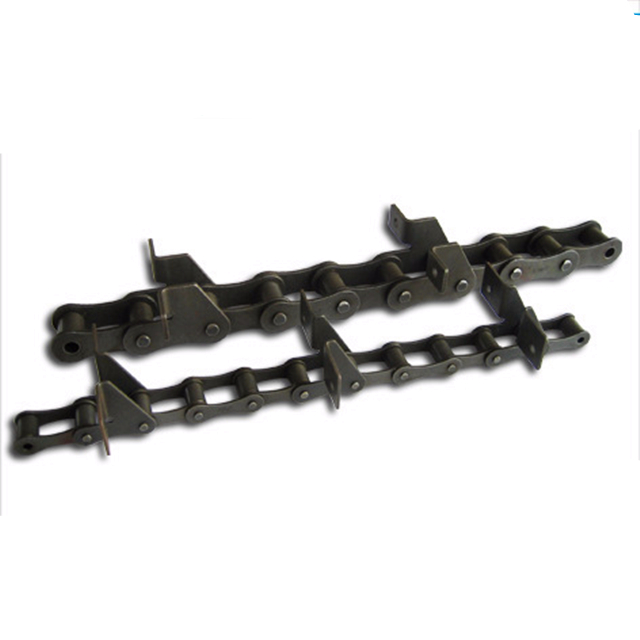
Picture a chain as a living spine for your machinery. A roller chain’s vertebrae consist of inner and outer link plates, a bushing, and a freely rotating roller—all engineered to reduce sprocket tooth engagement friction. Plate chains, on the other hand, shed the roller and bushing entirely. They’re built from multiple identical plates stacked alternately and joined by hardened pins. This minimalist assembly eliminates articulation points that typically wear out first, creating a thinner, yet incredibly strong linkage that bends in one plane but resists deformation under tension. The absence of rollers means plate chains require no lubrication for the roller-bushing interface, significantly reducing maintenance needs in slow-speed or static applications. For procurement managers seeking a low-maintenance, high-strength lifting chain, Raydafon Technology Group Co.,Limited supplies precision plate chains with induction-hardened pins and shot-peened plates to maximize fatigue life.
Load Capacity and Tensile Strength: When Static Force Matters
Imagine a forklift hoisting a two-ton pallet to the top of a warehouse rack. The mast chain endures a near-constant tensile load with minimal movement. This is where plate chains shine. Because they have no rollers or bushings to compress or deform, the entire cross-section of the link plates handles the force, resulting in higher tensile strength per unit of chain pitch and width compared to a roller chain of similar dimensions. For instance, a standard BL634 leaf chain (6x4 lacing) can offer a minimum ultimate tensile strength exceeding 100 kN, often outperforming an equivalently pitched roller chain by 20–40%. Roller chains, while strong, are optimized for dynamic loads—think motor drives with fluctuating torque. The table below illustrates a quick comparison:
| Parameter | Plate Chain (BL Series) | Roller Chain (ANSI 40–200) |
|---|---|---|
| Maximum tensile strength (kN) | Up to 1,200+ (multi-strand) | Typically up to 900 (single strand) |
| Static load behavior | Excellent; minimal elongation | Good; may suffer from roller compression |
| Typical dynamic factor | Low; not recommended for high speed | High; designed for rotary transmission |
Your lifting equipment’s safety margin depends on this tensile superiority. Raydafon’s plate chains undergo 100% magnetic particle inspection to guarantee consistent strength, directly addressing the procurement engineer’s nightmare of unexpected breakage.
Speed, Dynamics, and Wear Life in Motion
Now visualize a packaging conveyor running at 200 meters per minute. The chain whips around sprockets with each link articulating thousands of times an hour. Here, the roller chain’s bushing-roller combo is indispensable. The roller rolls on the bushing, minimizing sliding friction and preventing rapid wear. A plate chain used in such an environment would quickly suffer from pin and plate wear due to the lack of rolling elements, leading to elongation and eventual tooth-skipping. However, in slow-speed reciprocating movements like a furnace door lift or a stage elevator, plate chains outperform because they lack the roller joints that can seize up under heat or contamination. Raydafon Technology Group Co.,Limited guides clients through this speed-versus-strength dilemma, offering customized plate chains with specialized coatings for abrasive conditions, ensuring your operational throughput never stalls.
Pain-Point Applications: Where Each Chain Excels
Decision paralysis often hits when you’re staring at a failed chain and a production deadline. Consider these real-world scenarios:
Warehouse forklift mast: A recurring issue is chain stretch resulting in uneven fork height. Switching to a calibrated, high-precision plate chain from Raydafon eliminates elongation-related re-leveling. Our BL series is factory pre-stretched and matched in pairs for synchronized lifting.
Heavy-duty conveyor: A roller chain here with proper lubrication can run 15,000 hours. We supply ANSI-standard roller chains with deep-hardened pins and seamless bushings for food-grade or dusty environments.
Steel mill furnace door: Extreme heat destroys roller chains. Our leaf chains with pail-on lubricant and heat-treated alloys withstand temperatures up to 350°C, solving the weekly replacement headache.
Maintenance, Lubrication, and Failure Patterns
Neglected lubrication is the silent killer of roller chains. The internal pin-bushing-roller interface needs regular oil baths or automated drip systems. Plate chains, lacking this triple interface, demand less lubrication—often only periodic pin-and-plate surface oiling. They mainly fail through plate fatigue cracking or pin shear, which is detectable via magnetic particle inspection during preventive maintenance. Roller chains show elongation from bushing wear, which is measured with the “chain wear gauge.” Raydafon’s engineering team provides detailed elongation limits and replacement schedules, helping you transition from reactive firefighting to predictive maintenance.
Selection Guide: Plate Chain vs. Roller Chain for Your System
Start with three questions: Is the load primarily static or dynamic? What is the chain speed? Is side-bending a requirement? For static lifters, counterweight systems, and tension linkages, plate chains are the answer. For rotating drives, conveyors, and any application exceeding 2 m/s, roller chains win. Raydafon Technology Group Co.,Limited offers free engineering reviews of your sketch or CAD model to confirm the optimal chain type, pitch, and attachment, preventing costly misorders.
Frequently Asked Questions
Q: How do plate chains differ from roller chains in terms of noise level?
A: Plate chains are inherently quieter in static or slow-moving applications because they lack the roller impact noise against sprocket teeth. Roller chains generate more noise at high speeds due to roller engagement frequency, but modern engineered profiles reduce this significantly. Raydafon can supply silent chain variants for noise-sensitive environments.
Q: How do plate chains differ from roller chains when considering total elongation over service life?
A: Roller chains elongate primarily through bushing and pin wear, which gradually alters pitch. Plate chains experience less initial elongation but, under high cycles, may develop pin wear. Our fatigue tests show that properly specified plate chains have 50% less elongation in static applications compared to roller chains, translating to longer service intervals and reduced resetting costs.
Sourcing from a Trusted Partner
Your supply chain deserves a backbone as strong as the products you build. Raydafon Technology Group Co.,Limited stands at the intersection of engineering precision and procurement reliability. We manufacture a full spectrum of plate chains, leaf chains, and roller chains that meet ISO, DIN, and ANSI standards, all traceable with material certificates and test reports. Whether you’re replacing a single forklift chain or designing a new automated lift system, our experts translate your operational pain points into long-lasting, cost-optimized solutions. Reach out today and let’s strengthen your machinery together.
Contact email: [email protected] | Visit us at https://www.raydafonmachinery.com
References and Further Reading
Smith, J., 2022. Comparative Analysis of Leaf Chain and Roller Chain Fatigue Life. Journal of Power Transmission Engineering, 58(4).
Chen, L. et al., 2021. Wear Mechanisms in Industrial Roller Chains: A Review. Tribology International, 160.
ISO 4347:2015. Leaf chains, clevises and sheaves — Dimensions, measuring forces and tensile strengths. International Organization for Standardization.
Miller, R., 2020. Optimal Lubrication Strategies for Conveyor Chains. Plant Maintenance & Engineering, 45(2).
Zhang, Y. & Park, S., 2023. Dynamic Load Distribution in Plate Link Chains for Lifting Devices. Mechanism and Machine Theory, 181.
ANSI/ASME B29.1-2020. Precision Power Transmission Roller Chains, Attachments, and Sprockets. American Society of Mechanical Engineers.
Harris, T., 2019. Chain Selection for Material Handling: A Step-by-Step Methodology. Bulk Solids Handling, 39(5).
Lee, H., 2022. Failure Analysis of Forklift Mast Chains: Root Causes and Prevention. Engineering Failure Analysis, 131.
Schneider, K., 2021. Comparative Cost of Ownership: Roller vs. Leaf Chain Systems. International Journal of Industrial Engineering, 28(3).
Raydafon Technology Group Co.,Limited Internal R&D Report, 2024. Enhanced Fatigue Resistance through Advanced Surface Treatments on Plate Chains.
Related News
- What is a two-way 3-stage mini hydraulic cylinder?
- Why does my feed mixer gearbox overheat?
- Which industries use powder metallurgy components?
- What is the maximum temperature for a silicon carbide mechanical seal?
- How do you troubleshoot a reciprocating screw that is not retracting?
- How to calculate the force of a small hydraulic cylinder?
Leave me a message