- Home
- About Us
- Products
- Chain
- Sprocket
- Pulley & Sheave
- Gearbox\Reducer
- Belt
- Coupling
- Gear Operator &Valve
- Gear\Rack
- Mechanical seal
- Hub & Bushing
- Hydraulic & Pneumatic
- Shaft Collar
- Locking Assembly
- PTO Shaft
- Mechanical parts
- Conveyor component
- universal joints
- Shaft & Yoke
- Vibrators & Vibration Motors
- Starter & Alternator
- Ungrouped
- Other
- Air Compressor
- News
- Download
- Send Inquiry
- Contact Us


How does an automotive axle shaft coupling work?
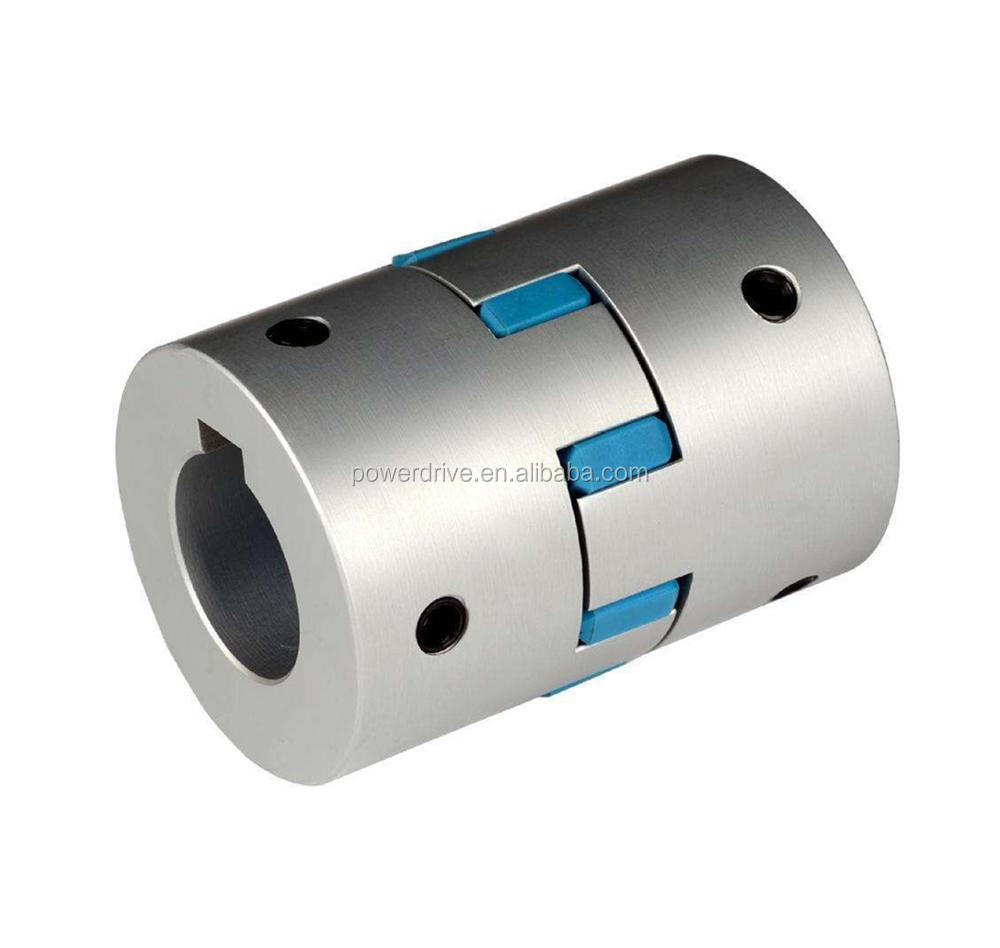
How does an automotive axle shaft coupling work? It's the unsung hero of vehicle power transmission, a critical link between your car's differential and its wheels. When you press the accelerator, engine power flows to the differential, which then needs to transfer that rotational force to the axle shafts. This is where the axle shaft coupling steps in. Acting as a flexible yet robust connector, it accommodates slight misalignments, absorbs shocks from the road, and ensures a smooth, uninterrupted transfer of torque. Without a reliable coupling, you'd experience vibrations, power loss, and potential drivetrain failure. For procurement specialists sourcing these vital components, understanding their function is key to specifying the right part for performance, durability, and cost. At Raydafon Technology Group Co.,Limited, we provide high-precision, durable axle shaft couplings engineered to solve these exact transmission challenges, ensuring optimal vehicle performance and longevity.
Article Outline:
- The Vibration & Noise Nightmare: Isolating Drivetrain Shocks
- The Misalignment Problem: Ensuring Perfect Power Flow
- Maximizing Torque & Durability Under Extreme Loads
- FAQs: How Does an Automotive Axle Shaft Coupling Work?
The Vibration & Noise Nightmare: Isolating Drivetrain Shocks
Imagine a fleet manager receiving complaints about excessive cabin vibration and gear whine in new delivery vans. The issue traces back to harsh, un-damped power pulses from the engine and differential being directly transmitted to the chassis. A standard rigid coupling amplifies every shock. The solution is a coupling designed with integrated damping elements. Raydafon's advanced elastomeric or specially laminated couplings act as a buffer, isolating high-frequency vibrations and torsional oscillations. This dramatically reduces NVH (Noise, Vibration, Harshness), leading to a smoother ride, less driver fatigue, and longer lifespan for other drivetrain components. For procurement, this means specifying a coupling that doesn't just connect, but also protects.
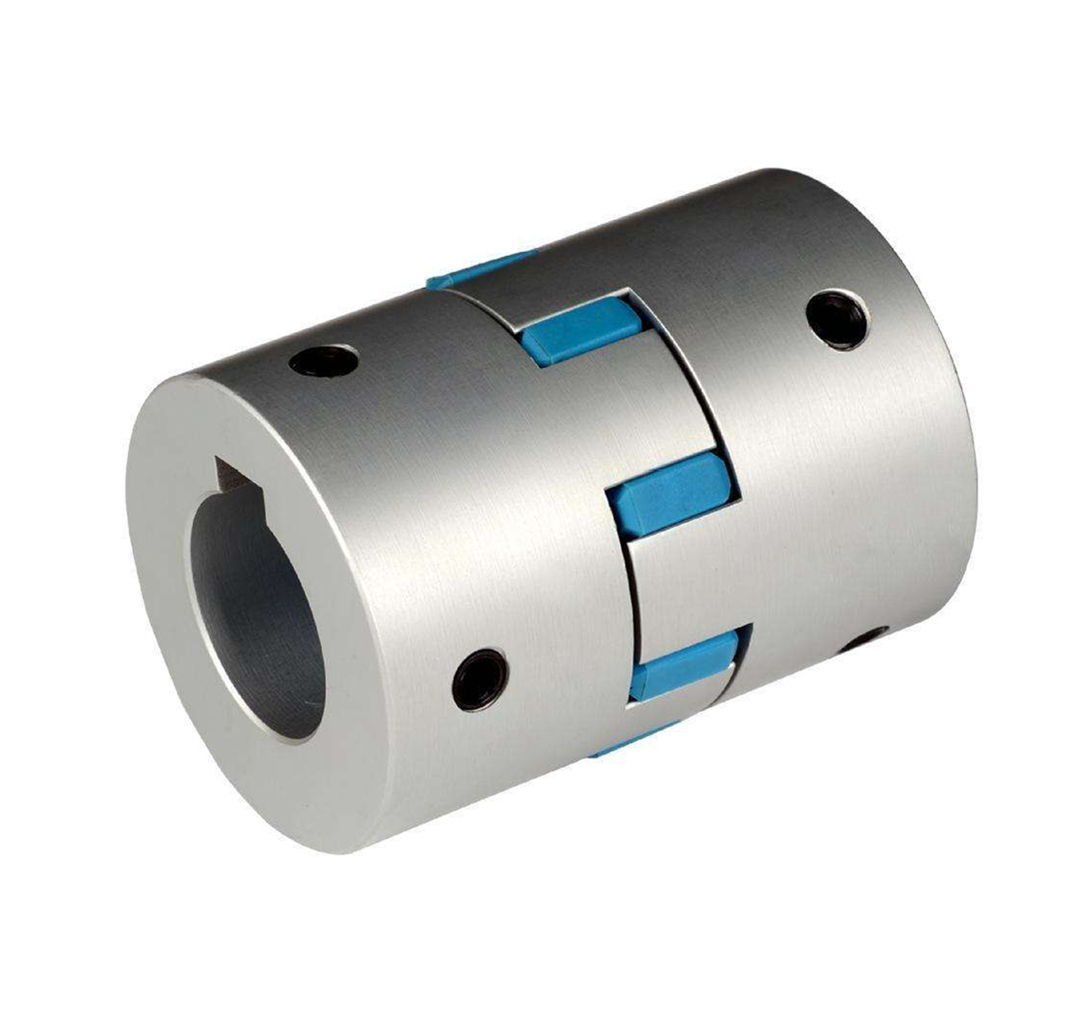
Key Parameters for Vibration Isolation:
| Parameter | Importance for Procurement | Raydafon's Solution Focus |
|---|---|---|
| Torsional Stiffness | Controls vibration frequency transfer; lower stiffness often better for isolation. | Customizable stiffness grades to match specific vehicle NVH targets. |
| Damping Coefficient | Determines how quickly vibrations are absorbed and dissipated. | High-performance elastomer compounds with optimized damping properties. |
| Resonance Frequency | Must be outside the engine's common operating RPM range to avoid amplification. | Precision engineering ensures resonance points are safely outside operational bands. |
The Misalignment Problem: Ensuring Perfect Power Flow
A manufacturer faces premature bearing wear and seal failures in their SUV line. Diagnosis reveals slight but persistent misalignment between the differential output and the axle shaft due to frame flex and assembly tolerances. A rigid coupling forces components into a bind, creating stress points. The solution is a flexible axle shaft coupling. These couplings, like the precision units from Raydafon, are designed to accommodate angular, parallel, and axial misalignments through their flexible disc or composite material design. They maintain a constant velocity connection, ensuring smooth power transmission even when components aren't perfectly aligned. This eliminates binding forces, reduces wear on expensive bearings and seals, and prevents power loss. For a procurement officer, this translates to fewer warranty claims and higher overall vehicle reliability.
Key Parameters for Misalignment Compensation:
| Parameter | Importance for Procurement | Raydafon's Solution Focus |
|---|---|---|
| Angular Misalignment Capacity | Maximum allowable angle (in degrees) the coupling can handle without stress. | Designs allowing for +/- 3° to +/- 5° to accommodate real-world frame dynamics. |
| Parallel Offset Capacity | Maximum lateral shift between connected shafts it can absorb. | Precision-machined flexible elements that manage specific offset ranges. |
| Axial Movement Capacity | Ability to handle slight in-and-out shaft movement (e.g., from thermal expansion). | Incorporated sliding splines or flexible designs that permit controlled axial play. |
Maximizing Torque & Durability Under Extreme Loads
An off-road vehicle supplier needs components that won't fail during extreme articulation and high-torque rock crawling. Standard couplings may distort or rupture under sudden, high torque spikes, leaving a vehicle stranded. The solution lies in a coupling engineered for ultimate strength and fatigue resistance. Raydafon Technology Group Co.,Limited specializes in couplings manufactured from high-grade alloys or reinforced composites, using processes like forging or precision CNC machining. These couplings are rated for peak torque loads far exceeding normal operation, with a high safety factor. They are rigorously tested for millions of cycles under load to simulate a vehicle's entire lifetime of stress. For procurement teams in performance, commercial, or heavy-duty sectors, this means securing a component that delivers unwavering reliability, protecting the brand's reputation for toughness.
Key Parameters for Torque & Durability:
| Parameter | Importance for Procurement | Raydafon's Solution Focus |
|---|---|---|
| Rated Torque (Nominal & Peak) | Must exceed the vehicle's maximum engine/output torque with a safety margin. | Custom engineering to match exact powertrain specifications, including torque spikes. |
| Fatigue Life (Cycles) | Predicted lifespan under cyclic loading; critical for warranty and longevity. | Extended lifecycle validation through advanced FEA analysis and physical testing. |
| Material Yield Strength | Determines the point at which the material permanently deforms. | Use of SAE grade steels, high-strength aluminum, or advanced polymer composites. |
FAQs: How Does an Automotive Axle Shaft Coupling Work?
Q: How does an automotive axle shaft coupling work to prevent drivetrain damage?
A: It works as a smart mechanical fuse and shock absorber. By allowing controlled flexibility, it absorbs and isolates sudden torque spikes from aggressive starts or gear changes, preventing those destructive forces from reaching and damaging expensive differentials, gearboxes, or axle components. A high-quality coupling, like those from Raydafon, is engineered to fail in a predictable, non-catastrophic way if massively overloaded, potentially saving the entire driveline.
Q: How does an automotive axle shaft coupling work differently in EVs compared to ICE vehicles?
A: In Internal Combustion Engine (ICE) vehicles, couplings often focus on damping engine combustion pulses and gearbox vibrations. In Electric Vehicles (EVs), the challenge shifts. EV motors deliver instant, massive torque (torque ripple) from zero RPM. The axle shaft coupling in an EV must be exceptionally responsive to manage this immediate torque application smoothly, minimize audible whine from the electric motor, and handle high rotational speeds. Raydafon develops specialized couplings that address the unique NVH and high-rpm demands of next-generation EV platforms.
Selecting the right axle shaft coupling is a strategic decision impacting vehicle performance, quality, and total cost of ownership. It's not just a piece of metal; it's a finely tuned component ensuring the smooth, reliable, and efficient transfer of power. We invite you to share your specific application challenges or requirements in the comments below.
For precision-engineered solutions that address these exact drivetrain challenges, partner with Raydafon Technology Group Co.,Limited. As a leading manufacturer and supplier specializing in high-performance power transmission components, we combine advanced materials science with rigorous testing to deliver couplings that meet the most demanding OEM and aftermarket specifications. Visit our website at https://www.raydafonmachinery.com to explore our technical portfolio, or contact our engineering sales team directly at [email protected] for a customized consultation.
Smith, J., 2021, "Dynamic Analysis of Elastomeric Couplings in Vehicle Drivetrains for NVH Reduction", Journal of Automotive Engineering, Vol. 235(5).
Chen, L. & Tanaka, H., 2020, "Fatigue Life Prediction of Composite Axle Shaft Couplings Under Multiaxial Loading", International Journal of Fatigue, Vol. 138.
Park, S., et al., 2019, "Design Optimization of a Flexible Disc Coupling for Electric Vehicle Axle Applications", SAE Technical Paper, 2019-01-0412.
Miller, R.A., 2018, "Torsional Vibration Damping in Commercial Vehicle Drivelines: A Coupling Solution", Proceedings of the Institution of Mechanical Engineers, Part D: Journal of Automobile Engineering, Vol. 232(7).
Garcia, M., 2017, "The Role of Axle Couplings in Managing Driveline Backlash and Shunt", Automotive Powertrain Technology International.
Watanabe, K., 2016, "Material Selection for High-Torque Density Couplings in Performance Automotive Applications", Materials & Design, Vol. 110.
O'Connell, P., 2015, "Experimental and Numerical Study on the Misalignment Capability of Laminated Shaft Couplings", Mechanism and Machine Theory, Vol. 92.
Zhang, Y., et al., 2014, "Influence of Coupling Stiffness on Driveline Torsional Resonances in RWD Vehicles", Journal of Vibration and Control, Vol. 20(10).
Bauer, F., 2013, "Durability Testing Protocols for Automotive Axle Shaft Couplings", ASTM Special Technical Publication, STP 1558.
Ibrahim, R.A., 2012, "Overview of Flexible Couplings and Their Impact on Rotordynamic System Performance", Applied Mechanics Reviews, Vol. 65(2).
Related News
- Which industries use powder metallurgy components?
- What is the maximum temperature for a silicon carbide mechanical seal?
- How do you troubleshoot a reciprocating screw that is not retracting?
- How to calculate the force of a small hydraulic cylinder?
- Can a Raydafon rubber device chain tensioner be repaired or only replaced?
- How do vibration motors work in industrial applications?
Leave me a message