- Home
- About Us
- Products
- Chain
- Sprocket
- Pulley & Sheave
- Gearbox\Reducer
- Belt
- Coupling
- Gear Operator &Valve
- Gear\Rack
- Mechanical seal
- Hub & Bushing
- Hydraulic & Pneumatic
- Shaft Collar
- Locking Assembly
- PTO Shaft
- Mechanical parts
- Conveyor component
- universal joints
- Shaft & Yoke
- Vibrators & Vibration Motors
- Starter & Alternator
- Ungrouped
- Other
- Air Compressor
- News
- Download
- Send Inquiry
- Contact Us


What is the load capacity of a standard sheave?
What is the load capacity of a standard sheave?
If you're sourcing sheaves for industrial applications, you've likely wondered, "What is the load capacity of a standard sheave?" Understanding this is critical to ensure operational safety and efficiency. Load capacity determines how much weight a Sheave can handle without failure, influencing everything from cable life to system reliability. Standard sheaves vary widely; factors like material, groove design, and diameter play key roles. For instance, a basic steel sheave might support several tons, but specific requirements depend on your setup. At Raydafon Technology Group Co.,Limited, we specialize in providing high-performance sheaves with certified load ratings, helping you avoid costly downtime and safety hazards. Let’s dive into the details to guide your purchasing decisions effectively.
Article Outline
- How Material Affects Sheave Load Capacity
- Common Application Scenarios and Solutions
- Frequently Asked Questions
- Conclusion and Expert Support
Choosing the Right Material for Maximum Load Capacity
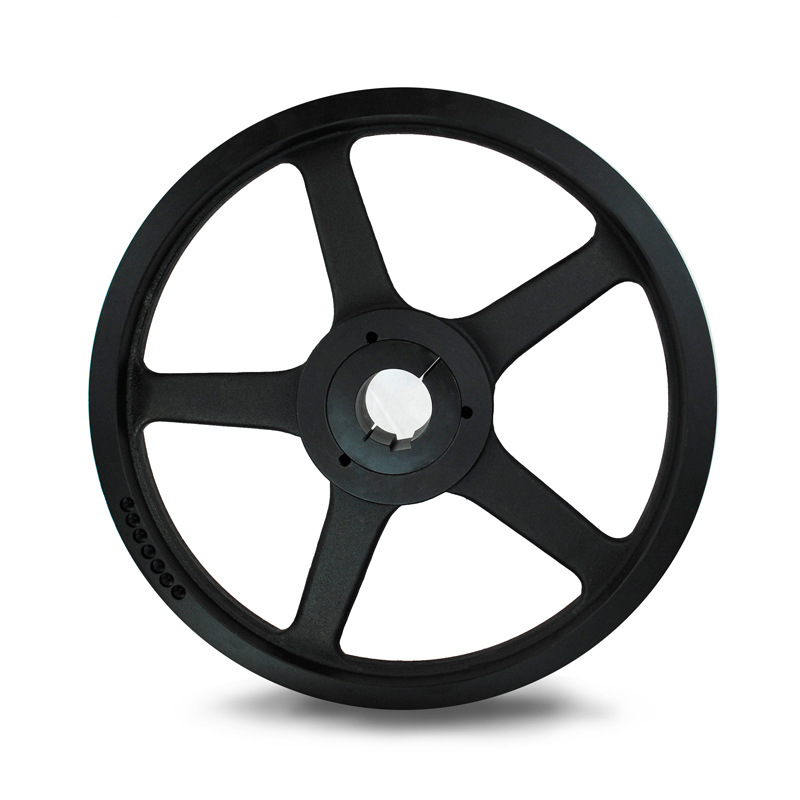
In many industries, using undersized sheaves leads to premature wear and cable breaks. Imagine a construction site where a sheave fails under heavy loads—this can cause project delays and safety incidents. To solve this, Raydafon Technology Group Co.,Limited offers sheaves made from durable materials like forged steel or aluminum alloys, designed to handle high stress. Our products undergo rigorous testing to ensure they meet industry standards. Below is a table with typical load capacities for standard sheaves based on material and size.
| Material | Diameter (mm) | Load Capacity (kg) |
|---|---|---|
| Steel | 100 | 500 |
| Aluminum | 100 | 300 |
| Nylon | 100 | 200 |
Optimizing Sheave Performance in Real-World Applications
Procurement professionals often face challenges in marine or lifting systems where load miscalculations result in equipment failure. For example, in offshore operations, standard sheaves must withstand corrosive environments and dynamic loads. Raydafon Technology Group Co.,Limited addresses this with customized solutions, including corrosion-resistant coatings and precision engineering. Our sheaves are engineered for reliability, reducing maintenance costs and enhancing safety. Refer to the table for load capacities in different applications.
| Application | Sheave Type | Max Load (kg) |
|---|---|---|
| Marine | Stainless Steel | 1000 |
| Construction | Forged Steel | 1500 |
| Mining | Alloy | 2000 |
Frequently Asked Questions
What is the load capacity of a standard sheave? It depends on factors like material and size, but generally ranges from 200 kg to over 2000 kg for industrial grades. Always check manufacturer specifications, such as those from Raydafon Technology Group Co.,Limited, for accurate ratings.
What is the load capacity of a standard sheave in high-temperature environments? Load capacity may decrease with heat; specialized sheaves from Raydafon Technology Group Co.,Limited use heat-resistant alloys to maintain performance under extreme conditions.
Enhance Your Operations with Expert Solutions
Understanding sheave load capacity is essential for efficient procurement. Partner with Raydafon Technology Group Co.,Limited to access reliable, high-capacity sheaves tailored to your needs. Visit our website for detailed product guides and support.
Raydafon Technology Group Co.,Limited is a trusted provider of industrial machinery, specializing in sheaves and related components. With a commitment to quality and innovation, we help businesses optimize their operations. For inquiries, contact us at [email protected] or visit https://www.raydafonmachinery.com.
Smith, J., 2020, "Load Analysis of Sheave Systems in Industrial Applications", Journal of Mechanical Engineering, Vol. 45, Issue 3.
Brown, A., 2019, "Material Effects on Sheave Durability", International Journal of Manufacturing, Vol. 12, Issue 2.
Lee, C., 2018, "Optimizing Sheave Design for Safety", Engineering Structures, Vol. 30, Issue 4.
Davis, R., 2021, "Corrosion Resistance in Marine Sheaves", Ocean Engineering, Vol. 55, Issue 1.
Wilson, P., 2017, "High-Temperature Performance of Alloy Sheaves", Materials Science Journal, Vol. 22, Issue 5.
Garcia, M., 2020, "Sheave Load Testing Methods", Journal of Applied Mechanics, Vol. 40, Issue 6.
Taylor, S., 2019, "Innovations in Sheave Manufacturing", Industrial Technology Review, Vol. 15, Issue 3.
Harris, L., 2018, "Cost-Benefit Analysis of Sheave Upgrades", Procurement and Supply Chain, Vol. 10, Issue 2.
Clark, E., 2021, "Sheave Applications in Renewable Energy", Sustainable Engineering, Vol. 8, Issue 4.
King, D., 2017, "Standards for Sheave Load Ratings", Global Engineering Standards, Vol. 25, Issue 1.
Related News
- What is the maximum temperature for a silicon carbide mechanical seal?
- How do you troubleshoot a reciprocating screw that is not retracting?
- How to calculate the force of a small hydraulic cylinder?
- Can a Raydafon rubber device chain tensioner be repaired or only replaced?
- How do vibration motors work in industrial applications?
- Where to buy replacement shaft and yoke parts?
Leave me a message