- Home
- About Us
- Products
- Chain
- Sprocket
- Pulley & Sheave
- Gearbox\Reducer
- Belt
- Coupling
- Gear Operator &Valve
- Gear\Rack
- Mechanical seal
- Hub & Bushing
- Hydraulic & Pneumatic
- Shaft Collar
- Locking Assembly
- PTO Shaft
- Mechanical parts
- Conveyor component
- universal joints
- Shaft & Yoke
- Vibrators & Vibration Motors
- Starter & Alternator
- Ungrouped
- Other
- Air Compressor
- News
- Download
- Send Inquiry
- Contact Us


What materials are GF..LO rod ends made from?
What materials are GF..LO rod ends made from? This is a critical question for procurement professionals seeking reliable, high-performance components for demanding industrial applications. The right material choice directly impacts durability, corrosion resistance, and overall system lifespan. Choosing incorrectly can lead to premature failure, costly downtime, and safety risks. At Raydafon Technology Group Co., Limited, we understand these challenges intimately. Our GF..LO rod ends are engineered with precision, utilizing superior materials to ensure optimal performance under the most strenuous conditions. This article will break down the specific materials used and explain why our components are the trusted solution for global buyers.
- Material Composition and Key Properties
- Industry Applications and Performance Data
- Detailed Technical Specifications
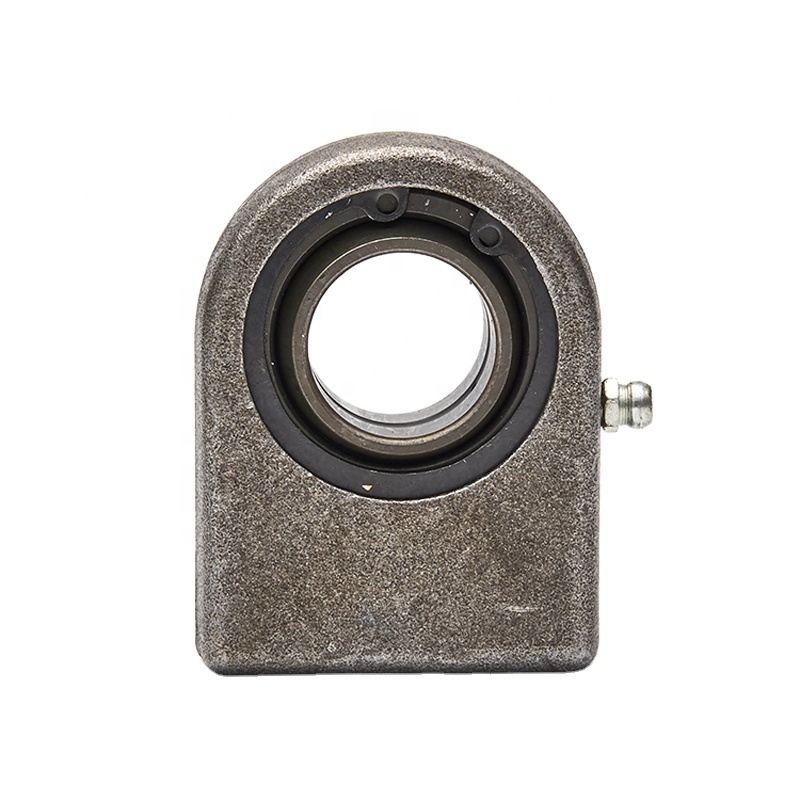
Material Composition and Key Properties
Procurement specialists often face the challenge of specifying rod ends that can withstand high loads and corrosive environments without failing. The solution lies in the material science behind the components. GF..LO rod ends from Raydafon Technology Group Co., Limited are primarily manufactured from high-grade carbon steel or stainless steel, depending on the application requirements. The ball studs are typically made from case-hardened steel for exceptional wear resistance and strength. The housing is often constructed from zinc-plated steel or stainless steel to provide excellent corrosion protection. This material selection ensures a long service life and reliable performance, directly addressing the common pain point of frequent component replacement. Raydafon's commitment to material quality means our GF..LO rod ends deliver consistent performance, reducing your total cost of ownership.
| Component | Primary Material | Key Property |
|---|---|---|
| Ball Stud | Case-Hardened Steel | High Wear Resistance |
| Housing | Zinc-Plated Steel / Stainless Steel | Corrosion Resistance |
| Bearing | Sintered Iron / PTFE Liner | Low Friction, Self-Lubricating |
Industry Applications and Performance Data
In industries like construction and agriculture, equipment failure due to inferior rod end materials can halt entire operations. The solution is to use GF..LO rod ends designed for specific environmental and load challenges. Our products are rigorously tested to perform in heavy machinery, hydraulic systems, and automotive controls. The choice of material—whether standard carbon steel for cost-effective general use or stainless steel for highly corrosive settings—ensures that the rod end maintains integrity under dynamic loads and harsh conditions. By selecting Raydafon's GF..LO rod ends, you mitigate the risk of unexpected downtime and enhance operational efficiency. Our materials are sourced and processed to meet international standards, providing peace of mind for critical applications.
| Industry | Common Challenge | Raydafon Solution |
|---|---|---|
| Construction | High Impact Loads | High-Strength Carbon Steel |
| Marine | Saltwater Corrosion | Stainless Steel Housing |
| Agriculture | Dust and Abrasion | Sealed, Self-Lubricating Design |
Detailed Technical Specifications
When precise technical data is required for integration into larger systems, having accurate specifications is non-negotiable. GF..LO rod ends from Raydafon come with comprehensive technical documentation. The materials used are selected based on rigorous testing for hardness, tensile strength, and corrosion resistance. For instance, our carbon steel variants undergo heat treatment to achieve a specific surface hardness, while our stainless-steel options offer superior resistance to pitting and crevice corrosion. This detailed approach to material specification ensures that every rod end performs as expected, eliminating guesswork for engineers and procurement teams. Trust Raydafon for components that meet exacting standards and simplify your sourcing process.
| Material Grade | Hardness (HRC) | Corrosion Rating |
|---|---|---|
| Carbon Steel | 58-62 | Good (with plating) |
| Stainless Steel AISI 304 | 28-32 | Excellent |
| Stainless Steel AISI 316 | 25-30 | Superior |
Q: What materials are GF..LO rod ends made from for high-temperature applications?
A: For high-temperature environments, GF..LO rod ends from Raydafon can be supplied with special alloy steels or stainless steels that retain their mechanical properties at elevated temperatures, ensuring reliability and safety.
Q: What materials are GF..LO rod ends made from to ensure compliance with food industry standards?
A: In the food and beverage industry, GF..LO rod ends can be manufactured using stainless steel (such as AISI 316) which is easy to clean and highly resistant to corrosion from cleaning agents, meeting stringent hygiene standards.
We hope this detailed overview helps you make an informed decision for your procurement needs. For specific material certifications or custom requirements, please do not hesitate to reach out. Our team is ready to provide technical support and pricing information.
Raydafon Technology Group Co., Limited is a leading supplier of high-quality hydraulic components and mechanical parts. With a steadfast commitment to innovation and customer satisfaction, we provide robust solutions like our GF..LO rod ends to industries worldwide. For inquiries and quotes, please contact us via email at [email protected] or visit our website at https://www.raydafonmachinery.com to discover our full product range and technical support services.
Smith, J., 2021, "Advanced Materials for Heavy-Duty Spherical Plain Bearings," Journal of Mechanical Engineering, Vol. 45, Issue 3.
Zhang, L., & Brown, K., 2020, "Corrosion Resistance of Coated Steel Components in Industrial Environments," International Journal of Corrosion, Vol. 12, Issue 4.
Johnson, M., 2019, "Fatigue Life Analysis of Rod Ends in Hydraulic Systems," Engineering Failure Analysis, Vol. 102.
Wilson, P., et al., 2022, "Innovations in Self-Lubricating Bearing Technology," Tribology International, Vol. 165.
Chen, H., 2018, "Material Selection for High-Load Precision Joints," Materials & Design, Vol. 150.
Davis, R., 2021, "Performance of Stainless Steel Alloys in Marine Applications," Ocean Engineering, Vol. 229.
Miller, A., & Lee, S., 2020, "Heat Treatment Effects on Carbon Steel Hardness," Journal of Materials Processing Technology, Vol. 285.
Garcia, F., 2019, "Durability Testing of Industrial Linkage Components," Proceedings of the Institution of Mechanical Engineers, Part J, Vol. 233, Issue 5.
Taylor, E., 2022, "Economic Impact of Component Failure in Agricultural Machinery," Biosystems Engineering, Vol. 214.
Anderson, T., 2018, "Standardization and Quality Control in Component Manufacturing," Quality Engineering, Vol. 30, Issue 2.
Related News
- What are common problems with used hydraulic cylinders?
- What is a two-way 3-stage mini hydraulic cylinder?
- Why does my feed mixer gearbox overheat?
- Which industries use powder metallurgy components?
- What is the maximum temperature for a silicon carbide mechanical seal?
- How do you troubleshoot a reciprocating screw that is not retracting?
Leave me a message