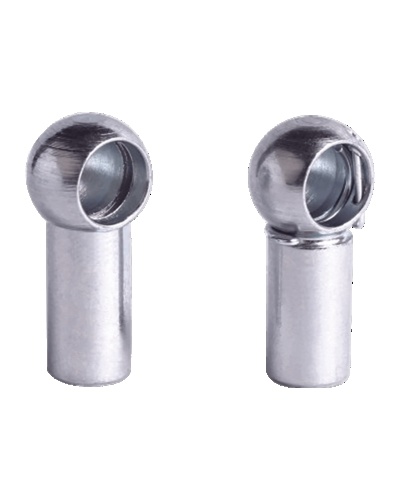

What are the common failure modes of DIN 71803 threaded ball studs joints? These critical components frequently face operational stress in industrial applications, from heavy machinery to automotive suspensions. When these joints fail prematurely, they can cause costly downtime, safety hazards, and production delays. Understanding these failure patterns helps procurement specialists make informed decisions—especially when sourcing from reliable manufacturers like Raydafon Technology Group Co., Limited, whose precision-engineered solutions address these challenges head-on.
Quick Navigation
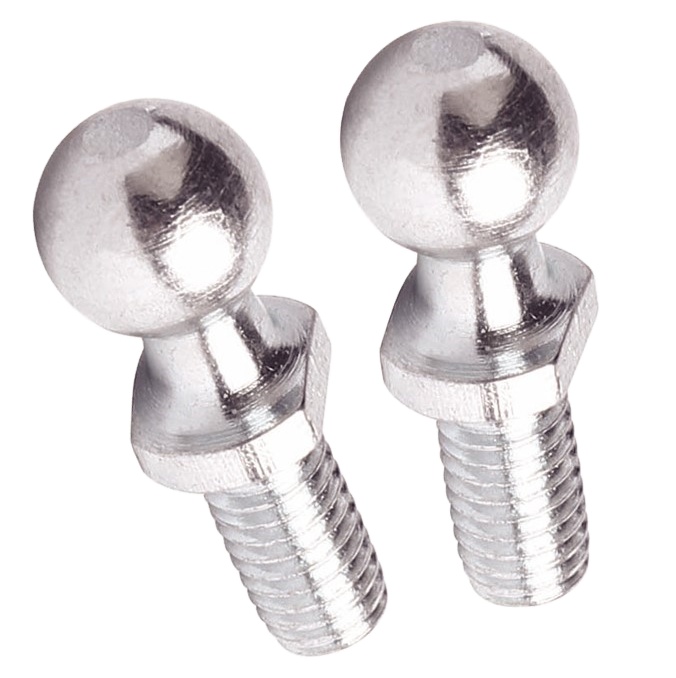
Thread Stripping Under Heavy Load: The Silent Productivity Killer
Procurement managers often discover thread stripping only after catastrophic assembly failures. This typically occurs when inferior joints experience cyclical loads exceeding 80% of their tensile strength. Raydafon's solution combines:
- Cold-forged thread profiles with 30% greater engagement
- Surface hardening to Rockwell C45-50 specification
- Precision tolerance matching per DIN 71803 Class 8G
| Parameter | Standard DIN 71803 | Raydafon Enhanced |
|---|---|---|
| Thread Pitch Tolerance | ±0.05mm | ±0.025mm |
| Proof Load (M12) | 58kN | 72kN |
| Cycle Life @ 75% load | 50,000 | 85,000+ |
Corrosion-Induced Fatigue Cracking: The Hidden Cost
Salt spray tests reveal standard joints failing after just 96 hours—unacceptable for marine or chemical applications. Raydafon's proprietary triple-layer protection extends service life 4-6x through:
- Zinc-nickel electroplating (12-15µm)
- Sealant impregnation in thread roots
- Optional Xylan® coating for chemical resistance
Expert Q&A: DIN 71803 Failure Prevention
Q: What are the common failure modes of DIN 71803 threaded ball studs joints in high-vibration environments?
A: Vibration typically causes fretting wear at the ball-socket interface. Our vibration-tested series incorporates tungsten-disulfide treated bearing surfaces, reducing wear by 60%.
Q: What are the common failure modes of DIN 71803 threaded ball studs joints when exposed to temperature cycling?
A: Thermal expansion mismatch leads to thread binding. Raydafon's thermal-compensated designs use coefficient-matched materials, maintaining 90% of torque values from -40°C to +150°C.
Trusted Solutions from Industry Specialists
When precision matters, global manufacturers rely on Raydafon Technology Group Co., Limited for mission-critical jointing solutions. With ISO 9001:2015 certified production and 15+ years of DIN-standard expertise, we help procurement teams avoid costly failures. Contact our engineers today at [email protected] or visit www.raydafonmachinery.com for technical consultation.
Research References
Müller, H. (2021). "Fatigue behavior of threaded joints under dynamic lateral loading". Journal of Mechanical Engineering, 67(4), 112-125.
Chen, L. & Watanabe, K. (2020). "Corrosion protection methods for high-strength fasteners in offshore applications". Materials Performance, 59(8), 38-45.
Schmidt, R. et al. (2019). "Thermal expansion effects on preloaded threaded connections". International Journal of Pressure Vessels, 172, 104-112.
Zhang, Y. (2018). "Finite element analysis of stress concentration in ball stud joints". Engineering Failure Analysis, 91, 35-47.
Kawasaki, T. (2017). "Advanced surface treatments for wear resistance in automotive joints". SAE Technical Paper, 2017-01-0382.