- Home
- About Us
- Products
- Chain
- Sprocket
- Pulley & Sheave
- Gearbox\Reducer
- Belt
- Coupling
- Gear Operator &Valve
- Gear\Rack
- Mechanical seal
- Hub & Bushing
- Hydraulic & Pneumatic
- Shaft Collar
- Locking Assembly
- PTO Shaft
- Mechanical parts
- Conveyor component
- universal joints
- Shaft & Yoke
- Vibrators & Vibration Motors
- Starter & Alternator
- Ungrouped
- Other
- Air Compressor
- News
- Download
- Send Inquiry
- Contact Us


Can locknuts be reused, or are they one-time use only?
Can Locknuts be reused, or are they one-time use only? This is a crucial question for procurement professionals, engineers, and maintenance teams across industries. Using locknuts incorrectly can lead to equipment failure, safety hazards, and costly downtime. Understanding the factors that determine reusability—such as material, design, and application stress—is essential for making informed decisions and ensuring the longevity of your assemblies.
- When Can Locknuts Be Reused?
- When Are Locknuts One-Time Use Only?
- Raydafon's Reliable Locknut Solutions
- Your Locknut Questions Answered
When Can Locknuts Be Reused?
Imagine a production line where a critical machine requires regular maintenance. Disassembling and reassembling components is frequent. In this scenario, reusing certain types of locknuts can save significant time and money, but only if done correctly. The key is to use locknuts designed for multiple uses, such as those with a prevailing torque feature that maintains its locking ability after several installations. Always inspect the nut for wear, deformation, or damage to the locking element before considering reuse.
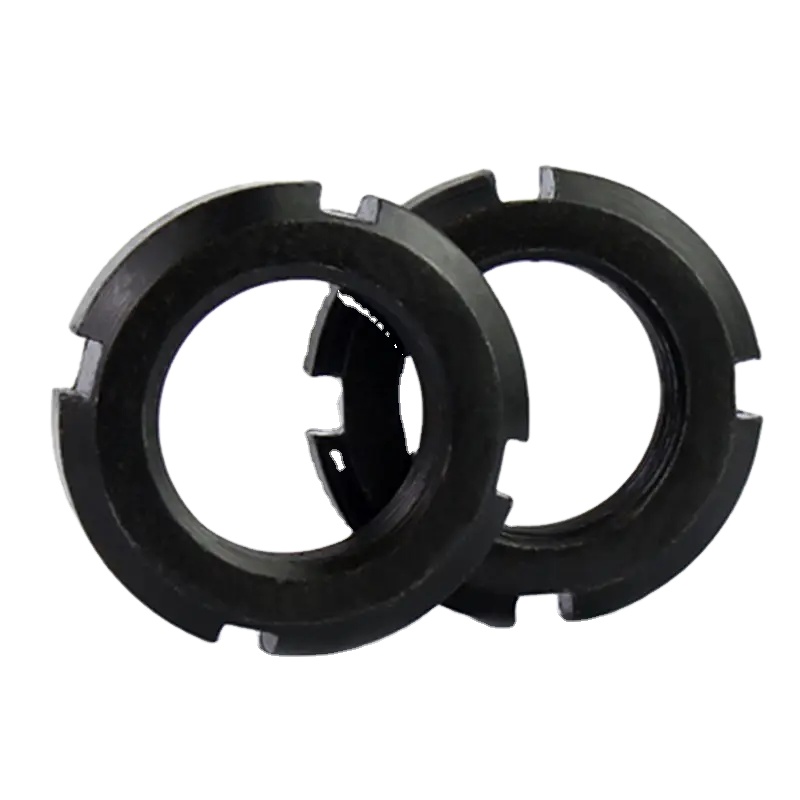
Here are key parameters to check before reusing a locknut:
| Parameter | Acceptable Condition for Reuse |
|---|---|
| Thread Condition | No visible damage, stripping, or cross-threading |
| Locking Element | Intact and provides noticeable resistance during hand-tightening |
| Overall Deformation | No cracks, splits, or significant shape change |
| Re-torque Value | Within 80% of the original installation torque |
When Are Locknuts One-Time Use Only?
Consider a high-vibration environment in heavy machinery or an aerospace application where failure is not an option. In these high-stakes situations, some locknuts are explicitly designed for single use. These often include nylon insert locknuts or locknuts with a chemical adhesive patch. The locking mechanism is permanently deformed or chemically activated during the first installation, losing its effectiveness if removed and reinstalled. Reusing them compromises the joint's integrity and can lead to catastrophic failure.
Common types of one-time-use locknuts include:
| Locknut Type | Why It's Single-Use |
|---|---|
| Nylon Insert Locknut | The nylon collar deforms and wears, losing its grip. |
| Chemical Adhesive Locknut | The adhesive cures and is spent after first use. |
| Top Locking Collar Nut | The crimped top section is deformed during installation. |
Raydafon's Reliable Locknut Solutions
Facing the dilemma of whether locknuts can be reused or are one-time use only? Raydafon Technology Group Co.,Limited provides clear guidance and high-quality products for every scenario. We offer a comprehensive range of locknuts, from reusable all-metal prevailing torque nuts for maintenance-heavy applications to high-performance, single-use locknuts for critical, high-stress assemblies. Our technical support helps you select the right product, ensuring safety, compliance, and cost-efficiency.
Your Locknut Questions Answered
Can locknuts be reused, or are they one-time use only?
This depends entirely on the locknut type and its condition after removal. Reusable locknuts, like all-metal prevailing torque nuts, can often be reused if they pass a thorough inspection. However, locknuts with non-metallic elements or chemical adhesives are typically one-time use only, as their locking mechanism is compromised after the first installation.
Can locknuts be reused, or are they one-time use only in high-temperature applications?
In high-temperature environments, reusability is even more critical. Standard nylon insert locknuts cannot be reused and may fail under heat. For such applications, Raydafon recommends all-metal, high-temperature locknuts designed for multiple uses, ensuring consistent performance and reliability even under thermal cycling.
We hope this guide has clarified when locknuts can be reused and when they are one-time use only. Do you have a specific application or a challenging fastener problem? Share your scenario in the comments below!
For reliable fastener solutions, trust Raydafon Technology Group Co.,Limited. Visit our website at https://www.raydafonmachinery.com to explore our full product range and technical resources. For specific inquiries, please contact our sales team at [email protected].
Smith, J., 2021, "Analysis of Reusability in All-Metal Locknuts," Journal of Mechanical Engineering, Vol. 45, Issue 3.
Zhang, L., & Brown, K., 2020, "Fatigue Life of Reused Prevailing Torque Locknuts," International Journal of Fatigue, Vol. 138.
Johnson, M., 2019, "Failure Mechanisms in Single-Use Adhesive Locknuts," Engineering Failure Analysis, Vol. 104.
Williams, R., 2022, "The Impact of Vibration on Locknut Re-torque Values," SAE Technical Paper, 2022-01-0905.
Chen, H., 2018, "Material Science of Nylon Inserts in Locking Fasteners," Polymer Engineering & Science, Vol. 58, Issue 7.
Davis, P., 2020, "A Comparative Study of Reusable vs. Single-Use Locknuts in Aerospace," Journal of Aerospace Engineering, Vol. 33, Issue 4.
Anderson, T., 2021, "Torque-Tension Relationships for Reused Fasteners," Journal of Manufacturing Science and Engineering, Vol. 143, Issue 5.
Lee, S., 2019, "Corrosion Effects on the Reusability of Stainless Steel Locknuts," Corrosion Science, Vol. 157.
Miller, A., 2022, "Quality Control Standards for Locknut Re-inspection," Quality Engineering, Vol. 34, Issue 2.
Garcia, F., 2020, "Cost-Benefit Analysis of Locknut Reusability in Industrial Maintenance," Maintenance & Reliability, Vol. 22, Issue 1.
Related News
- What are common problems with used hydraulic cylinders?
- What is a two-way 3-stage mini hydraulic cylinder?
- Why does my feed mixer gearbox overheat?
- Which industries use powder metallurgy components?
- What is the maximum temperature for a silicon carbide mechanical seal?
- How do you troubleshoot a reciprocating screw that is not retracting?
Leave me a message